Wet or Dry Dispersion Inside the Glovebox? Choosing the Right Laser Diffraction Pathway for Solid-State Electrolytes!
2026-10-16News
Key Insight
High-performance sulfide and halide solid-state electrolytes (SSEs) react rapidly with trace ambient moisture—generating toxic H2S gas or suffering irreversible particle agglomeration. Integrating your laser diffraction analyzer directly inside an inert-atmosphere glovebox is essential. So, should you choose wet or dry dispersion inside the glovebox?
- Wet dispersion (in anhydrous solvent) is the best choice for ultrafine, sticky powders (~1 µm cathode-composite sulfides) and small R&D batches.
- Dry dispersion (with pressurized inert gas) is ideal for coarser, free-flowing powders (4–10 µm separator grades and halides) and fast, solvent-free quality control.
Rather than forcing laboratories to choose a single mode, Bettersize provides a streamlined, all-in-one solution: by integrating the Bettersizer 2600 Plus with interchangeable BT-812 (Wet) and BT-912 (Dry) dispersion modules inside a single custom-engineered glovebox, battery teams can effortlessly switch between wet and dry analysis as their materials evolve from R&D to mass production.
The ASSB Method Development Dilemma
As All-Solid-State Batteries (ASSBs) move from lab-scale research to pilot production, controlling the Particle Size Distribution (PSD) of the solid electrolyte is critical. Particle size directly dictates how densely the electrolyte sinters, how smoothly lithium ions travel, and how well the electrolyte contacts the electrodes.
However, characterizing next-generation sulfide and halide electrolytes comes with an immediate catch: they cannot be tested in open air. Even brief exposure to room humidity triggers hydrolysis, releasing hazardous H2S gas in sulfides and causing halides to clump together, which ruins measurement accuracy. Installing the particle size analyzer inside an inert-atmosphere glovebox (with O2 and H2O maintained below 1 ppm) is mandatory.
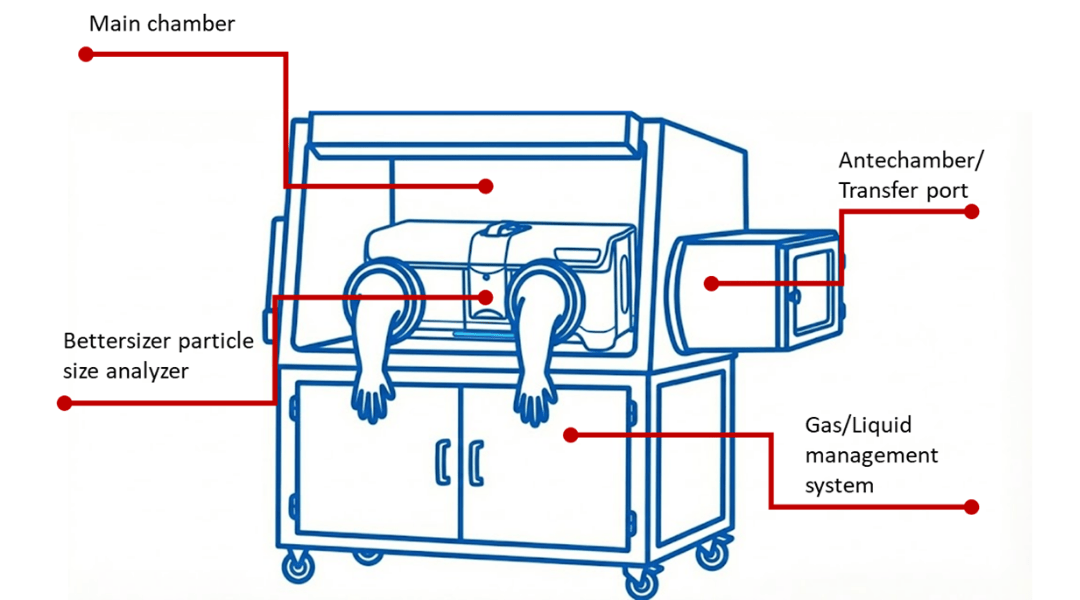
Once inside the glovebox, battery engineers face a practical configuration question: Should we disperse our solid electrolytes using a liquid solvent (Wet Dispersion) or compressed inert gas (Dry Dispersion)?
Naturally, most labs prefer dry dispersion at first to avoid handling organic solvents inside a sealed chamber. Yet in real-world cell manufacturing, a single dispersion method rarely covers every material in the battery stack. Choosing the right pathway depends on two practical factors: how sticky your particles are and how your glovebox workflow operates.
Factor 1: Particle Cohesion and Target Cell Layer
In an all-solid-state battery, the ideal particle size of the electrolyte depends on where it is used inside the cell.
Cathode Composites Demand Ultrafine Powders → Best for Wet Dispersion (BT-812): To achieve tight solid-to-solid contact with cathode materials (like NCM or LFP), electrolyte powders must be milled down to around 1 µm. At this ultrafine scale, soft sulfide particles become highly cohesive and stick together strongly. Blowing compressed gas at a 1 µm sulfide powder often fails to break up clusters—or smears the soft particles against the disperser walls. Suspending the powder in an anhydrous organic solvent (such as low-moisture n-heptane) and applying gentle ultrasonic energy in the BT-812 Wet Dispersion Unit is the most reliable way to separate stubborn clusters into true primary particles.
Separator Layers Utilize Coarser Powders → Best for Dry Dispersion (BT-912): Bulk solid electrolyte separators typically use coarser, uniform particles (4–10 µm) to improve powder flowability and reduce grain-boundary resistance. For halide electrolytes and coarser separator powders in this range, the BT-912 Dry Dispersion Unit uses pressurized Nitrogen (N2) to shear apart particles cleanly in seconds—with zero liquid solvent required.
Factor 2: Glovebox Operational Reality—Sample Size vs. Solvent-Free Speed
|
Operational Factor |
Wet Dispersion (BT-812 Unit) |
Dry Dispersion (BT-912 Unit) |
|---|---|---|
|
Sample Amount Needed |
~0.5 mL suspension: Ideal for early-stage R&D chemists synthesizing tiny, gram-scale batches of precious electrolytes. |
2–5 g dry powder: Ideal for pilot lines and Incoming Quality Control (IQC) where kilogram batches are routine. |
|
Solvent & Waste Handling |
Uses anhydrous organic liquid (<1% moisture); supported by a built-in liquid waste recovery system. |
100% solvent-free: Eliminates chemical compatibility checks, solvent vapors, and liquid waste disposal. |
|
Glovebox Environment Control |
Prevents airborne dust; requires controlled ultrasonic timing to keep solvent temperature stable. |
Uses compressed N2 gas; supported by active glovebox pressure balancing and dual dust collectors. |
|
Primary ASSB Use Case |
Ultrafine cathode electrolytes (~1 µm), cohesive sulfides, R&D formulation. |
Halide electrolytes, coarser separator grades (4–10 µm), fast IQC supplier screening. |
Beyond D50: How High-Resolution Sizing Catches Hidden Battery Defects
Whether you choose wet or dry dispersion, relying on a single average particle size (D50) is risky in solid-state battery manufacturing. Because solid electrolyte layers are pressed into ultra-thin membranes (just 30–50 µm thick), hidden defects at the edges of the size curve can cause catastrophic cell failure.
In recent laboratory testing inside an inert glovebox, the Bettersizer 2600 Plus demonstrated why full-curve optical resolution and high repeatability (<1% to 2% RSD, far exceeding ISO 13320 standards) are vital for quality control:
Catching Short-Circuit Risks in Sulfides (via Wet Dispersion): When testing three sulfide batches, two batches shared almost the exact same median size (D50 of 8.4 µm vs. 9.7 µm). A basic check would pass both. However, the Bettersizer 2600 Plus revealed a hidden "coarse tail" stretching past 54 µm in the third batch—oversized particles capable of puncturing a 30–50 µm separator membrane and short-circuiting the battery.
Benchmarking Halide Suppliers (via Dry Dispersion): When screening commercial halide powders from three suppliers using dry N2 dispersion, Supplier C’s powder looked nearly identical to Supplier A’s on paper (D50 of 3.9 µm vs. 4.7 µm). Yet the full distribution curve exposed a secondary "bimodal shoulder" in Supplier C’s batch—a clear sign of unstable milling and crystallization that leads to poor electrode packing.
The All-in-One Solution: Bettersizer 2600 Plus Glovebox System
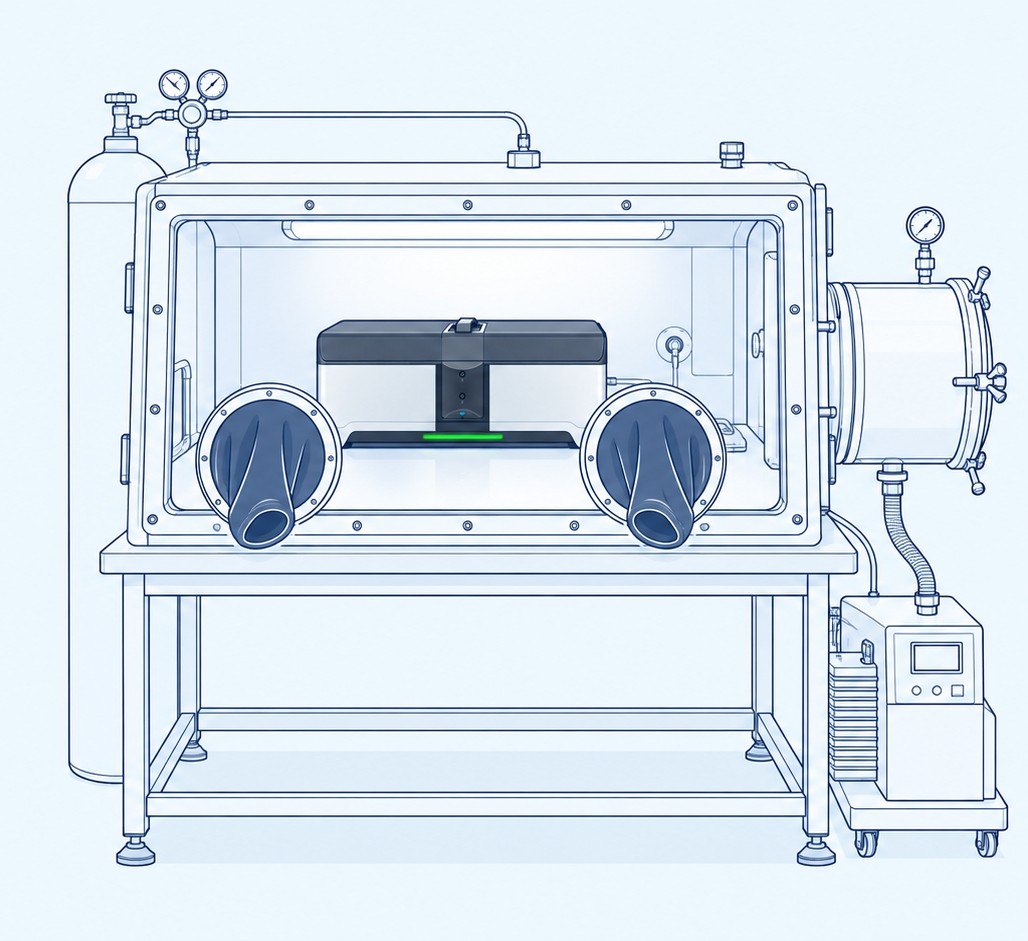
Glovebox floor space is some of the most expensive real estate in a battery lab. Buying two separate analyzers—and two separate gloveboxes—just to cover wet R&D testing and dry QC screening is costly and inefficient.
The Bettersizer 2600 Plus Inert-Atmosphere Glovebox Solution solves this by combining optical precision with modular versatility in a single, compact footprint:
Seamless Wet & Dry Modularity (BT-812 & BT-912): Equipped with both the BT-812 automatic wet dispersion unit and the BT-912 automatic dry dispersion unit, the system adapts to your exact material needs. Teams can use wet ultrasonic dispersion for sticky 1 µm R&D sulfides in the morning, and switch to solvent-free dry dispersion for bulk halide IQC in the afternoon.
Purpose-Built Glovebox Engineering: Unlike makeshift benchtop placements, this custom-engineered enclosure features active pressure management (to handle 0.4 MPa dry gas injection without over-pressurizing the chamber), airtight cable and plumbing feedthroughs, built-in liquid waste recovery, and a dual dust-collection system with a viewing window to keep the interior clean and recover tested powders.
Uncompromised Precision & Safety: Operating in pure N2, Ar, or He (<1 ppm O2 and H2O), the system protects operators from toxic H2S gas while delivering <1%–2% RSD repeatability across the entire sub-micron to millimeter range.
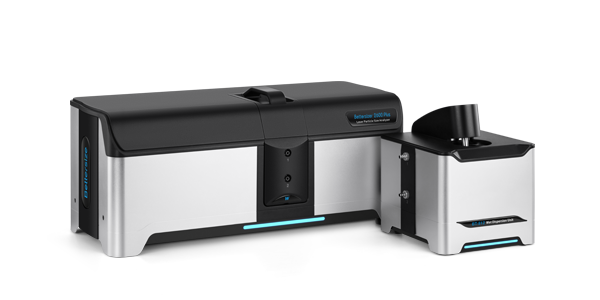
Bettersizer 2600 PlusAdvanced Particle Size and Shape Analyzer
|
 |
Frequently Asked Questions (FAQ)
Q1: Why can’t sulfide and halide solid electrolytes be measured on a standard benchtop laser diffraction analyzer?
A: Sulfide and halide electrolytes are extremely moisture-sensitive (hygroscopic). Even brief exposure to normal room humidity triggers rapid chemical hydrolysis. In sulfides, this releases toxic and corrosive hydrogen sulfide (H2S) gas; in both materials, moisture causes particles to dissolve or clump together (agglomerate), meaning the analyzer measures moisture-damaged clusters rather than the true particle size.
Q2: How do I decide between the BT-812 (Wet) and BT-912 (Dry) dispersion modules for my solid electrolyte?
A: Base your choice on particle size, stickiness, and batch volume. Choose Wet Dispersion (BT-812) if you work with ultrafine, highly cohesive powders (D50 ≈ 1 µm, typical for cathode composites) or have very small R&D sample sizes (~0.5 mL). Choose Dry Dispersion (BT-912) if you work with coarser or free-flowing powders (D50 ≈ 4–10 µm, typical for halides and separator layers), have 2–5 g of sample available, and want fast, solvent-free testing for Incoming Quality Control (IQC).
Q3: Can one Bettersizer 2600 Plus system support both wet and dry dispersion inside the same glovebox?
A: Yes. The Bettersizer 2600 Plus features a modular design that supports both the BT-812 wet unit and the BT-912 dry unit inside a single custom-engineered glovebox. This allows battery laboratories to cover early R&D formulation and high-throughput pilot-line QC without purchasing two separate instruments or sacrificing valuable lab space.
Q4: Won’t blowing high-pressure gas during dry dispersion over-pressurize the glovebox or create a dust hazard?
A: Not with a purpose-engineered system. The Bettersize glovebox solution integrates active pressure management to automatically balance internal chamber pressure during 0.4 MPa inert-gas dispersion. Additionally, it uses a dual dust-collection system—one collector captures airborne particulates inside the glovebox, while a second collector safely recovers residual sample powder after each test.
Q5: Does placing a laser diffraction analyzer inside a glovebox reduce measurement accuracy or repeatability?
A: No. Testing shows that the Bettersizer 2600 Plus achieves Relative Standard Deviation (%RSD) values below 2% for wet dispersion and 0.01%–1.05% for dry dispersion inside the glovebox. This significantly outperforms the ISO 13320 international standard for laser diffraction repeatability (which permits 3–5% variation), ensuring lab-grade precision in a fully isolated environment.
|
FURTHER READING / APPLICATION NOTE Want to see the full experimental parameters, PSD curves, and repeatability data tables? Read the original application note for the full experimental methods, data, and findings. Read the Original →Solid Electrolytes · Laser Diffraction · Particle Size Distribution |
 |
Rate this article
Share On


Recent News