DLS vs. Laser Diffraction: Which Is the Superior Technique for Nanoparticle Analysis?
2026-08-21News
Particle size influences stability, reactivity, dissolution, flow behaviour, and countless other material properties, making nanoparticle size analysis a fundamental part of modern materials research and industrial production. Dynamic Light Scattering (DLS) and laser diffraction are well-established analytical techniques that provide valuable particle sizing data, but they approach measurement in very different ways. Knowing where each technique excels is essential for obtaining accurate and meaningful analytical results.
How DLS and Laser Diffraction Work
Dynamic Light Scattering measures the Brownian motion of particles dispersed in a liquid by monitoring fluctuations in scattered light intensity over time. These fluctuations reveal how rapidly particles diffuse through the suspension. Using the Stokes-Einstein equation, the diffusion coefficient is converted into the hydrodynamic diameter (Dh), which represents the particle together with its surrounding solvation layer. As a result, DLS is particularly effective for nanoparticle analysis involving colloidal suspensions, proteins, liposomes, polymer dispersions, and other systems where particles remain suspended in a liquid.
Alternatively, laser diffraction analysis determines particle size through measuring the angle and intensity of light scattered by a group of particles. Large particles scatter light at small forward angles, whereas smaller particles generate wider-angle scattering with lower intensity. Mathematical models based on Mie theory or Fraunhofer diffraction transform the scattering pattern into a volume-based particle size distribution. Because laser diffraction analysis captures a broad spectrum of particle sizes in a single measurement, it has become a widely adopted solution for both research and industrial quality control.
Key Parameters in Nanoparticle Analysis
Size Range and Dynamic Reach
DLS - optimised for dedicated nanoparticle analysis. Modern DLS systems typically measure particles from approximately 0.3 nm to 15 μm, meaning they are suitable for analysing biomolecules, nanocarriers, emulsions, and finely dispersed colloids that need high nanoscale sensitivity.
Laser Diffraction - establishes a much broader dynamic range, typically spanning 0.01 μm to 3,500 μm depending on the instrument configuration. Laboratories analysing materials that contain both nano- and microscale particles can therefore characterise an entire distribution without switching between analytical techniques. This capability benefits industries such as battery manufacturing, catalyst production, ceramic processing, and mineral engineering.
Sample State and Preparation
DLS - operates exclusively with liquid suspensions. Samples must be dispersed in a compatible solvent before measurement, limiting its use with dry powders or bulk particulate materials. It performs exceptionally well when analysing stable dispersions prepared for pharmaceutical development, biologics research, or nanomaterial characterisation.
Laser Diffraction - accommodates both wet dispersions and dry powders with dedicated dispersion modules. Consequently, one laser diffraction analysis instrument can support routine measurements across multiple sample formats, simplifying analytical workflows in manufacturing laboratories that process powders, slurries, granules, and suspensions.
Sensitivity to Aggregates and Polydispersity
DLS - highly sensitive to aggregates because scattered light intensity is proportional to the sixth power of particle diameter (I ∝ d⁶). A relatively small number of larger particles can thus dominate the scattering signal, helping researchers to detect aggregation during formulation development or stability studies.
Laser Diffraction - delivers a volume-weighted particle size distribution that presents a balanced representation of the overall sample. Larger particles remain visible and avoid overwhelming the principal particle population, a capability that is valuable for analysing broad or polydisperse particle size distributions encountered in industrial production.
Multi-Parameter Capabilities Beyond Size
DLS instruments - can integrate Electrophoretic Light Scattering (ELS) to determine zeta potential, providing useful information about colloidal stability and particle surface charge. Static Light Scattering (SLS) complements this functionality by enabling molecular weight determination for selected materials.
Laser diffraction analyzers - can be combined with Dynamic Image Analysis (DIA) using integrated camera systems. This allows laboratories to evaluate particle shape alongside particle size, ensuring researchers can identify agglomerates, elongated particles, and irregular morphologies that influence processing behaviour and product performance.
Advanced Solutions from Bettersize Instruments
Whether your work needs detailed nanoparticle characterisation or broad particle size analysis, Bettersize Instruments offers dedicated solutions for both applications.
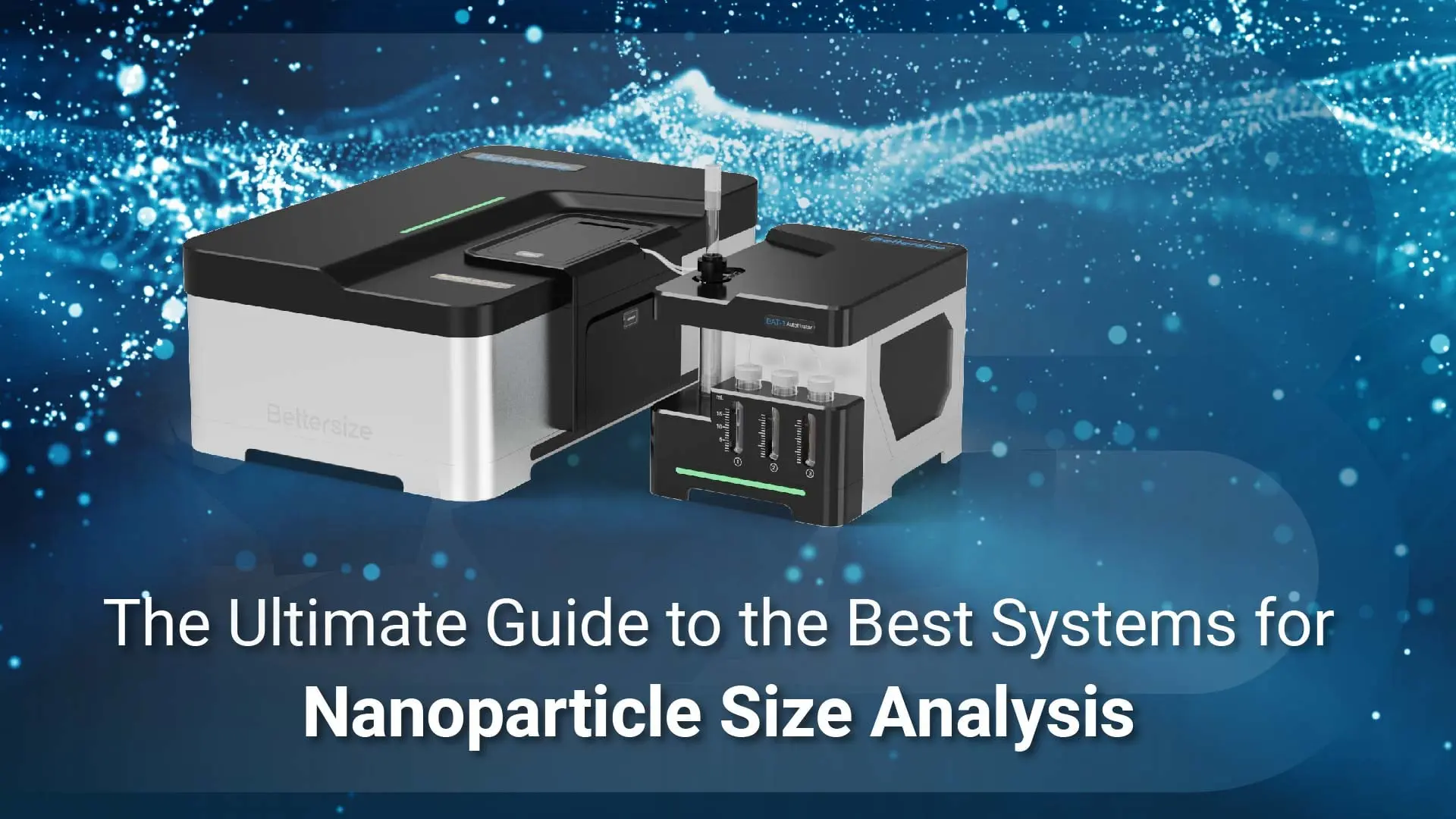
The BeNano Series is engineered for high-precision analysis of proteins, liposomes, nanosuspensions, and colloidal systems. Combining DLS, SLS, and Electrophoretic Light Scattering (ELS), the BeNano 180 Zeta Max incorporates advanced backscattering technology to deliver accurate measurements for weakly scattering materials and highly concentrated samples.
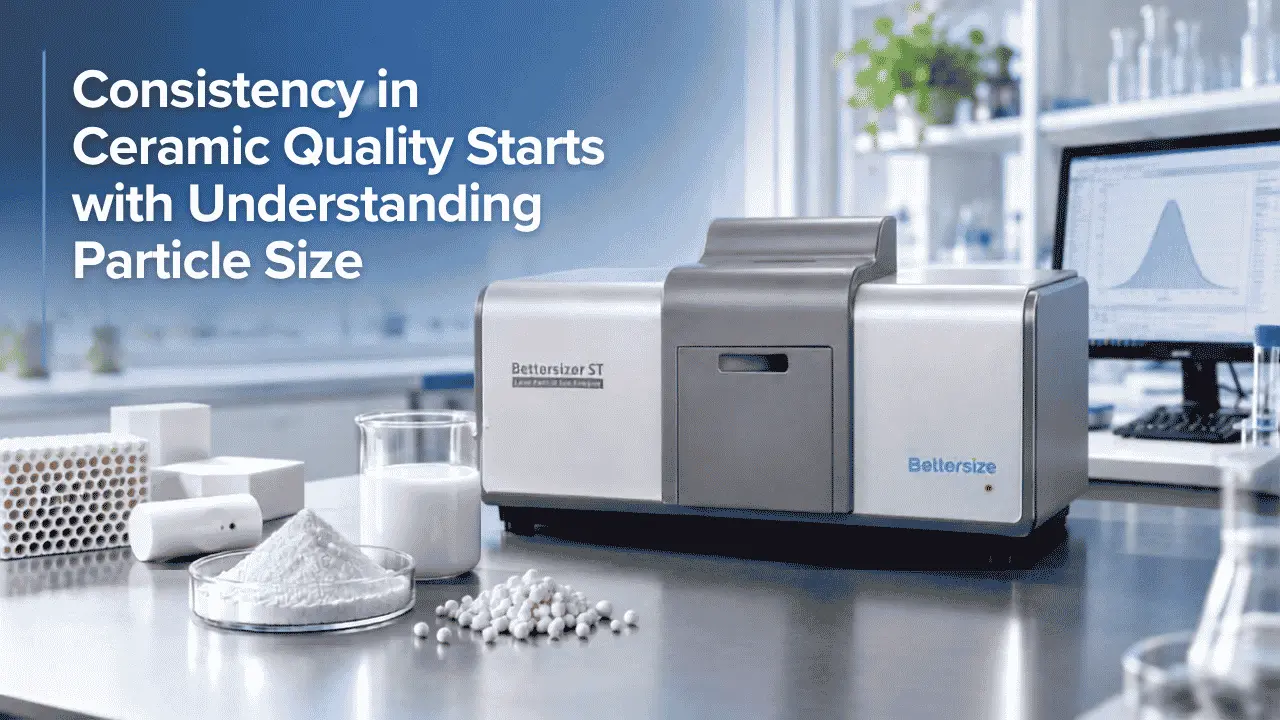
For broader particle size measurement, the Bettersizer Series provides versatile laser diffraction systems that analyse wet dispersions and dry powders. Instruments like the Bettersizer S3 Plus and the Bettersizer 2600 Plus feature Bettersize Instruments' patented Dual Lens and Oblique Incidence Optical System, enabling continuous scattering detection up to 165° and reliable particle size analysis from the nanoscale through to the millimetre range.
Is DLS or Laser Diffraction the Right Technique for Your Laboratory?
Ultimately, the question isn't which technique is superior, but which is best suited to your specific materials and analytical objectives. DLS delivers exceptional sensitivity for nanoparticle analysis in stable liquid dispersions, while laser diffraction analysis offers the flexibility to characterise virtually any particulate material, including nanoparticles and millimetre-sized particles in both wet and dry samples. Understanding the strengths of each technique allows laboratories to generate more reliable, application-specific particle size data. Bettersize Instruments' BeNano and Bettersizer product families provide complementary capabilities for analysing particulate materials. Connect with our specialists today to determine the optimal solution for your laboratory.
Rate this article
Share On


Recent News