
What are the differences between measurement results obtained by image analysis and laser diffraction particle size analysis?
2023-07-17WIKI
The measurement result obtained by the laser diffraction particle size analysis is based on the scattered signals of particles captured onto detector arrays. An inverse algorithm is carried out to calculate a theoretical signal intensity distribution, which is compared to the measured one. An index called residual is used to describe the difference between the theoretical and measured signal intensity distributions. The theoretical signal intensity distribution with the smallest residual value is considered the measurement result. In contrast, the measurement result obtained by image analysis is calculated based on the captured images of real particle projections instead of algorithms.
The laser diffraction particle size analysis yields signal-equivalent diameters, which is suitable for the analysis of small micro-level particles, while image analysis provides area-equivalent diameters, measurement of oversized particles is therefore possible.
 |
Struggling to grasp particle analysis concepts? Our new Beginner's Guide to Particle Analysis is here to help you grasp these concepts in the most accessible manner possible. Download it as a PDF to read on the train, on the plane, or wherever else there’s no internet. |

Recommended articles
Rate this article
Share On


Related Particle Size Analyzer
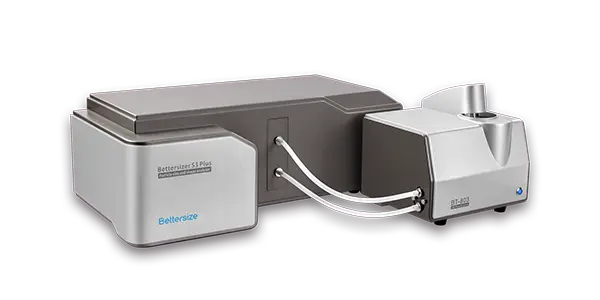
Bettersizer S3 Plus
Laser Diffraction Particle Size Analyzer
Measurement range: 0.01 - 3,500μm (Laser System)
Measurement range: 2 - 3,500μm (Image System)
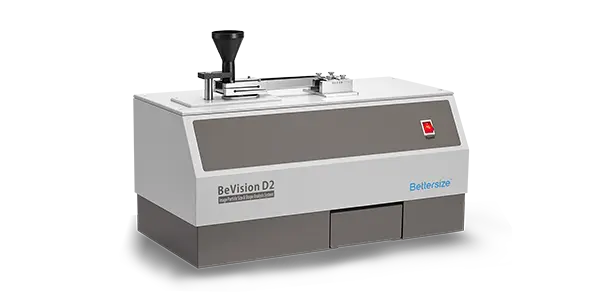
BeVision D2
Image Analyzer
Dispersion type: Dry
Measurement range: 30 - 10,000μm
Technology: Dynamic Image Analysis
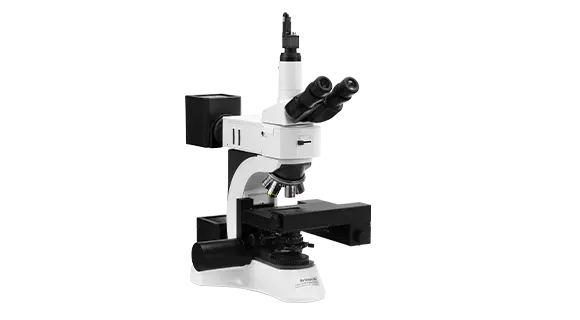
BeVision M1
Automated Static Image Analyzer
Dispersion type: Dry
Measurement range: 0.3 - 10,000 μm
Technology: Static Image Analysis
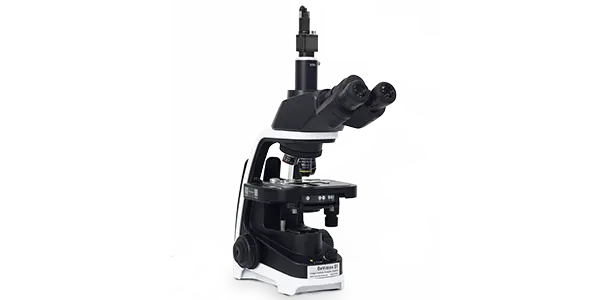
BeVision S1
Classical and Versatile Static Image Analyzer
Dispersion type: Dry & Wet
Measurement range: 0.3 - 4,500 µm
Technology: Static Image Analysis