What Makes SMLS Ideal for Evaluating the Stability of Dispersions?
2026-07-21News
A dispersion can appear perfectly uniform while subtle changes are already setting the stage for failure. Particles aggregate, droplets grow, and concentration gradients emerge long before visible separation provides any warning. For formulation scientists, quantifying these early events is crucial for predicting shelf life and product performance. Static multiple light scattering (SMLS) excels in revealing the onset and progression of instability, transforming subtle optical changes into actionable stability data.
What Defines Dispersion Stability?
A stable dispersion resists changes in particle or droplet structure and limits particle migration over its intended lifetime. Two forms of instability can occur in the same formulation, often simultaneously:
Thermodynamic instability describes changes that reduce the system's interfacial free energy. These include flocculation, coalescence, and Ostwald ripening. Flocculation can be reversible, whereas coalescence and Ostwald ripening generally produce irreversible changes in droplet or particle size.
Kinetic instability describes the rate at which particles or droplets migrate under gravitational forces, resulting in creaming, sedimentation, and concentration gradients within the sample.
In concentrated or opaque systems, structural change and particle migration often develop together. A dispersion may retain its particle or droplet size while particles migrate and form distinct layers. Conversely, aggregation or size evolution may occur throughout the sample without producing an obvious concentration gradient. Identifying the dominant instability mechanism is essential for meaningful stability evaluation. Methods based on visual inspection, turbidity, or particle-size measurements may not reliably distinguish particle migration from structural evolution. Static multiple light scattering (SMLS) monitors changes in light transmission and backscattering as a function of sample height and time, enabling particle migration and particle-size changes to be evaluated within a single measurement.
How SMLS Evaluates Stability Mechanisms
|
1
|
Non-Invasive Spatial ProfilingSMLS scans the entire height of a dispersion at regular intervals, measuring backscattering (BS) and transmission (T) as a function of sample height. The resulting optical profile tracks stability changes under native storage conditions without dilution or sample preparation. Because SMLS preserves the original formulation, researchers can observe destabilisation pathways as they naturally develop over time. |
|
2
|
Isolating Particle Migration KineticsLocalised changes near the sample boundaries reveal particle migration kinetics. Increased backscattering near the top indicates creaming and provides a basis for calculating upward migration velocity, while changes near the bottom quantify sedimentation and sediment bed compaction. These measurements establish objective numerical data describing phase separation behaviour. Beyond identifying migration, SMLS also provides the direct comparison of formulation performance under identical storage conditions. This makes it easier to evaluate formulation modifications, ingredient changes, or processing adjustments that may influence long-term stability. |
|
3
|
Quantifying Internal Structural ChangesStructural evolution within the bulk dispersion can be monitored using SMLS. Flocculation, aggregation, and coalescence alter photon transport and appear as changes in backscattering and/or transmission across part or all of the sample profile.. Unlike localised migration profiles, these global signal changes reveal particle size growth and offer insight into aggregation kinetics. Such a capability is extremely valuable when structural changes begin long before visible instability appears. Early detection allows formulation scientists to identify potential stability risks during development and optimise formulations before large-scale production. |
|
4
|
Deriving a Global Stability IndexSMLS software compiles spatial and temporal signal changes into a quantitative stability index, enabling objective comparison of formulations, batches, and storage conditions using reproducible kinetic data rather than subjective visual assessments. As a result, stability ranking becomes faster, more reliable, and easier to standardise across laboratories. |
Why SMLS Is Indispensable for Stability Evaluation
|
1
|
Preservation of the Native StateHighly concentrated and opaque dispersions can be analysed without dilution using SMLS, preserving natural particle interactions and formulation structure. This allows researchers to evaluate samples exactly as they are formulated and reduces uncertainty introduced through sample preparation. |
|
2
|
Accelerated Detection Without Artificial StressSmall changes in backscattering and transmission become detectable long before visible separation occurs, reducing study timelines while avoiding introducing artificial stress conditions such as centrifugation. Researchers gain faster access to meaningful stability data and can maintain realistic storage conditions. |
|
3
|
High-Resolution Kinetic MonitoringContinuous measurements from SMLS generate a complete kinetic profile of dispersion evolution, revealing when instability begins, how rapidly it progresses, and helping to distinguish the mechanisms potentially responsible for the process Instead of relying on isolated snapshots, scientists can monitor the full progression of destabilisation and evaluate formulation performance with greater confidence. |
Complete Characterisation Through the Bettersize Portfolio
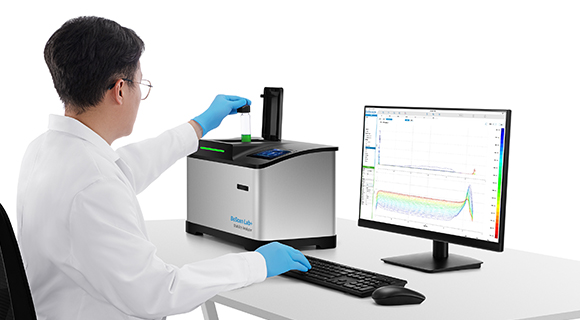
Optimising a formulation requires knowledge of both macroscopic stability and the particle-level properties that influence it. Although SMLS quantifies phase separation kinetics and structural evolution, complementary particle characterisation techniques help explain the underlying causes of instability.Within the Bettersize portfolio, the BeScan Lab+ performs this SMLS-based stability analysis by monitoring transmitted and backscattered light along the sample height over time.
At Bettersize Instruments, this analytical framework extends through the BeNano Series. The BeNano 180 Zeta Max utilises patented 173° Dynamic Light Scattering (DLS) backscattering technology with an adjustable measurement position to determine hydrodynamic particle size from 0.3 nm to 15 μm. The system also incorporates Electrophoretic Light Scattering (ELS) supported by Phase Analysis Light Scattering (PALS) for accurate zeta potential and surface charge measurements.
For broader characterisation, the BeNano 180 Zeta Max combines DLS, ELS, and static light scattering (SLS) within a single platform. Additional capabilities include transmittance monitoring, high-precision refractive index measurement, and automated temperature trend programming from -15°C to 120°C for thermal stability studies.
The BAT-1 Autotitrator complements these measurements through automated pH titrations and zeta potential tracking, enabling the precise identification of isoelectric points where flocculation risk is highest.
Connecting Stability Data to Formulation Decisions
Every dispersion tells a story of competing forces, evolving structures, and gradual change. SMLS captures that story with the clarity needed to transform observations into actionable insight. Paired with the particle characterisation capabilities of the BeNano Series, researchers gain a richer understanding of formulation behaviour across the entire stability lifecycle. Contact Bettersize Instruments for additional information about our SMLS products.
Rate this article
Share On


Recent News