How Integrated GMP Standards Speed Up Pharmaceutical Product Development
2026-07-21News
The greatest delays in pharmaceutical product development do not always stem from failed formulations or unsuccessful clinical studies. Often, they emerge when analytical methods that performed well during research must be rebuilt to satisfy Good Manufacturing Practice (GMP) requirements. Embedding GMP standards into analytical testing from the outset removes this hidden obstacle, ensuring regulatory compliance keeps pace with scientific progress.
The Compliance Bottleneck
Many research laboratories prioritize flexibility and rapid experimentation in early pharmaceutical product development. Scientists often collect analytical data using software that supports efficient method design but lacks GMP functionality because regulatory compliance is viewed as a concern for later clinical phases.
Problems appear once projects transition toward manufacturing. Analytical methods developed in non-compliant environments frequently require extensive re-validation before they can support GMP operations. Teams must verify software compatibility, recreate documentation, confirm data integrity, and demonstrate that methods perform consistently under regulated conditions. Every additional verification step consumes valuable time and delays process transfer.
Integrated GMP standards eliminate this analytical disconnect. If characterization data is generated within a compliant environment from the outset, analytical methods move smoothly between formulation, scale-up, and quality control laboratories. Software migration becomes straightforward since compliant data structures, documentation, and workflows already exist, allowing pharmaceutical product development to progress without unnecessary interruptions.
How Integrated GMP Features Drive Development Velocity
Successful pharmaceutical product development relies on analytical systems that generate consistent, traceable, and inspection-ready data throughout the product lifecycle. Integrated GMP software establishes standardized workflows and secure data management in laboratory operations, reducing administrative effort while supporting regulatory compliance.
Several integrated GMP features contribute directly to this consistency. Automated Standard Operating Procedure (SOP) execution ensures analytical methods remain uniform regardless of who performs the test. Additionally, preconfigured workflows prevent operators from modifying approved parameters, generating identical testing conditions in research, process development, and quality control laboratories. These standardized processes minimize human variability and decrease Out-of-Specification (OOS) investigations caused by procedural differences.
Beyond governing laboratory workflows, integrated GMP software also protects the integrity and traceability of analytical data through built-in Food and Drug Administration (FDA) 21 Code of Federal Regulations (CFR) Part 11 compliance, supported by capabilities such as:
Electronic audit trails that automatically record user logins, method changes, data processing activities, and result modifications
Hierarchical user permissions that define responsibilities for administrators, developers, supervisors, and analysts, preventing unauthorized changes and maintaining complete accountability.
Because every action is captured within electronic audit trails, laboratories spend less time assembling supporting records before inspections or technology transfers. Scientists can focus on critical tasks such as formulation optimization, particle characterization, stability studies, and process analytical development instead of manually organizing compliance documentation.
Integrated systems also improve collaboration across multidisciplinary development teams. Analytical data generated in early formulation studies remains suitable for later regulatory submissions, driving key efficiencies such as reducing duplicate testing, simplifying knowledge transfer, and shortening the timeline between laboratory research and commercial manufacturing. Consequently, pharmaceutical product development advances with enhanced efficiency due to compliance supporting scientific progress from the beginning.
Driving Velocity Across Key Analytical Portfolios
Maintaining consistent GMP compliance across multiple analytical platforms accelerates pharmaceutical product development. The value of this integrated approach becomes clear when deploying critical characterization techniques such as the following:
|
1
|
Laser Diffraction and Particle Size AnalyzerParticle size distribution directly influences active pharmaceutical ingredient (API) dissolution, blend uniformity, and oral bioavailability. GMP-compliant software embedded within laser diffraction systems records critical material attributes using secure audit trails during formulation development. These validated records support process scale-up without requiring additional data reconciliation. |
|
2
|
Dynamic Light Scattering and Nanoparticle TrackersAdvanced therapies such as lipid nanoparticle drug delivery systems, liposomal formulations, and messenger RNA (mRNA) therapeutics necessitate accurate measurements of particle size, zeta potential, and molecular weight. Collecting stability data under FDA 21 CFR Part 11 regulated conditions enables laboratories to incorporate analytical results directly into submission dossiers, avoiding delays associated with cross-validation. |
|
3
|
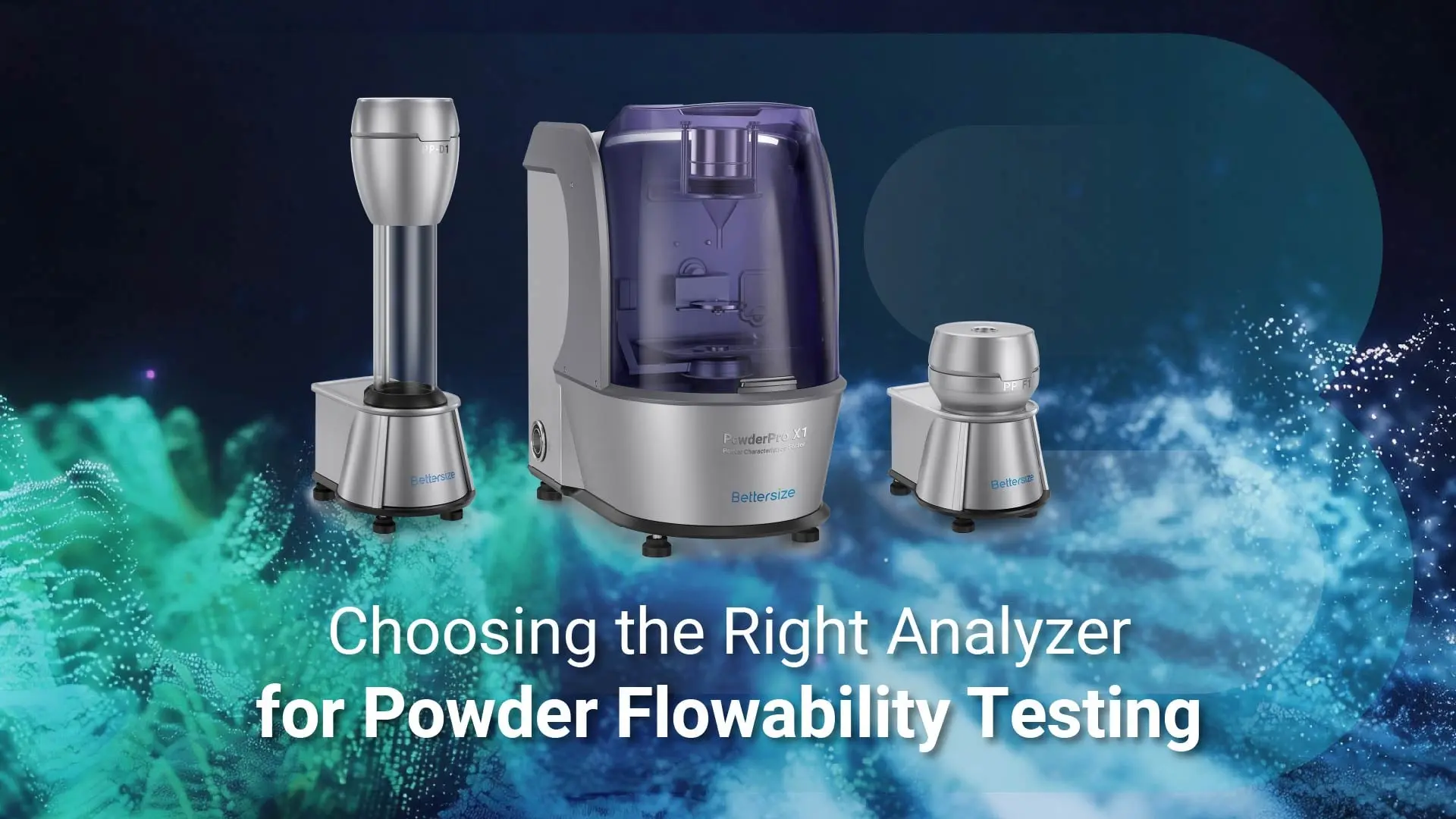
Automated Powder Characterization SystemsPowder flowability, bulk density, and tapped density influence tablet compression, capsule filling, and manufacturing consistency. Automated powder characterization systems operating under standardized GMP software minimize operator variation and produce physical property data that aligns with digital batch records. Consistent measurements improve manufacturing reliability and simplify process validation. |
Advancing Pharmaceutical Product Development
Accelerating pharmaceutical product development depends on eliminating obstacles between laboratory research, process scale-up, and commercial manufacturing. Bettersize Instruments addresses such challenges by integrating FDA 21 CFR Part 11 compliance across the Bettersizer Series for laser diffraction, the BeNano Series for dynamic light scattering and zeta potential analysis, and the PowderPro and BeDensi Series for automated powder characterization. Laboratories can generate compliant, traceable analytical data from discovery through to production using one connected approach.
Explore Bettersize Instruments' pharmaceutical solutions today to build a faster, more efficient development pipeline.
Rate this article
Share On


Recent News