
Particle Size and Shape Analysis of Ceramic Proppants Using the BeVision D3
2026-05-22Application Note
Abstract: Ceramic proppants are critical in hydraulic fracturing, where particle size and shape determine packing density, flowability, and mechanical strength. This study employs the BeVision D3 dynamic image analyzer with a BV-F10 Free Fall unit to measure particle size distribution (D10, D50, D90), circularity, and length-to-width ratio (L/W). Results demonstrate excellent repeatability, narrow distribution (Span = 0.17), and highly spherical particles, supporting robust quality control, process optimization, and proppant performance evaluation in the oil and gas industry.
Keywords: Ceramic proppants, Particle size distribution (PSD), Particle shape, Circularity, L/W ratio, BeVision D3, Dynamic image analysis, Hydraulic fracturing, Quality control
| Product | BeVision D3 |
| Industry | |
| Sample | Ceramic proppants |
| Measurement Type | Particle Size, Particle Shape |
| Measurement Technology |
Ceramic proppants are high-strength man-made material made from bauxite, clay, and other raw materials through processes such as crushing, granulation, and high-temperature sintering. They serve as critical proppants in hydraulic fracturing operations for oil and gas reservoirs. During hydraulic fracturing, ceramic proppants are injected into formation fractures to keep them open, thereby creating high-conductivity flow channels and improving hydrocarbon production and recovery in low-permeability formations.
Particle size and particle shape are key parameters for evaluating proppant performance: The particle size distribution determines packing density and pore structure, which directly influence fracture conductivity. Meanwhile, particle shape characterized by parameters such as circularity and L/W ratio affects flowability, packing behavior and mechanical strength. Particles with high circularity are less prone to breakage under stress, helping maintain fracture permeability and prevent pore blockage. Therefore, rapid and accurate characterization of both particle size and shape is essential for ensuring optimal fracturing performance.
Measurement method
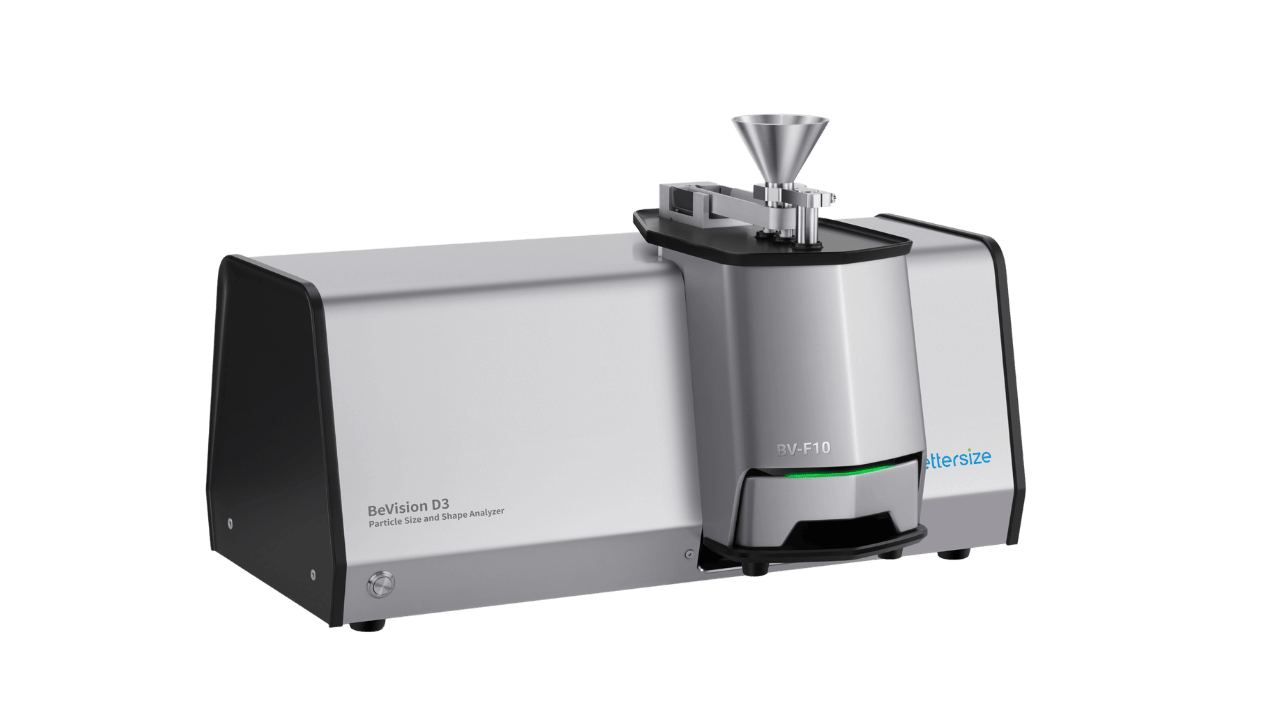
A BeVision D3 Particle Size and Shape Analyzer, equipped with a BV-F10 Free Fall Dispersion Unit, was used to analyze the sample.
|
Dispersion method |
Free Fall |
|
Camera |
5-megapixel CMOS |
|
Feeding rate |
Automatic |
|
Number of particles |
17,000 pcs |
|
Duration time |
4 mins |
Results and Discussion
Particle Size Analysis
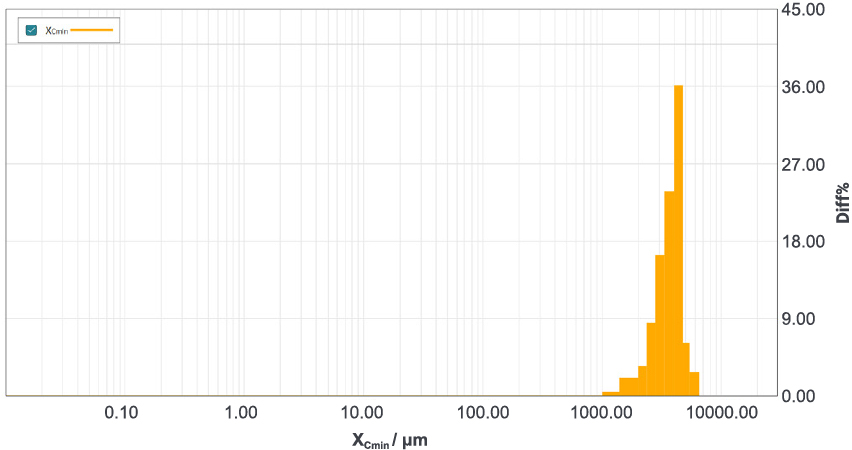
Figure 1. The particle size distribution of the ceramic proppant
Table 1. Characteristic values of ceramic proppant
|
XA(Q=10%) |
XA(Q=50%) |
XA(Q=90%) |
Span(XA) |
|
1033.64 μm |
1123.72 μm |
1221.24 μm |
0.17 |
Figure 1 shows the particle size distribution of the ceramic proppant, while Table 1 shows its summarized its characteristic size parameters: XA(Q=10%), XA(Q=50%), and XA(Q=90%) correspond to D10, D50, and D90 in the particle size distribution, representing the 10%, 50%, and 90% of the particle volume is smaller than these particle sizes, respectively.
The Span value, defined as:
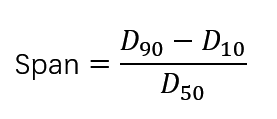
The Span is 0.17, indicating that the ceramic proppant has a very narrow particle size distribution. This demonstrates excellent particle size uniformity, which is critical for achieving optimal packing density and maintaining high flow conductivity. A narrow distribution also minimizes the presence of fine particles that could block pore spaces and reduce performance.
Table 2. Typical values of three repeatability tests for ceramic proppant
|
|
Test 1 |
Test 2 |
Test 3 |
Average |
Std. dev. |
Repeatability |
|
XA(Q=10%) |
1033.64 μm |
1031.65 μm |
1031.52 μm |
1032.27 μm |
1.19 μm |
0.12 % |
|
XA(Q=50%) |
1123.72 μm |
1123.65 μm |
1124.43 μm |
1123.93 μm |
0.43 μm |
0.04 % |
|
XA(Q=90%) |
1221.24 μm |
1222.33 μm |
1220.46 μm |
1221.34 μm |
0.94 μm |
0.08 % |
To evaluate measurement stability of BeVision D3, three repeatability tests were conducted.
The table 2 show that the repeatability for D10, D50, and D90 in the three tests is better than 0.2%, demonstrating excellent measurement stability.
Particle Shape Analysis
Circularity (CP) is defined as the ratio of the area-equivalent diameter XA to the perimeter-equivalent diameter XP. It describes the proximity of the particle projection to a cirle, with values ranging from 0 to 1. Higher values indicate more rounded particles. The typical requirement for petroleum proppant circularity is ≥ 0.7.
The length-to-width ratio (L/W) is defined as the ratio of the long side to the short side of the minimum bounding rectangle of the particle projection. Higher values indicate that the particle is more elongated or flat. Petroleum proppants generally require an L/W ratio ≤ 1.2.
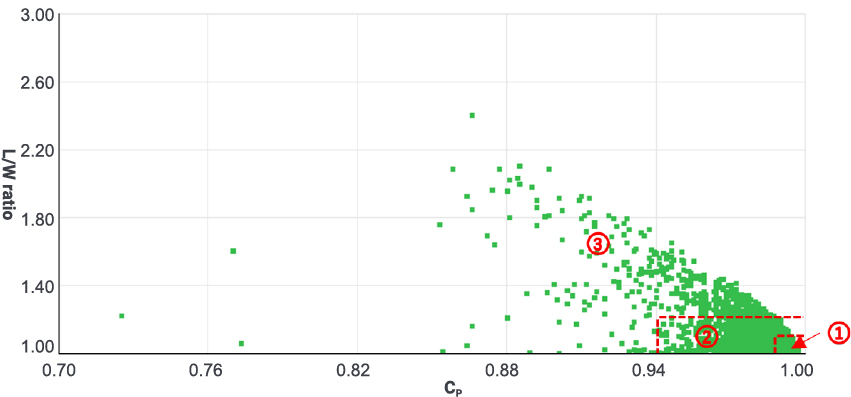
Figure 2. Scatter plot of circularity CP and L/W ratio
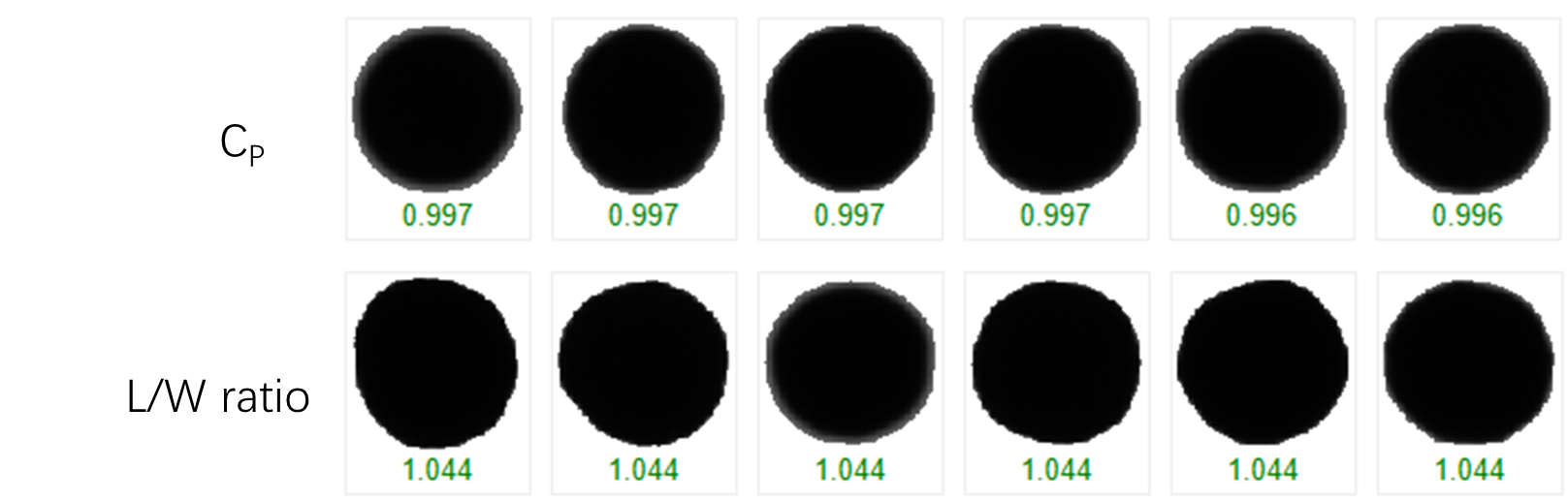
Figure 3. High-quality particles (Zone 1)
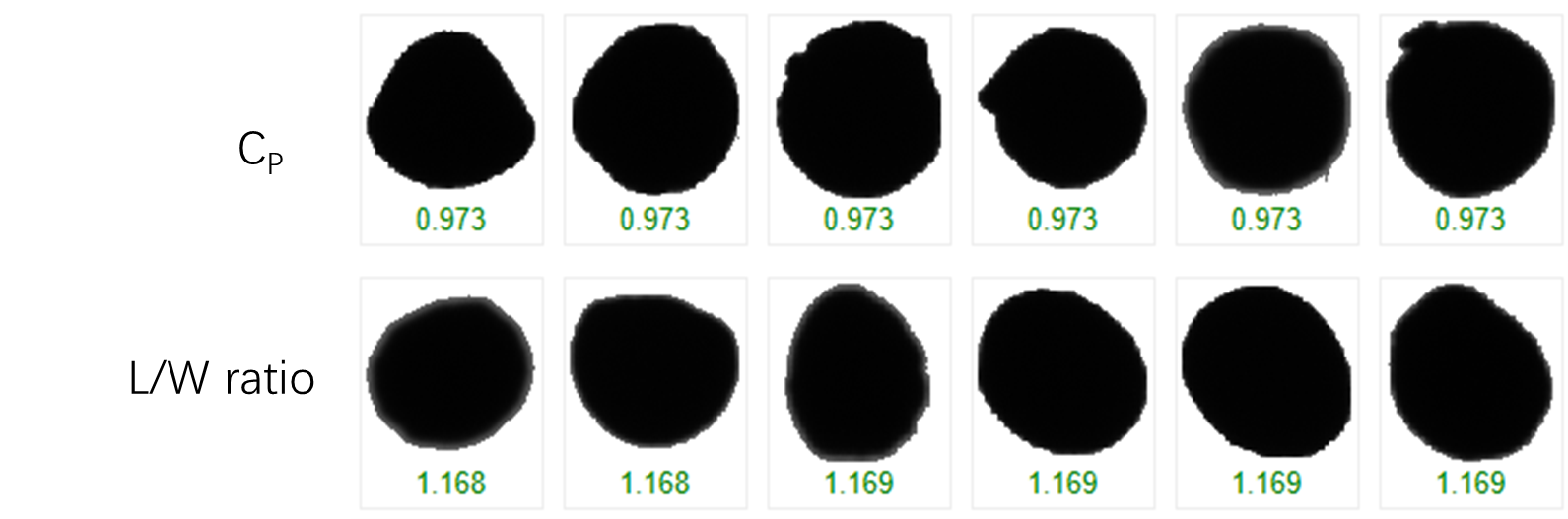
Figure 4. Mediocre-quality particles (Zone 2)
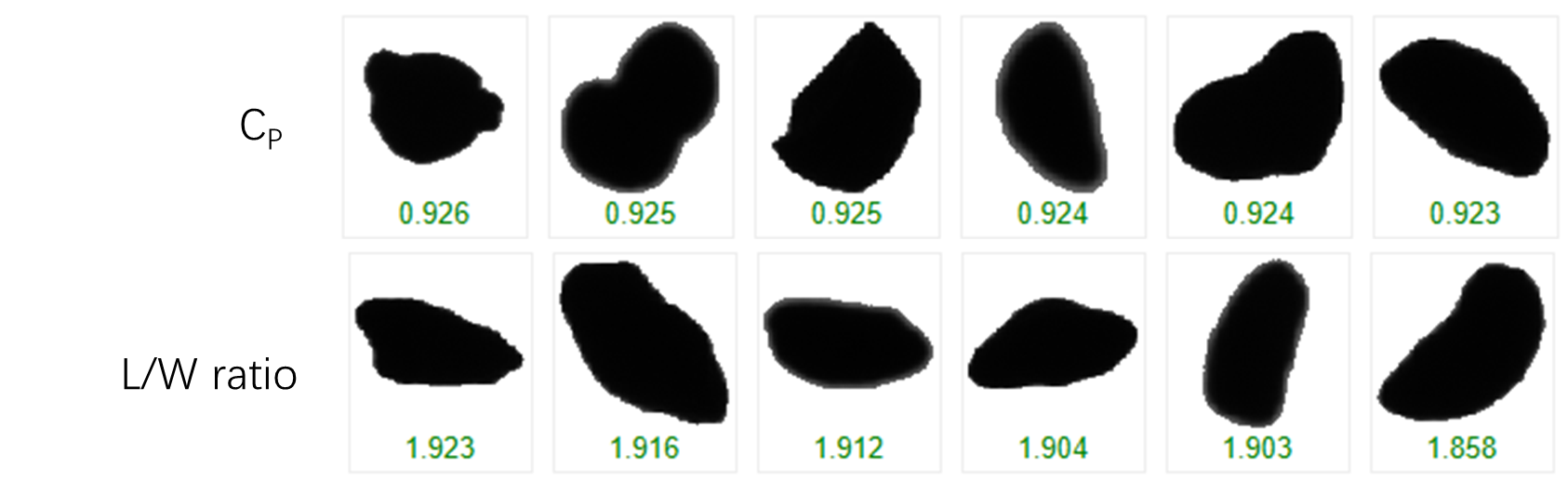
Figure 5. Low-quality particles (Zone 3)
Table 3. Characteristic values of particle shape parameters
|
|
Q=10% |
Q=50% |
Q=90% |
Average |
Span |
|
Circularity CP |
0.981 |
0.991 |
0.997 |
0.989 |
0.02 |
|
L/W ratio |
1.005 |
1.031 |
1.126 |
1.066 |
0.12 |
The results indicate that the ceramic proppant exhibits excellent particle morphology:
- The average circularity of the ceramic proppant is 0.989, significantly higher than industry requirements, indicating highly rounded particles with smooth surfaces. This reduces likelihood of particle breakage, minimizes fine powder generation and helps maintain fracture permeability.
- The average L/W ratio is 1.066, well below the upper limit of 1.2, confirming that the particles are close to spherical, with very few elongated or flat particles.
- The distribution of data points in Figure 2 shows that the majority of particles fall within the high-quality and medium-quality zones, with only a negligible proportion classified as low-quality.
Overall, the combination of high circularity and low L/W ratio ensures excellent crush resistance, flowability, and packing performance, fully meeting the requirements for petroleum proppant applications.
Conclusion
The BeVision D3 enables rapid, accurate, and fully automated characterization of both particle size distribution and shape parameters of ceramic proppants, with a typical test completed in approximately 4 minutes.
The method provides simultaneous measurement of key parameters such as particle size, circularity, and L/W ratio, with excellent repeatability and high-resolution data output. This allows for intuitive classification of particle quality and comprehensive evaluation of proppant performance.
With its ability to deliver precise, reliable, and multi-dimensional data in a single measurement, the instrument represents an efficient and powerful tool for quality control, process optimization, and performance evaluation of ceramic proppants in the oil and gas industry.
About the Authors
 |
Lisa Wang |
 |
Echo Cao |
|
|
|
|
|
BeVision D3Advanced Image Analyzer
|
|
LOGIN TO ACCESS EXCLUSIVE CONTENT
More Resources Including
- Application Notes & Collections
- Webinars & Workshops
- Presentations & Videos
- Monthly Newsletters
- Exclusive Events...

Recommended articles
Rate this article