
What is the background signal?
2022-12-09WIKI
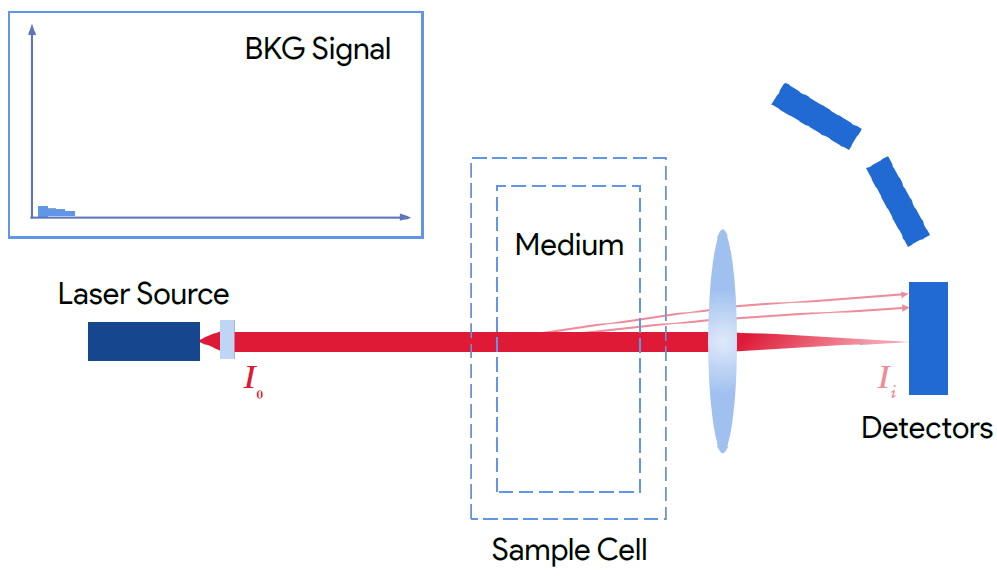
The background signal is made up of both optical and electrical signals. The optical noise is composed of an extraneous signal caused by unrelated substances during the measurement.
In a laser diffraction particle size analyzer, the background signal is made up of optical interference from the medium, which can be liquid or air, and the cleanliness of the sample cell, e.g., a small number of impurities that may exist on the cell window, creating signals with low intensities on the left side of the signal diagram. These background signals need to be measured prior to the particle size analysis and later removed from the measurement signal, which improves the measurement accuracy.
 |
Struggling to grasp particle analysis concepts? Our new Beginner's Guide to Particle Analysis is here to help you grasp these concepts in the most accessible manner possible. Download it as a PDF to read on the train, on the plane, or wherever else there’s no internet. |

Recommended articles
Rate this article
Share On


Related Particle Size Analyzer
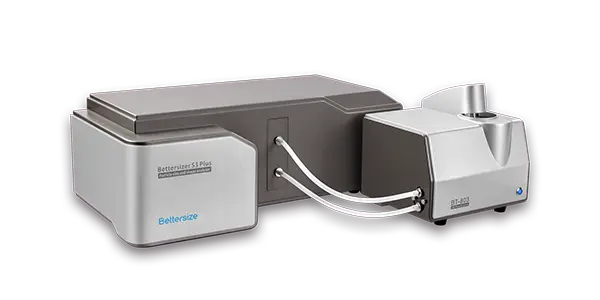
Bettersizer S3 Plus
Laser Diffraction Particle Size Analyzer
Measurement range: 0.01 - 3,500μm (Laser System)
Measurement range: 2 - 3,500μm (Image System)
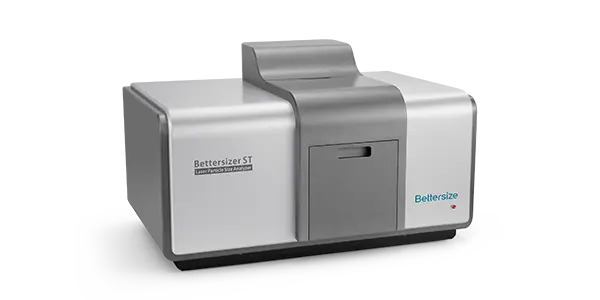
Bettersizer ST
One-stop Particle Size Analyzer
Dispersion type: Wet
Measurement range: 0.1 - 1,000µm
Repeatability: ≤1% variation

Bettersizer 2600
Particle Size Analyzer
Measurement range: 0.02 - 2,600μm (Wet dispersion)
Measurement range: 0.1 - 2,600μm (Dry dispersion)