
What is resolution and how to verify it?
2023-07-14WIKI
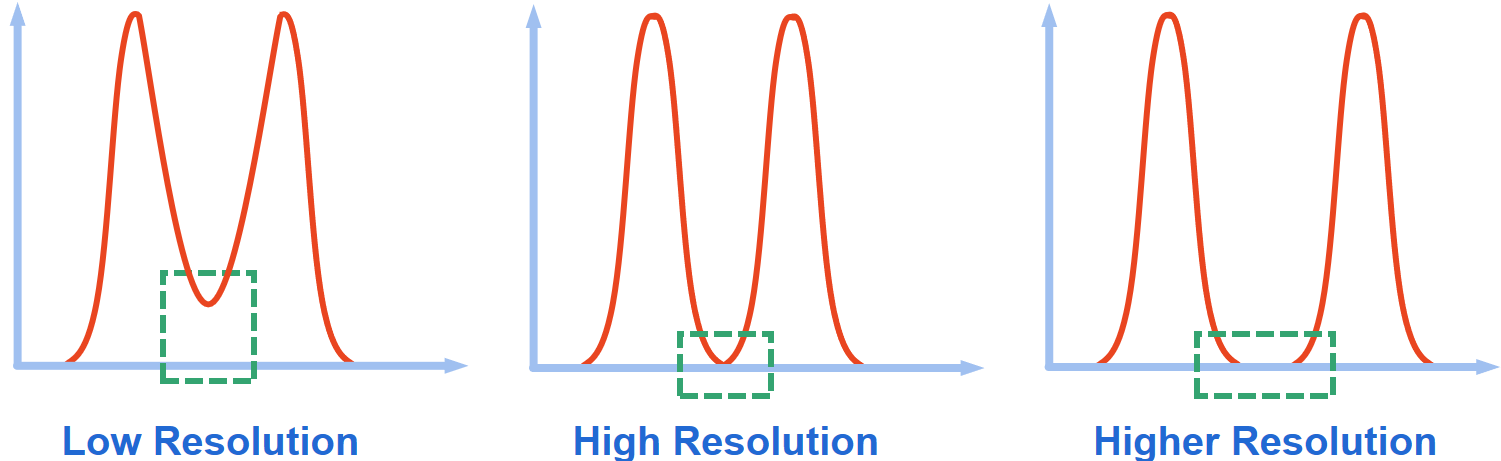
In laser diffraction particle size analysis, resolution is used to evaluate the degree of distinguishing two closely adjacent peaks. Just as repeatability and reproducibility are important factors, resolution is also a significant indicator related to the performance of an instrument.
Currently, no certified reference standards are utilized to verify resolution. However, the following method can be implemented for resolution verification:
Two reference standards whose ratio of nominal values is greater than five are mixed at equal proportions and measured with the particle size analyzer. If two separated peaks are shown in the particle size distribution graph, high resolution can be confirmed, and the instrument is qualified; If the two peaks are separated, and the baseline is clear (the coarse end of the fine sample can be separated from the fine end of the coarse sample), it indicates that the instrument exhibits a higher resolution. Otherwise, the resolution is relatively low.
 |
Struggling to grasp particle analysis concepts? Our new Beginner's Guide to Particle Analysis is here to help you grasp these concepts in the most accessible manner possible. Download it as a PDF to read on the train, on the plane, or wherever else there’s no internet. |

Recommended articles
Rate this article
Share On


Related Particle Size Analyzer
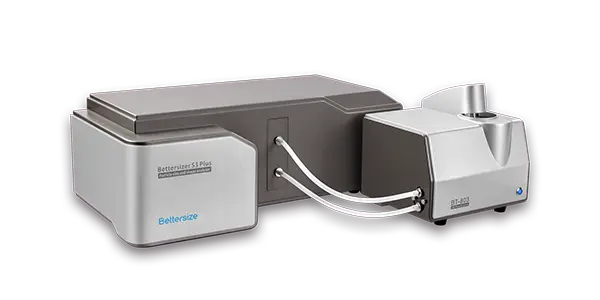
Bettersizer S3 Plus
Laser Diffraction Particle Size Analyzer
Measurement range: 0.01 - 3,500μm (Laser System)
Measurement range: 2 - 3,500μm (Image System)
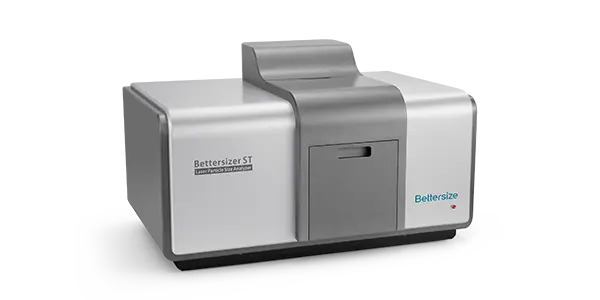
Bettersizer ST
One-stop Particle Size Analyzer
Dispersion type: Wet
Measurement range: 0.1 - 1,000µm
Repeatability: ≤1% variation

Bettersizer 2600
Particle Size Analyzer
Measurement range: 0.02 - 2,600μm (Wet dispersion)
Measurement range: 0.1 - 2,600μm (Dry dispersion)