
What are the typical unstable phenomena?
2024-09-24WIKI
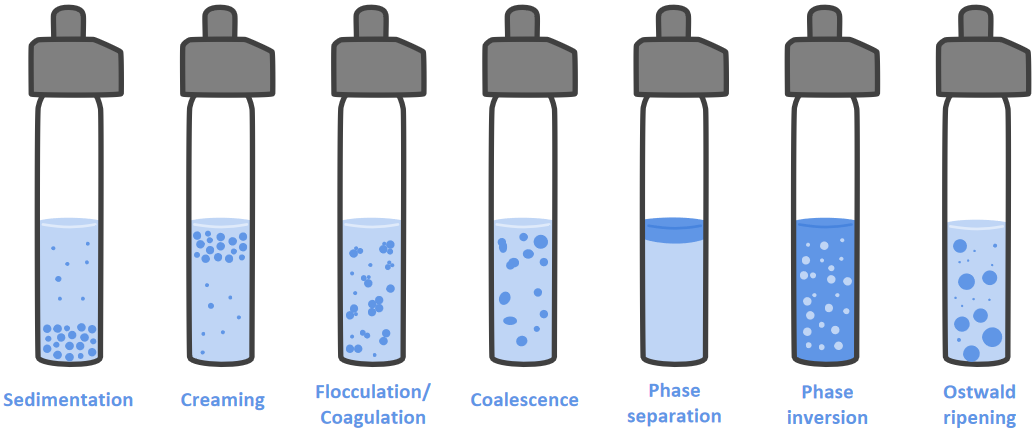
Commonly unstable phenomena include sedimentation, creaming, flocculation, coagulation, phase separation, phase inversion, and Ostwald ripening.
- l Sedimentation refers to the settling of suspended substances over time; While during creaming the suspended substances move upward over time.
- l Flocculation and coagulation are related processes and they both involve clumping of particles and are often used in colloidal chemistry. The difference is that flocculation is reversible aggregation caused by weak physical interaction. In this situation, aggregates are loosely bound; While coagulation refers to an irreversible aggregation undergoing chemical processes. In water treatment, suspended substances cohere together due to neutralization by adding coagulants. Then flocculation enables the forming of larger and visible flocs. Finally, large flocs settle down due to gravity force.
- l Coalescence often occurs in emulsion, where two or more droplets merge together. Coalescence is an irreversible destabilization process because the film of the droplet is destroyed.
- l Phase separation, also called breaking, is the result after coalescence continues, which leads to the separation of the emulsion into different phases.
- l Phase inversion occurs when the hydrophilic-lipophilic balance (HLB) of the surfactant changes, resulting in the exchange of dispersed phase and continuous phase. HLB can be affected by external conditions, such as temperature and pH.
- l Ostwald ripening involves the dissolution of smaller droplets and subsequent precipitation onto larger ones, thereby minimizing surface energy and increasing the system's thermodynamic stability.
 |
Struggling to grasp particle analysis concepts? Our new Beginner's Guide to Particle Analysis is here to help you grasp these concepts in the most accessible manner possible. Download it as a PDF to read on the train, on the plane, or wherever else there’s no internet. |

Recommended articles
Rate this article
Share On


Related Particle Size Analyzer
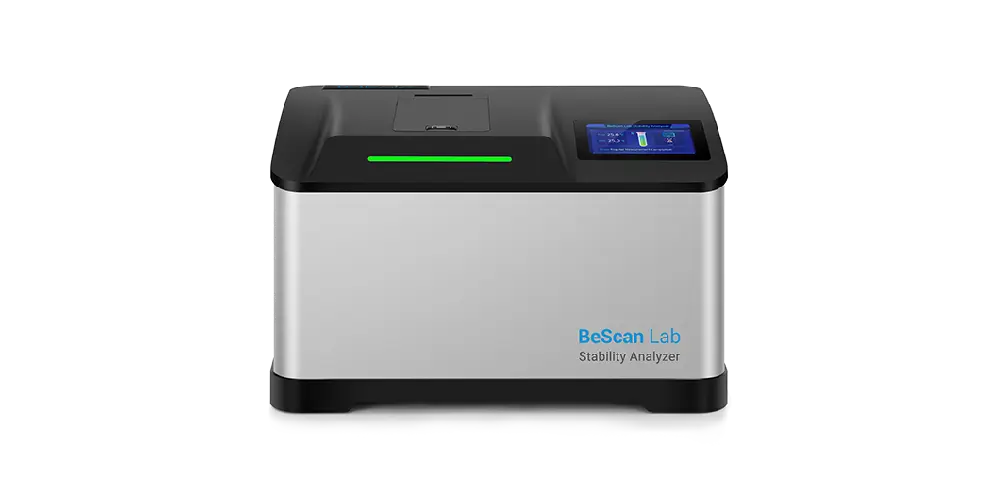
BeScan Lab
Stability Analyzer
Particle size ranges from 10 nm to 1 mm
Volume fraction up to 95%
Compliance with ISO/TR 18811, 13097, 21357, 22107