
What are the factors that affect background?
2023-01-04WIKI
The normal background signal is characterized by the following conditions:
- The normal background should occupy less than 20 units of channel.
- The higher signals should appear on the far left of the signal diagram.
- The intensity of the background signal should be quite low.
- The signal intensity decreases from left to right sequentially.
- There should be no castellation in the signals as this could indicate bad alignment.
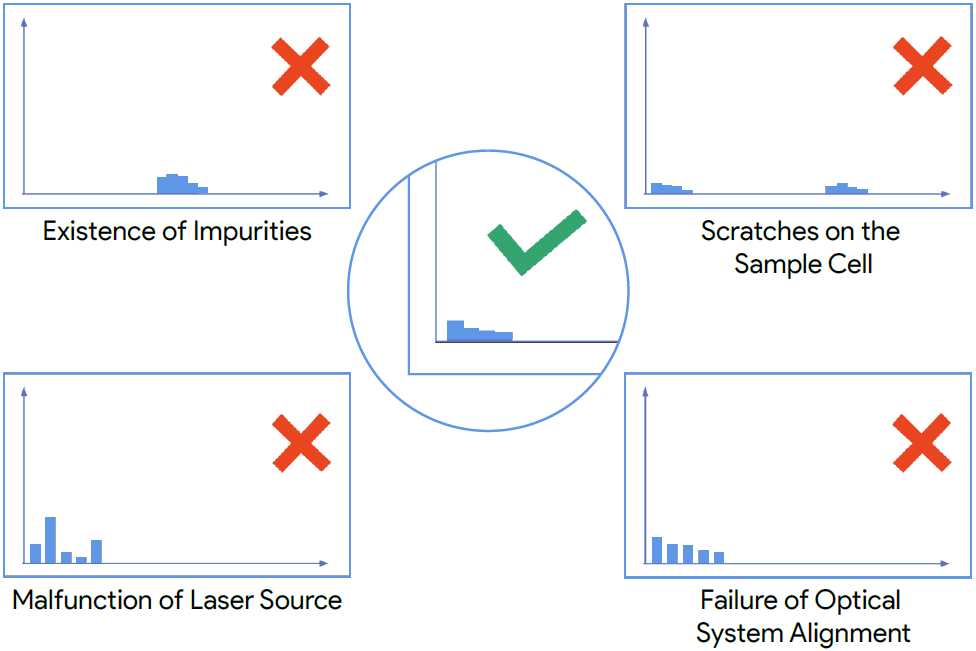
The reasons for abnormal background signals vary. For example, the optical system alignment cannot be carried out; there may be impurities attached to the inner surface of the sample cell or the surface of the lens; the sample cell is foggy due to the temperature difference between the medium and the working environment, causing condensation on the sample cell; the medium is not pure; the working status of the laser source is not ideal; the lens or the sample cell are scratched. Troubleshooting should begin with inspecting the sample cell, then the laser source and lens, and finally, the alignment system.
 |
Struggling to grasp particle analysis concepts? Our new Beginner's Guide to Particle Analysis is here to help you grasp these concepts in the most accessible manner possible. Download it as a PDF to read on the train, on the plane, or wherever else there’s no internet. |

Recommended articles
Rate this article
Share On


Related Particle Size Analyzer
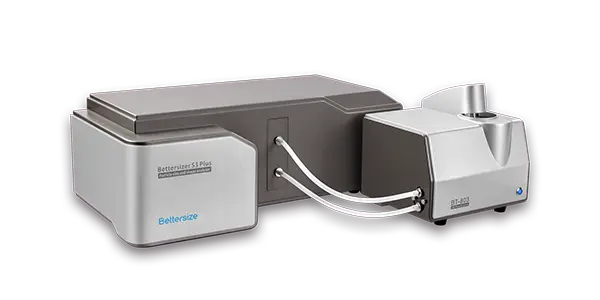
Bettersizer S3 Plus
Laser Diffraction Particle Size Analyzer
Measurement range: 0.01 - 3,500μm (Laser System)
Measurement range: 2 - 3,500μm (Image System)
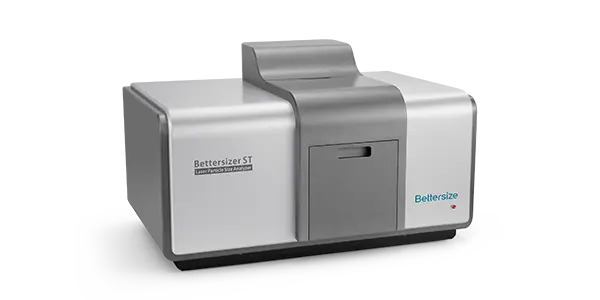
Bettersizer ST
One-stop Particle Size Analyzer
Dispersion type: Wet
Measurement range: 0.1 - 1,000µm
Repeatability: ≤1% variation

Bettersizer 2600
Particle Size Analyzer
Measurement range: 0.02 - 2,600μm (Wet dispersion)
Measurement range: 0.1 - 2,600μm (Dry dispersion)