
What are the commonly used media and requirements?
2023-01-11WIKI
For particle size analysis using the wet method, the most commonly used medium is water, followed by organic solvents, such as absolute ethanol. Compressed nitrogen and air are usually applied as the media for the dry method. The role of the medium is to allow the particles to be distributed evenly during measurement.
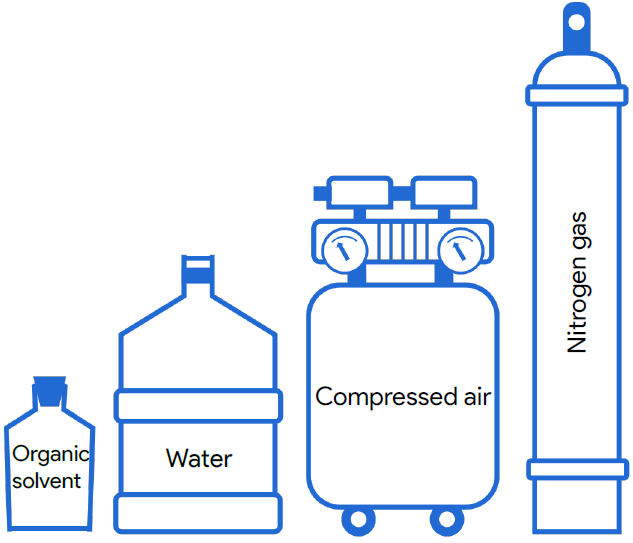
For liquid medium, the following conditions should be satisfied:
- The medium should be pure without impurities.
- The sample dispersed in the medium should not be swollen or shrunk; the medium should be inert to the sample.
- The medium should have good miscibility with the particles; in other words, the surface-wetting effect should be obvious.
- In the presence of the medium, the particles are well dispersed.
- The temperature difference between the medium and the working environment should be as small as possible in order to reduce the possibility of condensation on the sample cell.
The requirements for the gaseous medium are that the medium should be pure, dry, non-toxic, odorless, and cost-effective. The gas pressure should be adjustable up to 4bar normally but occasionally up to 6bar. For friable materials, the pressure may need to be controlled down to 0.5bar.
 |
Struggling to grasp particle analysis concepts? Our new Beginner's Guide to Particle Analysis is here to help you grasp these concepts in the most accessible manner possible. Download it as a PDF to read on the train, on the plane, or wherever else there’s no internet. |

Recommended articles
Rate this article
Share On


Related Particle Size Analyzer
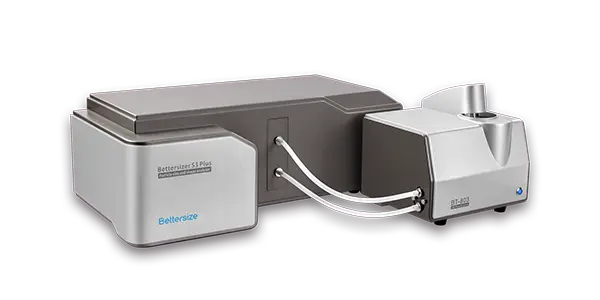
Bettersizer S3 Plus
Laser Diffraction Particle Size Analyzer
Measurement range: 0.01 - 3,500μm (Laser System)
Measurement range: 2 - 3,500μm (Image System)
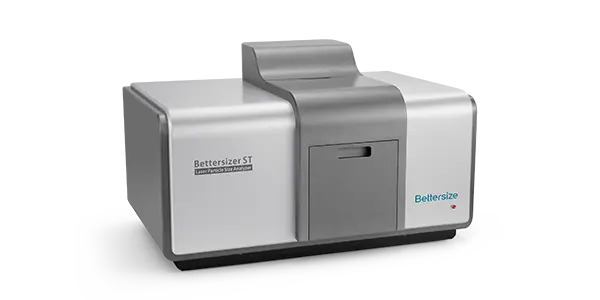
Bettersizer ST
One-stop Particle Size Analyzer
Dispersion type: Wet
Measurement range: 0.1 - 1,000µm
Repeatability: ≤1% variation

Bettersizer 2600
Particle Size Analyzer
Measurement range: 0.02 - 2,600μm (Wet dispersion)
Measurement range: 0.1 - 2,600μm (Dry dispersion)