
Particle Sizing: A Guide to Laser Diffraction
2025-08-12Guidebook
Particle size is a fundamental characteristic influencing the performance of materials across countless applications – from the effectiveness of ZnO in sunscreens to the strength of concrete and even the taste of coffee. Understanding and controlling it is crucial in many industries. That's why laser diffraction particle size analysis has become an indispensable technique for almost every researcher in the field.
Our new "Laser Diffraction Guidebook" is your essential resource to master this powerful analytical method. It's an entry-level guide for operators and particle enthusiasts alike, helping you deepen your understanding of laser diffraction particle size analysis.
Why Laser Diffraction?
The laser diffraction technique stands out due to its wide measurement range, excellent repeatability and accuracy, simple operation, and fast analysis capabilities. It's widely regarded as a leading method for efficient and robust particle size measurements.
What You'll Discover Inside:
This guidebook offers a comprehensive exploration of laser diffraction, covering:
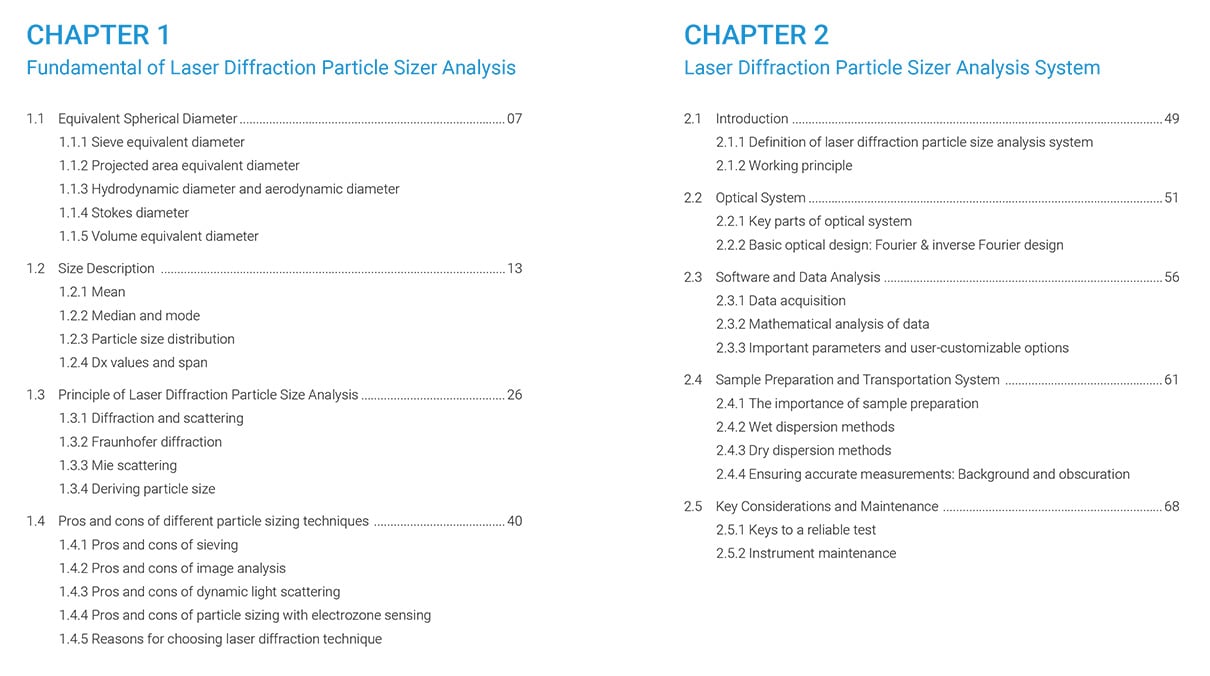
- Fundamental Concepts of Particle Sizing: Delve into various definitions of Equivalent Spherical Diameter (ESD), including sieve, projected area, hydrodynamic, aerodynamic, Stokes, and volume equivalent diameters.
- Describing Particle Size: Learn about different statistical descriptions like mean, median, mode, Dx values, and span, and how to interpret particle size distribution graphs.
- The Core Principle: Understand the interplay of diffraction and scattering, including Fraunhofer and Mie theories, and how particle size is derived from scattering patterns through inverse algorithms.
- Comparing Sizing Techniques: Explore the pros and cons of various particle sizing methods (such as sieving, image analysis, dynamic light scattering, and electrozone sensing), and the compelling reasons for choosing laser diffraction.
- The Laser Diffraction System: Gain insights into the components of a laser diffraction particle size analyzer, including its optical system, software, and sample preparation/transportation systems.
- Achieving Reliable Results: Learn about crucial considerations for accurate measurements, including optimal sample preparation (wet and dry dispersion methods), managing background signals, obscuration levels, and essential instrument maintenance.
Prepare for your measurements with confidence and gain a deeper understanding of the science behind particle size analysis.
DOWNLOAD YOUR FREE GUIDEBOOK (PDF) NOW.
Our Laser Diffraction Analyzers
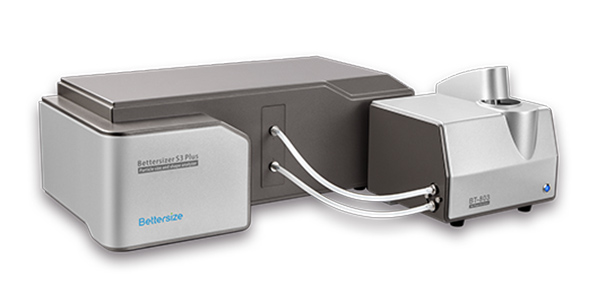
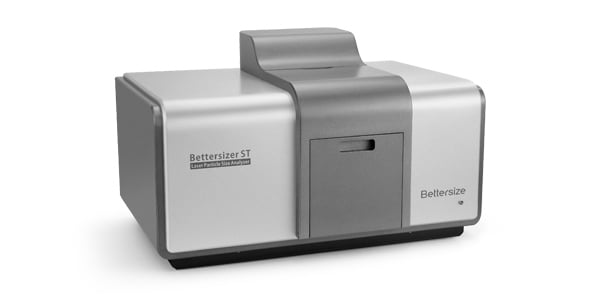
The powerful principles detailed in this guide are at the heart of our Bettersizer series of analyzers, which use laser diffraction technology. This includes the Bettersizer 2600, Bettersizer S3 Plus, and Bettersizer ST.
 |
 |
 |
|
|
|
If you have difficulty selecting the right product for your application, please don't hesitate to contact us. Our experts are ready to help.

About the Authors
 |
Wenjian Zhou Application Scientist @ Bettersize Instruments He authored the content for Chapter 1 and created all the illustrations in this guidebook. |
 |
Weichen Gan Application Scientist @ Bettersize Instruments He authored the content for Chapter 2 in this guidebook. |
LOGIN TO ACCESS EXCLUSIVE CONTENT
More Resources Including
- Application Notes & Collections
- Webinars & Workshops
- Presentations & Videos
- Monthly Newsletters
- Exclusive Events...

Recommended articles
Rate this article