
Improving Suspended Sediment Concentration Measurement Efficiency with the DeepSizer 300
2025-09-28Application Note
Monitor how extreme hydrological events impact sediment transport using DeepSizer 300 for real-time Suspended Sediment Concentration and Particle Size Distribution analysis.
| Product | DeepSizer 300 |
| Industry | |
| Sample | Suspended Sediment |
| Measurement Type | Particle Size, |
| Measurement Technology |
|
Jump to a section:
Introduction
Sediment transport plays a central role in shaping river morphology, influencing reservoir siltation, and affecting ecological conditions. Accurate measurement of suspended sediment concentration (SSC) is therefore essential for flood forecasting, hydraulic engineering, and environmental management.
Suspended sediment concentration (SSC) measurement can be divided into traditional and modern methods. Traditional methods, involving sampling, filtration, drying, and weighing, are accurate but time-consuming, labor-intensive, and unable to provide continuous real-time data. Therefore, modern instruments such as photoelectric, ultrasonic, infrared, and isotope-based sensors have been applied with some success, but the accuracy of these instruments still falls short of standards, and some require station-specific rating curves or extensive data analysis before use, preventing large-scale application.
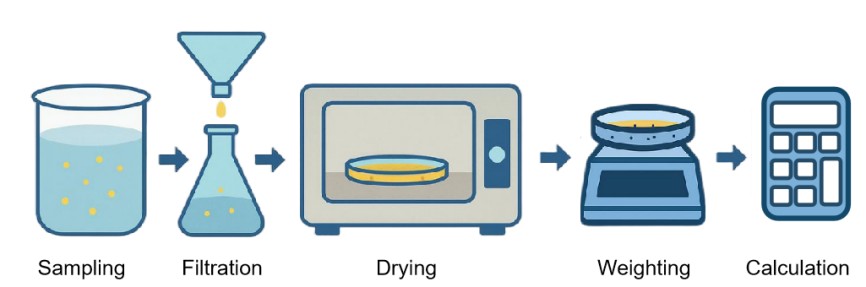
Figure 1. Gravimetric method process
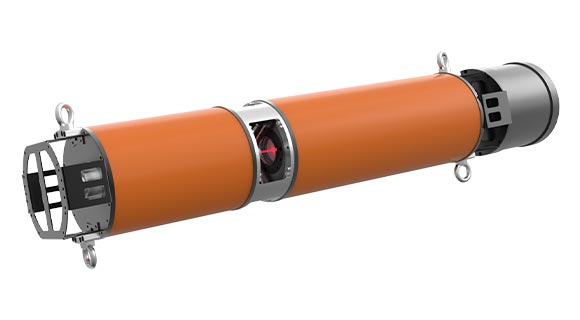
The DeepSizer 300 submersible particle size analyzer enables long-term in-situ monitoring of SSC and particle size distribution without manual sampling. It provides automatic, real-time data, greatly improving monitoring efficiency and supporting high-quality hydrological development.
Theory
The DeepSizer 300 determines suspended sediment concentration (SSC) using the combined extinction–scattering method. First, scattering signals are analyzed to resolve the particle size distribution (PSD). Since light extinction depends not only on sediment concentration but also on particle size, the obtained PSD is incorporated into the extinction analysis. Through this process, the instrument converts optical attenuation into accurate volume concentration and then into mass concentration. In addition to reliable SSC measurements, the scattering signal simultaneously provides particle size distribution, enabling the DeepSizer 300 to output both parameters in real time.
This dual-signal approach enables stable measurements across a wide turbidity range without the need for laborious calibration. Even under floods or rapidly changing conditions, the DeepSizer 300 delivers continuous, real-time data on both suspended sediment concentration and particle size distribution.
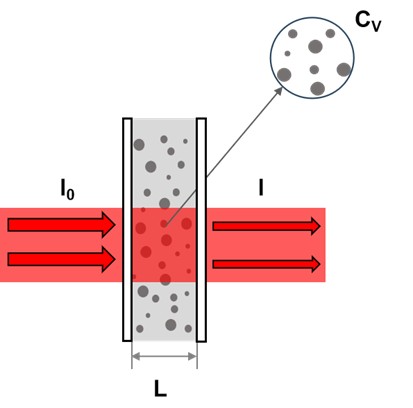
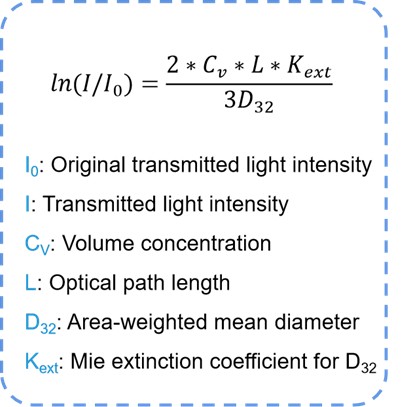
Figure 2. The principle of concentration measurement
Experimental
The DeepSizer 300 submersible laser particle size analyzer was deployed at two hydrological sites.
At the first site, the instrument was suspended beneath a circular buoy at a water depth of 0.5 m. At the second site, the DeepSizer 300 was mounted on a hydrological pump boat at a water depth of 2.2 m.
Concurrently, sediment samples were collected at the same depth beside the instrument using a 1000 mL horizontal sampler. A total of 36 samples were collected at the first site and 38 samples at the second site. Suspended sediment concentration (SSC) was determined by the gravimetric method and compared with the instrument measurements.
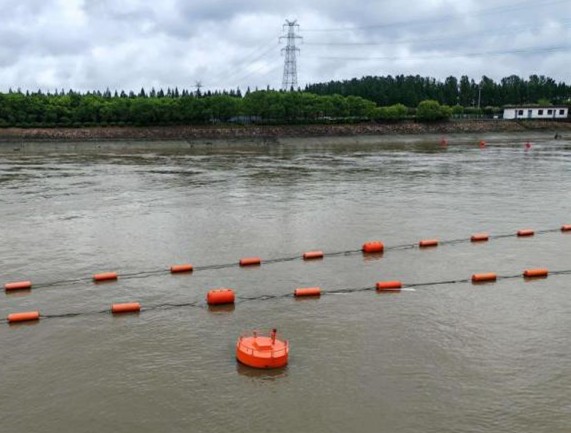
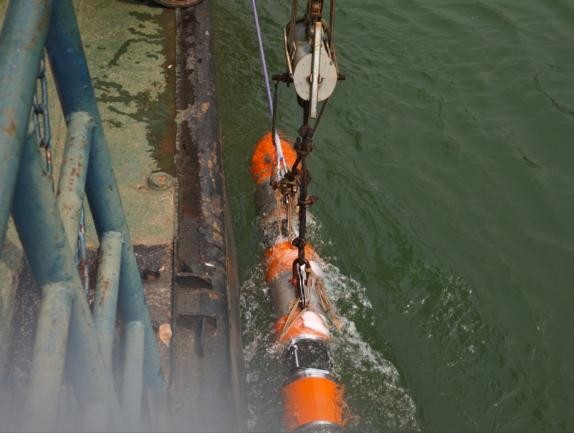
Figure 3. Deployment of DeepSizer 300 (Left: First site; Right: Second site)
Results and Discussion
At both hydrological sites, the suspended sediment concentration (SSC) measured by the DeepSizer 300 showed good agreement with values obtained from the gravimetric method.
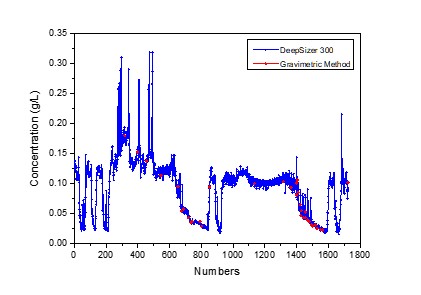
Figure 4. Gravimetric Method vs. DeepSizer 300 Measurements (first site)
Figure 4 shows that the SSC results from the DeepSizer 300 are highly consistent with those obtained by the gravimetric method. Meanwhile, at the first site, the DeepSizer 300 provided continuous SSC measurements. The results clearly show temporal fluctuations, with several rapid peaks exceeding 0.3 g/L. In contrast, the gravimetric method, limited to discrete sampling, only reflects the general trend and misses these short-lived events.
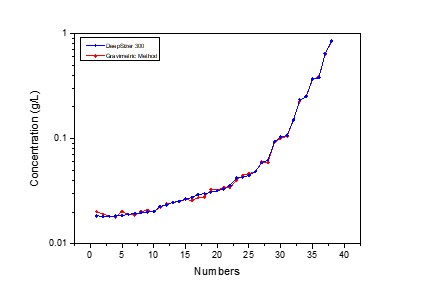
Figure 5. Gravimetric Method vs. DeepSizer 300 Measurements (second site)
Figure 5 compares suspended sediment concentrations (SSC) obtained from the DeepSizer 300 with those measured by the gravimetric method. Across all 38 samples, the two datasets exhibit strong agreement over a broad concentration range (0.01–1 g/L). Both curves follow nearly identical trends, with minimal deviation between the two methods.
These findings confirm that the DeepSizer 300 can accurately reproduce SSC values obtained by the traditional gravimetric method while offering the added advantage of real-time, automated monitoring. The close correspondence between the two methods validates the instrument’s applicability for continuous field measurements, providing a robust alternative to labor-intensive manual sampling.
Conclusion
This application note demonstrates that the DeepSizer 300 provides suspended sediment concentration (SSC) measurements that are highly consistent with the standard gravimetric method across two hydrological sites. Beyond accuracy, the instrument offers continuous, high-resolution monitoring that captures short-lived sediment fluctuations often missed by discrete sampling. These capabilities make the DeepSizer 300 a reliable and efficient tool for sediment monitoring in dynamic environments, supporting flood forecasting, hydraulic engineering, and environmental management.
About the Authors
 |
Zhichao Han |
|
DeepSizer 300 Your Essential Tool for Sediment Insight
|
|
LOGIN TO ACCESS EXCLUSIVE CONTENT
More Resources Including
- Application Notes & Collections
- Webinars & Workshops
- Presentations & Videos
- Monthly Newsletters
- Exclusive Events...

Recommended articles
Rate this article