
Evaluating Water-Soluble Chitosan Molecular Weight with the BeSEC
2026-01-14Application Note
Abstract: Chitosan molecular weight plays a critical role in determining its functional performance across food, pharmaceutical, and environmental applications. In this study, size-exclusion chromatography coupled with static light scattering and refractive index detection was used to evaluate the absolute molecular weight and distribution of water-soluble chitosan, providing detailed insight into sample heterogeneity and polymer chain distribution.
Keywords: Chitosan, Absolute molecular weight, Polymer molecular weight distribution, Size-exclusion chromatography (SEC), Static Light scattering, Biopolymer characterization
| Product | BeSEC |
| Industry |
Pharmaceutical, Food Analysis |
| Sample | Water-soluble chitosan (polysaccharide) |
| Measurement Type | Molecular weight analysis |
| Measurement Technology |
Size-Exclusion Chromatography (SEC)
|
Introduction
-
Food: Chitosan forms protective films to slow microbial growth and extends shelf life. It also acts as a thickener or emulsifier that improves flow and stability.
-
Pharmaceuticals: Chitosan’s biocompatibility and biodegradability make it suitable for drug carriers, sustained-release systems, and wound dressings with hemostatic and antibacterial properties.
-
Water Treatment: Chitosan functions as a flocculant for contaminant removal.
-
Agriculture: Chitosan serves as a seed coating to enhance germination and disease resistance.
-
Low molecular weight: dissolves easily, producing low viscosity solutions, and penetrates membranes more readily, often linked to stronger antimicrobial or antitumor activity.
-
High molecular weight: creates viscous solutions, forms stable gels and scaffolds for tissue engineering, and offers higher adsorption capacity for metals and organics, albeit with slower kinetics.
Experimental Section
-
Detector: Light Scattering (LS) + Refractive Index (RI)
-
Column: Shodex Ohpak LB-806M
-
Mobile phase: Water with 0.2M NaNO3
-
Flow rate: 0.7 mL/min
-
Injection volume: 100 μL
-
Column temperature: 40 °C
-
dn/dc: 0.129 mL/g
Results and Discussion
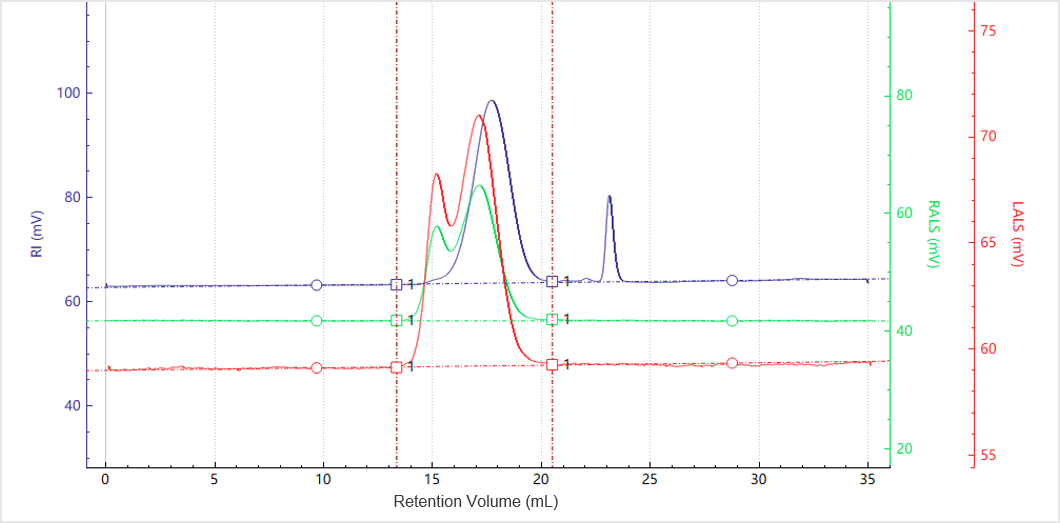
Figure 1. Elution profiles of the multi-detector signals for Chitosan
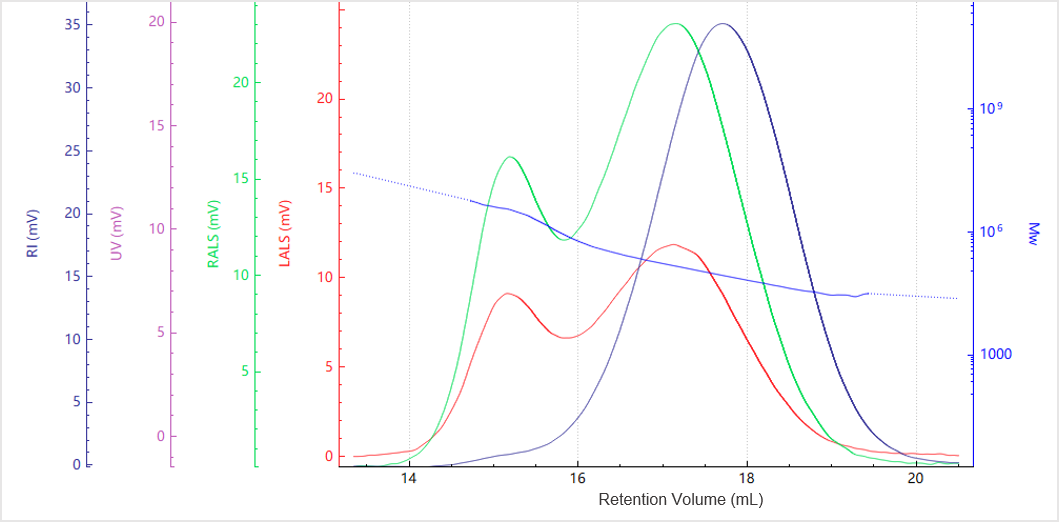
Figure 2. Elution profile of the molecular weight for Chitosan
| Sample | Mn (Da) | Mw (Da) | Mz (Da) |
| Chitosan |
71,254 |
181,663 | 3,266,638 |
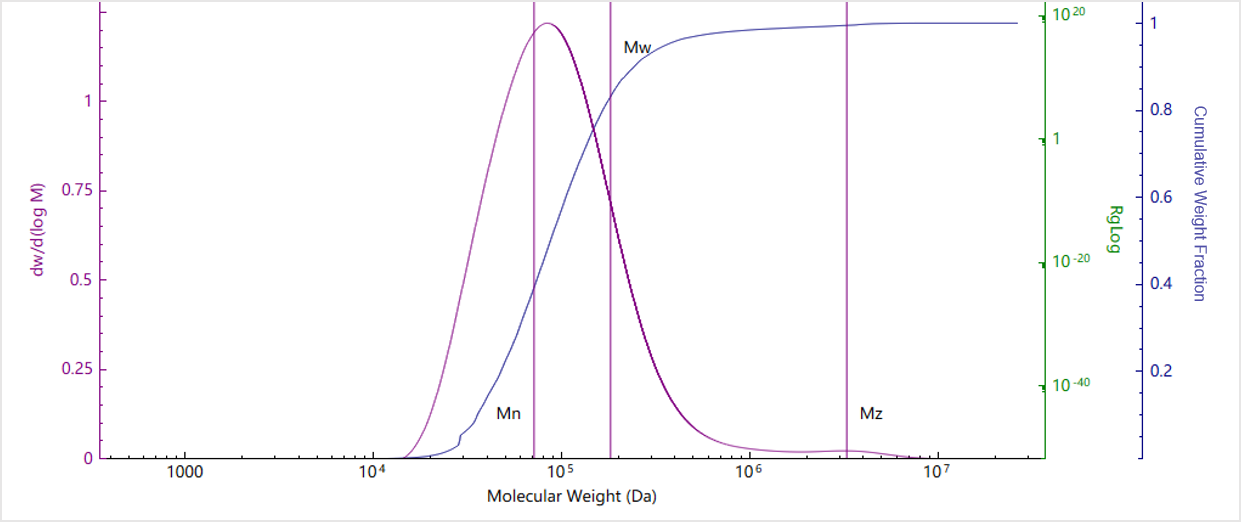
Figure 3. Molecular weight distribution of Chitosan
Conclusion
About the Authors
 |
Zhibin Guo |
BeSECAdvanced Light Scattering Detector
|
 |
LOGIN TO ACCESS EXCLUSIVE CONTENT
More Resources Including
- Application Notes & Collections
- Webinars & Workshops
- Presentations & Videos
- Monthly Newsletters
- Exclusive Events...

Recommended articles
Rate this article