
AI-Assisted Stability Analysis of Oil Dispersion Formulations Using BeScan Lab+
2026-06-23Application Note
Abstract: Oil dispersion (OD) formulations are widely used in agrochemical applications but often suffer from sedimentation, aggregation, and phase separation during storage. This study demonstrates the use of BeScan Lab+ based on Static Multiple Light Scattering (SMLS) combined with AI-assisted analysis to identify instability mechanisms and guide formulation optimization. The optimized formulation exhibited significantly improved stability, validating the effectiveness of AI-driven formulation development and stability assessment.
Keywords: Oil Dispersion (OD), Formulation Stability, Static Multiple Light Scattering (SMLS), AI-Assisted Analysis, Sedimentation, Aggregation, Agrochemical Formulations, BeScan Lab+, Stability Optimization
| Product | BeScan Lab+ |
| Industry | Agrochemical Analysis |
| Sample | Oil dispersion |
| Measurement Type | Stability |
| Measurement Technology | Static Multiple Light Scattering (SMLS) |
Introduction
Oil dispersion (OD) systems are widely used in modern agrochemical products due to their ability to deliver high active ingredient loadings while minimizing dust formation, reducing solvent usage, and improving adhesion to plant surfaces. These systems are particularly well-suited for polar, crystallization-prone active ingredients such as chlorantraniliprole and flubendiamide, which are often combined to improve efficacy against lepidopteran pests.
Despite these advantages, OD formulations present significant stability challenges. They are susceptible to sedimentation, particle aggregation, and long-term storage instability. These issues are especially pronounced in multi-active systems where differences in polarity between active ingredients can induce heterogeneous flocculation and phase separation.
Traditional visual inspection methods are often insufficient for detecting early-stage instability, particularly in opaque or highly concentrated systems. BeScan Lab+, based on Static Multiple Light Scattering (SMLS) technology, enables non-destructive and quantitative monitoring of particle migration and aggregation across the full sample height. When combined with AI-assisted analysis, this approach not only identifies destabilization mechanisms but also provides actionable recommendations for formulation optimization.
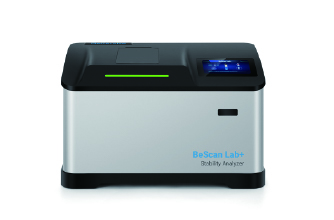
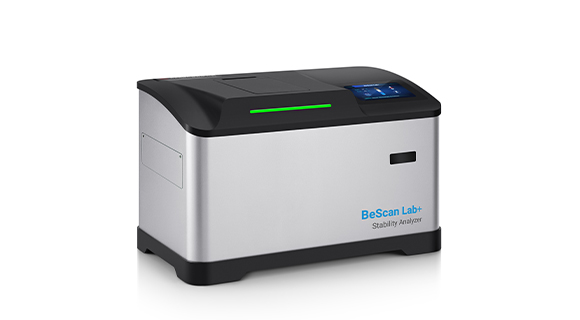
Figure 1. BeScan Lab+ stability analyzer
Materials and Methods
A model compound OD formulation containing 3.5% chlorantraniliprole and 4.5% flubendiamide was prepared using a proprietary stabilizing system consisting of an oil phase, dispersants, and rheological modifiers.
The formulation was analyzed using a BeScan Lab+ instrument at 25 °C, with a scanning interval of 6 min over a total duration of 2 h and 40 min. Backscattering (BS) signals were recorded continuously over the entire sample height to monitor particle migration and structural evolution.
An integrated AI-assisted analysis module was applied to interpret the temporal evolution of BS signals, diagnose instability mechanisms, and recommend targeted formulation improvements. Based on these recommendations, an optimized formulation was developed and tested under identical experimental conditions for comparison
Results and Discussion
Original Formulation
The original formulation exhibited clear signs of instability (Figure 2). Backscattering profiles revealed significant sedimentation and particle aggregation over time. Specifically, the lower region showed a marked increase in BS intensity, while the middle and upper regions exhibited a corresponding decrease. This pattern indicates downward particle migration and accumulation at the bottom of the sample (Figure 3).
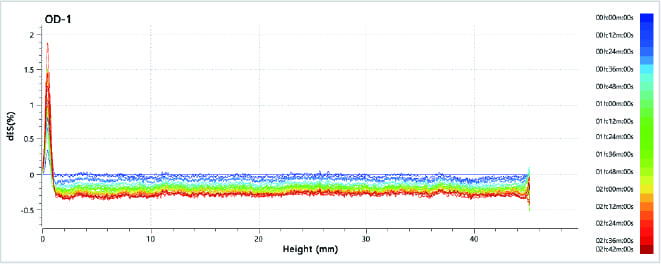 Figure 2. Backscattering profiles of the original formulation (dBS vs. height vs. time)
AI-assisted interpretation identified the primary instability mechanisms as:
- Polarity mismatch between chlorantraniliprole and flubendiamide, leading to heterogeneous flocculation.
- Insufficient viscosity of the oil phase, reducing the system’s ability to suspend dispersed particles.
- Density differences between the dispersed phase and the continuous phase, promoting gravitational sedimentation.
Based on these findings, the AI system recommended targeted optimization strategies, including:
- Optimization of dispersant polarity to better match the active ingredients.
- Enhancement of thixotropic structuring to increase viscosity and suspend particles.
- Adjustment of particle size distribution to reduce sedimentation kinetics.
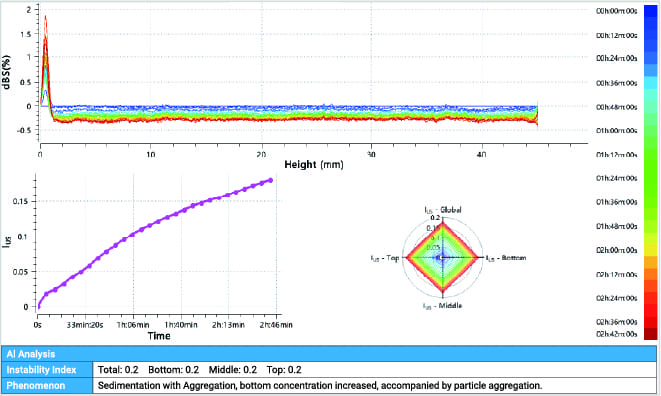
Figure 3. AI evaluation of the instability kinetics and mechanisms for the original formulation
Optimized Formulation
Following the implementation of the recommended modifications–particularly the use of a more suitable polar dispersant – the optimized formulation demonstrated significantly improved stability.
Backscattering profiles remained uniform across the entire sample height, with negligible sedimentation, phase separation, or aggregation throughout the test period (Figure 4). The Instability Index (IUS) evolved only minimally over time, indicating a stable and homogeneous particle distribution (Figure 4).
AI-assisted evaluation confirmed that the optimized formulation achieved a stable dispersion state, validating the effectiveness of the implemented formulation strategies.
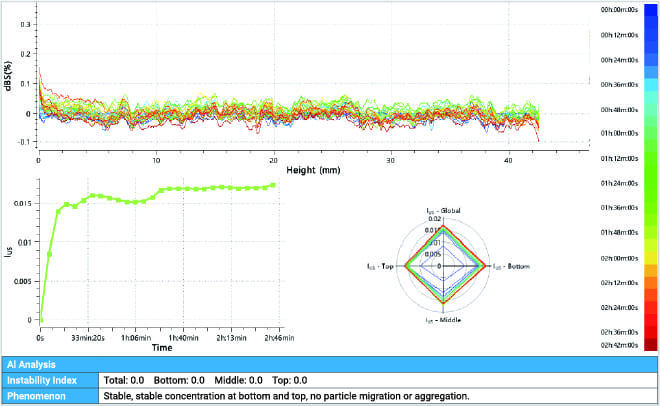
Figure 4. AI evaluation confirming the stability of the optimized formulation
Conclusion
The combination of BeScan Lab+ SMLS technology and AI-assisted analysis provides a powerful platform for rapid and quantitative stability assessment of complex OD formulations.
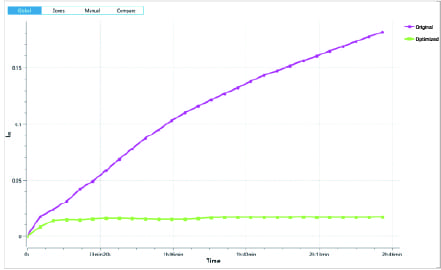
Figure 5: Comparison of IUS values (Original vs. Optimized)
In this study, the approach successfully identified sedimentation and aggregation issues in a chlorantraniliprole–flubendiamide system and guided the development of a significantly more stable optimized formulation, as clearly demonstrated by the comparative IUS profiles (Figure 5).
This methodology enables efficient screening, mechanismbased troubleshooting, and formulation optimization, making it highly suitable for pesticide OD development, stability evaluation, and quality control. By accelerating decision-making and reducing reliance on trial-and-error methods, it offers substantial benefits for improving R&D efficiency and ensuring product performance in industrial applications.
About the Author
 |
Alia Yan Application Engineer @ Bettersize Instruments |
|
BeScan Lab+ Stability Analyzer
|
|
LOGIN TO ACCESS EXCLUSIVE CONTENT
More Resources Including
- Application Notes & Collections
- Webinars & Workshops
- Presentations & Videos
- Monthly Newsletters
- Exclusive Events...

Recommended articles
Rate this article