Particle Image Analysis for Irregular Particles: From Aspect Ratio to Circularity
2026-05-20News
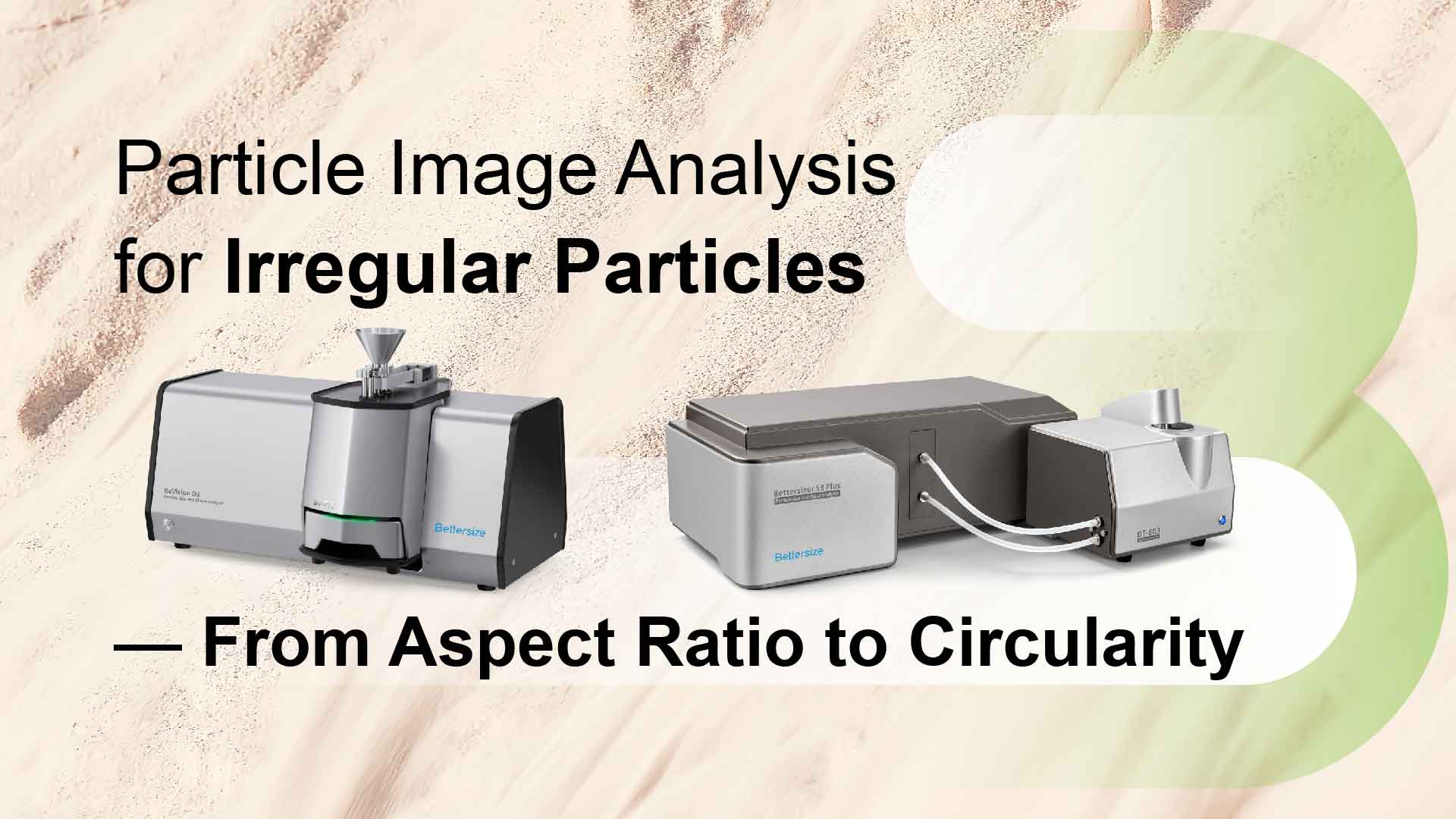
At first glance, many particle systems appear deceptively simple, reduced to neat distributions and single-number descriptors. Beneath this apparent order, however, lies a far more complex reality. Most materials are composed not of ideal spheres, but irregular forms, elongated, jagged, and plate-like structures that interact in unpredictable ways. Techniques like laser diffraction impose spherical assumptions for efficiency, overlooking geometric diversity. The result is a gap between measurement and behavior, one that particle image analysis is uniquely positioned to close.
Particle Image Analysis: High-Resolution Morphological Capture
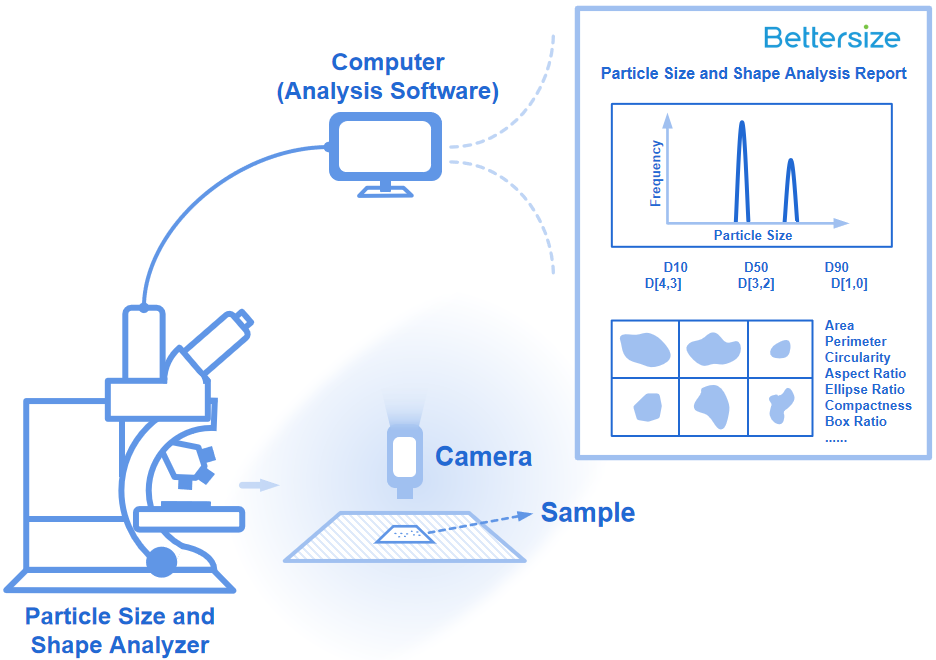
Particle image analysis enables direct observation of morphology by combining high-speed imaging with advanced computational algorithms. Instead of inferring shape indirectly, particle image analysis captures 2D projections of individual particles using high-resolution sensors. Once acquired, each image becomes a source of measurable data, allowing parameters like length, width, perimeter, and projected area to be calculated with precision.
Static vs. Dynamic Image Analysis
Modern particle image analysis systems typically operate using two complementary approaches to characterize particle morphology:
Static Image Analysis
In static image analysis, particles immobilized on a sample substrate remain stationary, allowing for highly detailed imaging under controlled conditions that minimize motion and enhance image clarity.
It is particularly effective for:
● Research and development
● High-resolution morphological evaluation
● Microscopic documentation.
Dynamic Image Analysis (DIA)
Here, dispersed particles pass individually through an illuminated optical measurement zone, where high-speed imaging records large numbers of particles for rapid, high-throughput analysis.
DIA supports:
● Rapid measurement of thousands of particles within seconds
● Strong statistical reliability enabled by large particle populations
● Representative sampling of bulk materials.
Together, these techniques make it possible to study individual particles in detail while also capturing the broader characteristics of entire material samples.
Aspect Ratio as a Predictor of Performance
Aspect ratio is a core shape descriptor in particle image analysis, expressed as the ratio of a particle's minimum to maximum dimension. Values near 1 indicate spherical forms, whereas decreasing values reflect increasing elongation.
Why Aspect Ratio Matters
Changes in aspect ratio often translate directly into changes in material performance:
● Pharmaceuticals- elongated particle shapes promote interlocking, reducing flowability and introducing variability during tablet formation
● Energy storage- irregular particle shapes can disrupt coating uniformity in electrode manufacturing, affecting overall electrochemical device performance.
The Importance of Statistical Depth
A key strength of particle image analysis lies in its ability to process large datasets. Rather than relying on averages alone, it reveals distribution characteristics that impact performance, including distribution width, skewness, kurtosis, and outlier populations. This level of statistical data allows subtle but significant variations within a sample to be identified and linked to material behavior. When considered across the full particle population, aspect ratio offers greater insight into how particle shape relates to material performance.
Circularity: Quantifying Surface Friction and Packing Efficiency
Circularity describes how closely a particle's projected shape resembles a perfect circle. Derived from area and perimeter, higher values indicate smooth, rounded forms, while lower values correspond to irregular or jagged geometries.
Shape, Friction, and Flow
Insights from particle image analysis show clear relationships between circularity and material behavior:
● Lower circularity is typically associated with more angular shapes, which can increase inter-particle friction.
● Higher circularity generally contributes to more uniform particle interactions and can improve flowability.
These effects are especially relevant to:
● Additive Manufacturing- poor circularity can hinder powder spreading, increasing the likelihood of defects in printed components
● Chemical Processing- angular shapes may enhance reactive surface area but also increase viscosity, complicating mixing and transport.
The Bettersize Portfolio
At Bettersize Instruments, particle image analysis is combined with laser diffraction and dynamic measurement technologies to provide integrated characterization of both size and shape. This enables users to link morphological parameters directly with particle size distributions for a more informed analysis.
Bettersizer S3 Plus 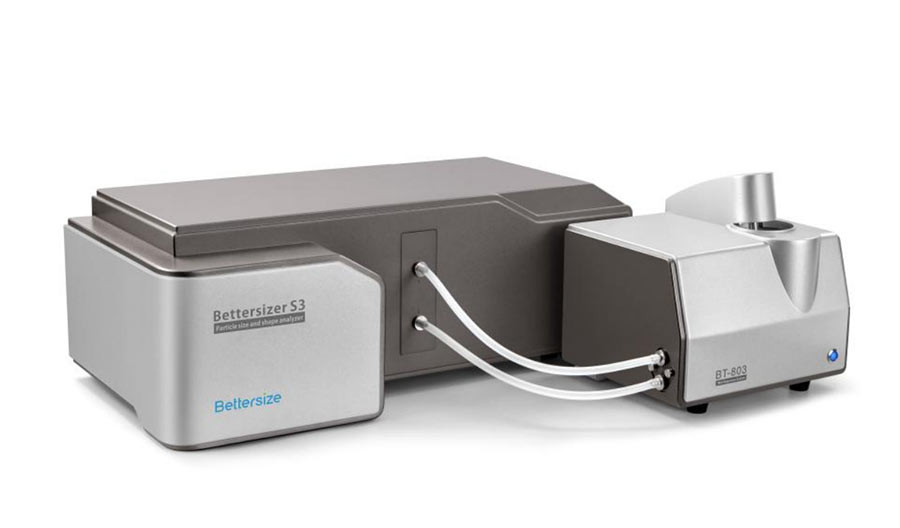
The Bettersizer S3 Plus merges laser diffraction with dynamic particle image analysis in a single system to deliver:
● Accurate particle size distribution measurement
● Simultaneous visualization of morphology
● Direct correlation between size and shape.
The outcome is a more complete material profile, supporting improved process optimization and product consistency.
BeVision Series 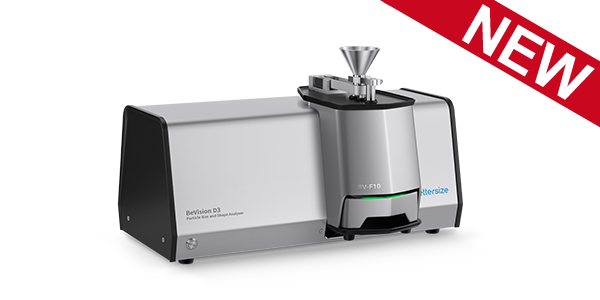
Particle image analysis can be applied across a wider range of workflows through the BeVision series:
● BeVision D3- designed for dry powders, it enables the rapid measurement of large particle populations, ensuring statistically meaningful results.
● BeVision M1- focused on static imaging, it offers maximum resolution for detailed morphological analysis and documentation.
Analytical Software Integration
Beyond data acquisition, meaningful analysis depends on how particle size distributions and morphological data are processed, analyzed, and linked to material performance. Bettersize software converts particle image analysis data into quantifiable insights. More than 20 morphological parameters can be extracted for each particle, including aspect ratio, circularity, convexity, and Feret diameters. The compiled morphological dataset provides a detailed digital representation of the sample, allowing for direct comparison and reliable quality control.
Enhance your Analysis with Bettersize Instruments
Bettersize Instruments offers advanced solutions for integrated particle size and shape characterization. Contact us for further information about how the Bettersizer S3 Plus and BeVision series can support more informed decision-making and enhance your material processes.
Rate this article
Share On


Recent News