How the BeNano Nanoparticle Analyzer Empowered Nobel-Winning Research
2026-03-24News
How the BeNano Nanoparticle Analyzer Empowered Nobel-Winning Research

The 2025 Nobel Prize in Chemistry recognized Susumu Kitagawa, Richard Robson, and Omar M. Yaghi for pioneering work on Metal-Organic Frameworks (MOFs). Often described as “designer sponges,” MOFs are crystalline materials engineered with atomic precision, capable of selectively capturing gases, hosting drugs, or catalyzing reactions within well-defined pores.
Translating MOFs from conceptual frameworks into deployable technologies for carbon capture, catalysis, or drug delivery requires rigorous, quantitative validation. Particle size, surface charge, dispersion stability, and aggregation behavior ultimately determine whether a MOF performs reliably outside the laboratory.
This same analytical discipline now underpins progress in a seemingly different domain: serum proteins. While MOFs represent engineered precision at the molecular level, proteins such as Human Serum Albumin (HSA) and Bovine Serum Albumin (BSA) form the biological foundation of modern biopharmaceuticals. In both cases, theory must be anchored by data.
Whether characterizing a Bio-MOF for targeted drug delivery or ensuring the stability of a therapeutic protein, researchers increasingly rely on complementary tools such as BeNano and BeSEC to convert visionary ideas into measurable realities.
Case Study: BeNano and the Bio-MOF Breakthrough
One interesting example comes from research into Bio-MOF systems functionalized with polydopamine for targeted drug delivery. These hybrid structures aim to combine the high loading capacity of MOFs with the biocompatibility and surface chemistry required for controlled release.
In this work, the analytical objective extended beyond synthesis. Researchers needed to confirm that the drug payload was successfully incorporated and that the resulting nanoparticles remained stable under physiological conditions.
Zeta potential measurements played a central role. By tracking shifts in surface charge, the BeNano confirmed successful loading of doxorubicin (DOX) onto the Bio-MOF/polydopamine system. These shifts provided direct evidence of surface modification and electrostatic interaction between carrier and drug.
Dynamic Light Scattering (DLS) complemented this insight by monitoring hydrodynamic size over time. Measurements conducted over 72 hours in biologically relevant media such as fetal bovine serum (FBS) and phosphate-buffered saline (PBS) demonstrated that the particle size remained stable, indicating resistance to aggregation or premature degradation.
Together, these measurements ensured that the delivery system was not only conceptually innovative, but also controllable, reproducible, and suitable for medical application.
The New Frontier: High-Resolution Protein Characterization
The same analytical rigor is now being applied to serum proteins, which play critical roles in clinical research, drug transport, and formulation stability. HSA and BSA are among the most abundant and well-studied proteins, yet their behavior remains highly sensitive to environmental conditions.
Changes in concentration, ionic strength, or buffer composition can alter intermolecular interactions, promote aggregation, and compromise biological activity. For pharmaceutical development, detecting these changes early is essential for ensuring safety and efficacy.
To address this challenge, researchers increasingly combine two complementary analytical approaches: separation-based analysis with BeSEC and ensemble-based analysis with BeNano. Each answers a different, but equally important, scientific question.
Resolving Protein Species with BeSEC
When the goal is to identify which species are present, separation is indispensable. The BeSEC LS2 detector integrates Light Scattering with Size Exclusion Chromatography to deliver absolute molecular weight distributions across an elution profile.
Using detection angles of 90° and 7°, the system calculates molecular weight directly from scattering intensity, independent of column calibration standards or retention time assumptions.
Applied to HSA samples, this approach reveals clear separation between monomeric protein at approximately 68 kDa and higher-order aggregates such as dimers, trimers, and tetramers. Rather than inferring aggregation from peak broadening, researchers can quantify each species explicitly.
In representative analyses, the HSA monomer accounted for roughly 77% of the total protein content, while the remaining fraction consisted of defined aggregated states. This level of resolution transforms aggregation from a qualitative observation into a traceable, quantitative parameter.
Profiling Environmental Stability with BeNano (DLS, ELS, SLS)
Not all questions require physical separation. When researchers seek to understand how proteins respond to their environment, ensemble measurements provide a faster and more holistic view.
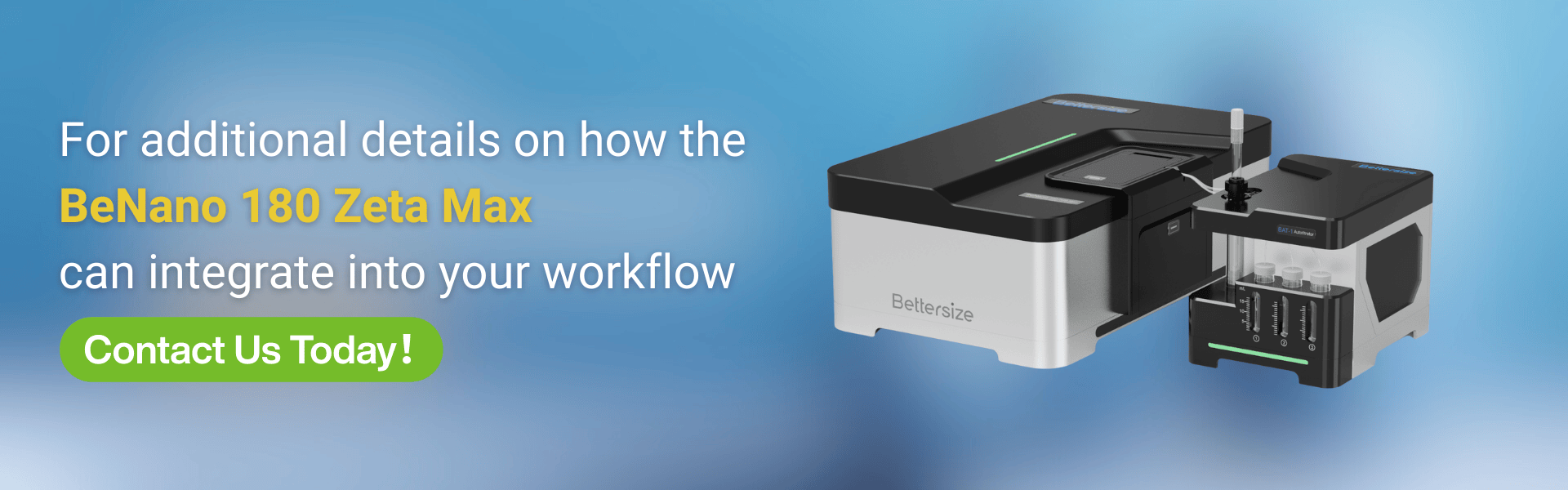
The BeNano 180 Zeta Max integrates Dynamic Light Scattering, Electrophoretic Light Scattering, and Static Light Scattering within a single platform. This combination enables simultaneous evaluation of particle size, surface charge, intermolecular interactions, and bulk molecular weight.
In studies of BSA, this approach has been used to investigate the influence of salt concentration on solution stability. As protein concentration increased, measured hydrodynamic size decreased, a counterintuitive but well-understood consequence of rising electrostatic repulsion.
Zeta potential measurements quantified these electrostatic effects directly, while calculation of the interaction parameter (kD) provided deeper insight into protein–protein interactions. Across the tested conditions, 20 mM sodium chloride produced the most stable balance between repulsion and screening.
Static Light Scattering further validated these findings by delivering an average molecular weight for the entire sample. Notably, these ensemble values showed excellent agreement with molecular weights obtained through chromatographic separation, reinforcing confidence in the analytical approach.
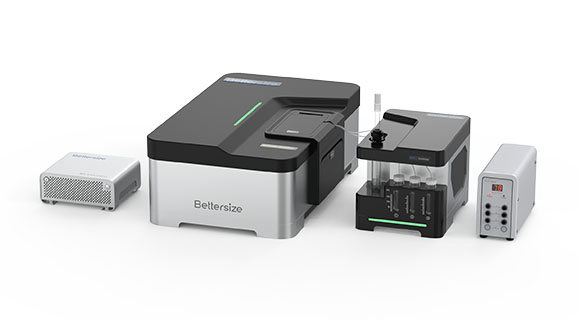
Explore the BeNano Series of nanoparticle analyzers here
Making Your Breakthrough Verifiable
From Nobel Prize–recognized MOF research to the stabilization of vital serum proteins, modern science advances on measurements that are both precise and trustworthy. Vision alone is not enough; progress depends on data that can stand up to scrutiny.
Bettersize provides researchers with the high-resolution tools required to validate complex systems and translate innovation into application.
References
- Shasha Yang, Zhihuan Zhao, Yiliang Xie, Jianying Lin, Bing Zhang, Jimin Fan,Engineering Bio-MOF/polydopamine as a biocompatible targeted theranostic system for synergistic multi-drug chemo-photothermal therapy,International Journal of Pharmaceutics, Volume 623, 2022, 121912, ISSN 0378-5173, https://doi.org/10.1016/j.ijpharm.2022.121912.
Rate this article
Share On


Recent News