BeNano’s Approach to PFAS at Toho University
2026-01-22News
In the field of materials science, per- and polyfluoroalkyl substances (PFAS) are a class of compounds recognized for their chemical stability. Their use across a wide range of applications has led to their detection in various environmental and biological contexts worldwide. Accordingly, PFAS have become an area of active interest in environmental and materials research.
At the Konno Laboratory within Toho University's Department of Environmental Science, researchers have initiated a sophisticated research initiative. Rather than attempting to break these indestructible bonds through brute force, the team led by Associate Professor Hiroki Konno has developed an innovative strategy: engineering molecular traps at the nanoscale. Their approach centers on deliberately designing imperfections in advanced materials to capture and remove PFAS. Critical to validating this strategy is their use of the BeNano 180 Zeta nanoparticle analyzer, an instrument that provides essential data to transform theoretical concepts into viable purification technologies.
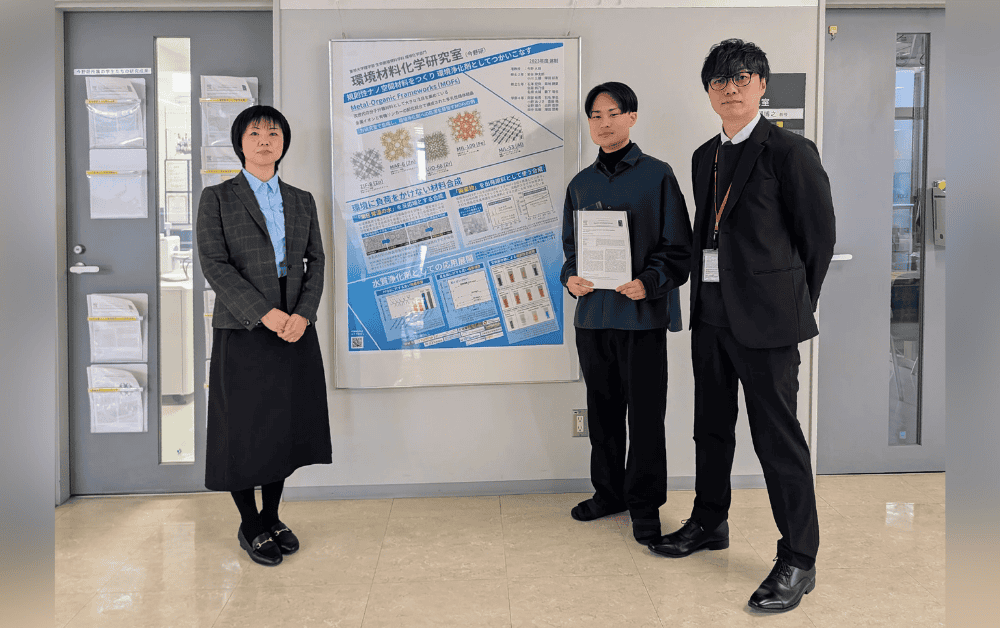
From right to left: Hiroki Konno (Associate Professor), Mr. Okawa (M1 Student), and Ms. Tanikawa (Sanyo Technos Co., Ltd.)
This groundbreaking research, accepted for publication in the high-impact journal Separation and Purification Technology, demonstrates how precise nanoparticle characterization enables new solutions for addressing PFAS.
Read the original article here: External link
Scientific Breakthrough: Engineering Defects to Trap PFAS
At the forefront of this research is Associate Professor Hiroki Konno and his team, whose innovative approach focuses on metal-organic frameworks (MOFs). These are highly porous, crystalline nanomaterials with exceptional surface areas—some exceeding 6,000 square meters per gram—making them theoretically ideal for contaminant capture.
The Toho University team's breakthrough involves deliberately engineering defect sites within the crystalline structure of a specific MOF called UiO-66. Rather than trying to create perfect crystals, the researchers introduce controlled imperfections that create tailored binding pockets specifically designed to capture PFAS molecules more effectively.
"Our work represents a paradigm shift from simply using materials as we find them to actively redesigning them at the molecular level," explains Associate Professor Konno. "By strategically designing defects in the MOF structure, we can create adsorption sites with enhanced affinity and selectivity for specific PFAS compounds."
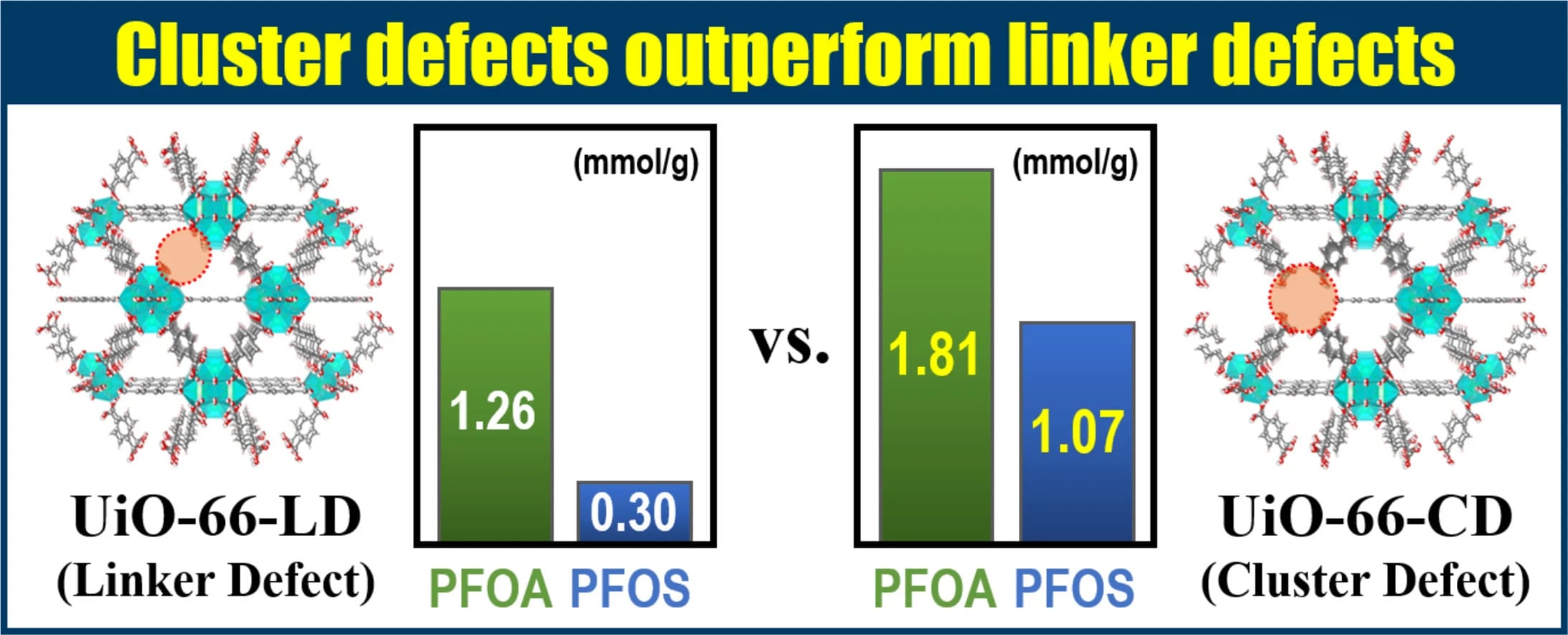
Cluster Defects Outperform Linker Defects
Introduction and Selection of BeNano 180 Zeta
Until now, the Konno Laboratory had instruments capable of measuring the particle size of relatively large particles; however, no instrumentation had been introduced for evaluating particles in the nanoparticle size range.
In this study, which focused on metal–organic framework (MOF) materials such as UiO-66, it was necessary to obtain a more detailed understanding of surface properties, requiring nanoparticle size and zeta potential measurements.
During the instrument selection process, products from other manufacturers based on the same measurement principles were also considered. However, after a comprehensive comparison of factors including:
- Technical specifications, such as support for a 180-degree detection angle
- Cost-performance balance within the available research budget
The laboratory concluded that BeNano 180 Zeta, manufactured by Bettersize, was better suited to the measurement requirements of the study. The key factor leading to the decision was the ability to reliably perform the required nanoparticle and zeta potential evaluations within a limited budget.
Key On-site Considerations During the Evaluation and Selection Process (Associate Professor Konno)
When considering the introduction of the instrument, we evaluated not only the specifications and price, but also the post-purchase maintenance and support system. Although we also received explanations of products from other manufacturers, we ultimately felt that purchasing from Sanyo Technos (formerly Sanyo Trading—Bettersize’s distributor in Japan)—with whom we had an established business relationship—provided a greater sense of reassurance.
Prior to installation, demonstration measurements were arranged promptly, allowing us to verify measurement results using our actual samples. In addition, clear explanations were provided regarding after-sales support, which gave us confidence that the instrument would be suitable for research applications.
We also felt that a continuous and stable partnership existed between Sanyo Technos and Bettersize, leading us to conclude that the instrument could be trusted for long-term use.
In our current research environment, we do not judge the quality of an instrument solely based on its country of manufacture (domestic or overseas). After observing the instrument firsthand and conducting demonstration measurements, we found that BeNano was more suitable in terms of performance, ease of use, and cost. Furthermore, BeNano offers a comprehensive product lineup, allowing us to select a model that matches our research requirements and budget, which further contributed to our confidence during the introduction process.
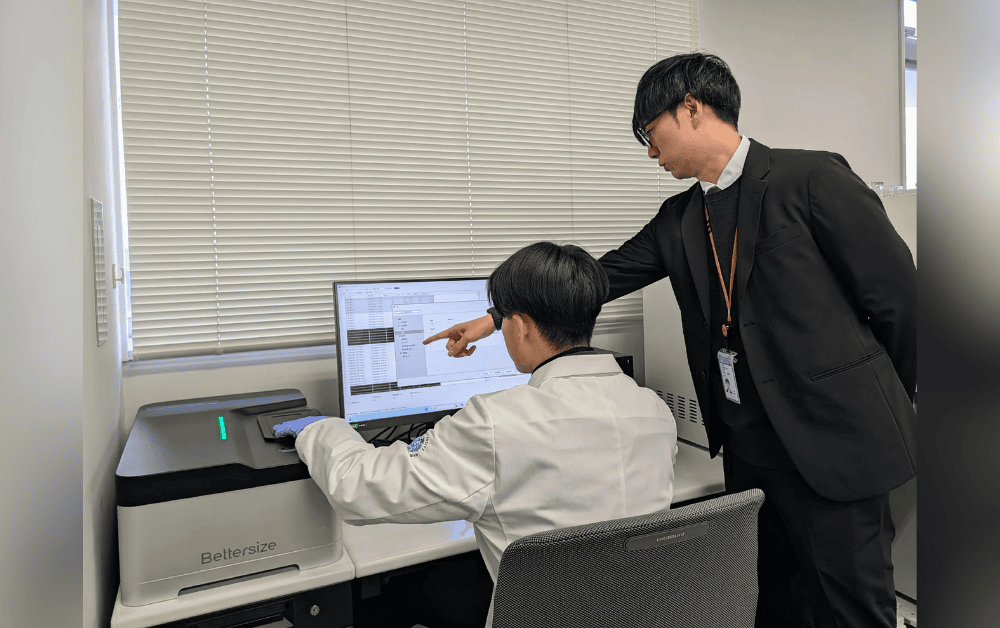
Prof. Konno and Mr. Taiga Working at BeNano 180 Zeta
The Hands-on Usage
Measurements with BeNano 180 Zeta can be performed through a simple operation: placing the sample into the cell and pressing the instrument button. This makes it a highly user-friendly instrument in the research environment. In addition, the instrument demonstrated high measurement reproducibility. Even in multiple measurements under varying conditions and comparative experiments, stable and reliable data acquisition was achieved.
In this study, measurements were primarily conducted by students. However, thanks to the clear and intuitive operating procedures, which do not require extensive training or experience, BeNano was able to be used routinely and without difficulty within the laboratory. During operation, there was one occasion when an inquiry was made to Sanyo Technos, and the issue was resolved promptly due to their quick response. As a result, the measurement and research workflow proceeded smoothly without interruption, allowing the study to progress efficiently overall.
At present, BeNano 180 Zeta is mainly used for zeta potential measurements, and the research group also plans to further utilize it for particle size measurements in the future.
Key Impressions from Hands-on Use of the Instrument (Mr. Taiga)
Although the laboratory routinely uses a variety of measurement instruments, BeNano stood out as being particularly easy to handle. When explaining the operating procedures to junior students, a single explanation was sufficient for them to understand, which proved to be a significant advantage in daily laboratory operations. There were no issues regarding measurement reproducibility. As long as proper care was taken in preparing dispersion solutions and sample pretreatment—such as ensuring sufficient dispersion through ultrasonic treatment—highly reproducible measurement results were obtained.
The user interface and display were intuitive and natural in Japanese, and the simplified user manual was easy to understand, resulting in very few instances of confusion during operation.
Another notable point was that measurements could be started on the very day the instrument was delivered. While some measurement instruments require considerable time for initial setup and calibration, BeNano involved minimal preparation and could be quickly put to use in research activities.
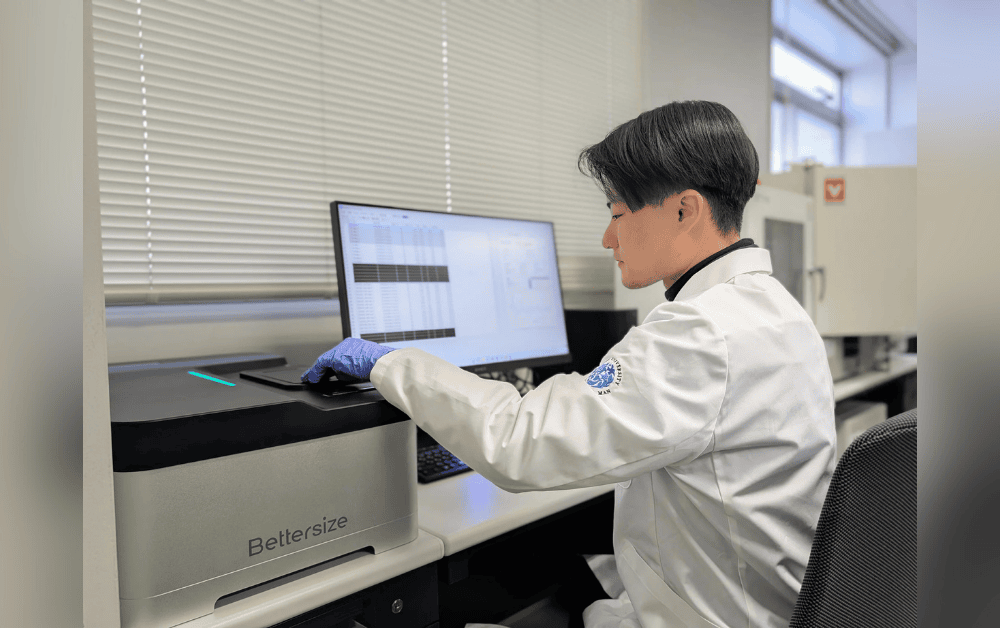
Mr. Okawa Working at BeNano 180 Zeta
About BeNano 180 Zeta
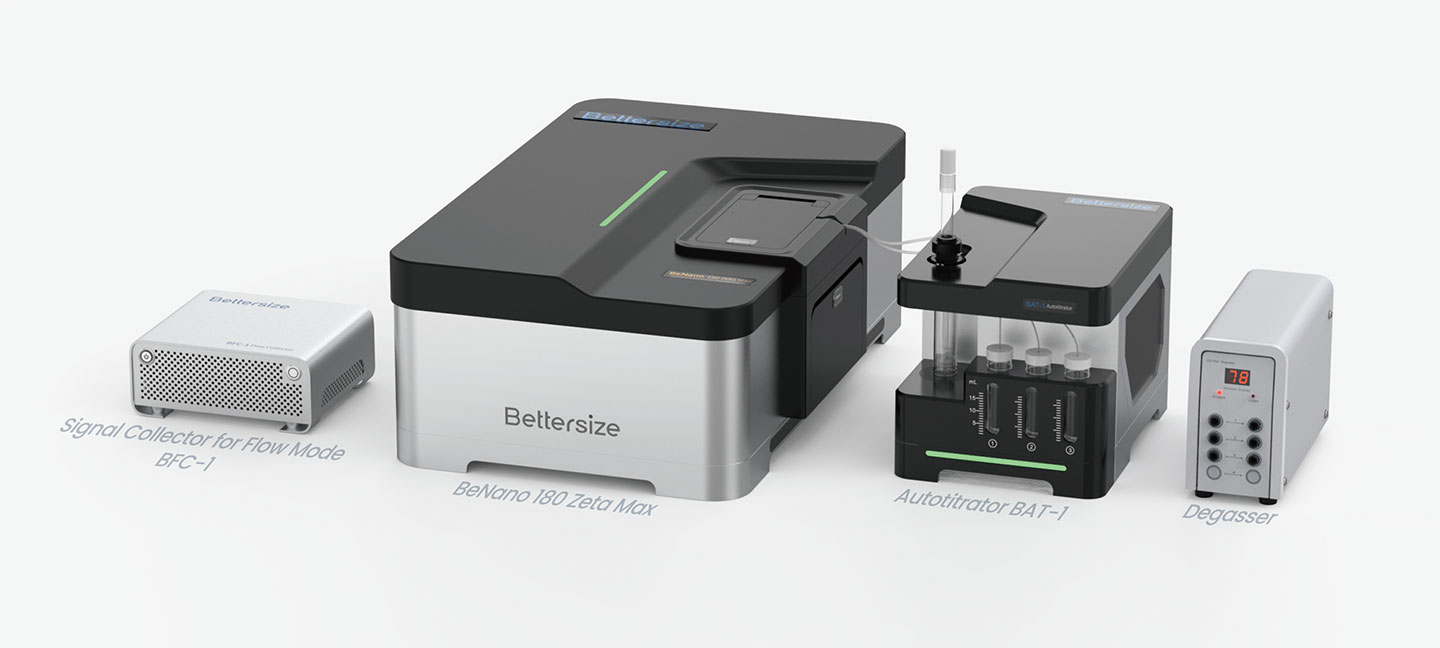
In this study, the BeNano nanoparticle size and zeta potential analyzer manufactured by Bettersize and distributed by Sanyo Technos was used to characterize the surface electrical properties (zeta potential) of the materials.
The BeNano system enables multiple measurements to be performed on a single instrument, including:
- Particle size distribution
- Zeta potential
- Molecular weight
- Microrheology
For zeta potential measurements, the instrument employs PALS (Phase Analysis Light Scattering) technology, which allows for high-sensitivity evaluation even for samples exhibiting low zeta potential.
In addition, optional accessories and functions are available, such as:
- An automatic pH titration unit
- High-resolution particle size measurement in flow mode
These features make the system suitable for a wide range of nanomaterial and particle research applications.
Conclusion
Research into PFAS-related materials benefits from approaches spanning materials science, chemistry, and environmental engineering. At Toho University, the use of the BeNano 180 Zeta for nanoparticle characterization is helping researchers examine material properties and interactions at the nanoscale.
Such analytical capabilities provide valuable information that supports ongoing materials research. Continued integration of advanced measurement tools with material design will play an important role in deepening understanding and exploring practical approaches in this field.
Editor’s Note: This article was authored by Sanyo Technos, Bettersize’s distributor in Japan, and originally published in Japanese.
The research work and perspectives introduced belong to the Konno Laboratory at Toho University.
Rate this article
Share On


Recent News
2026-03-26