Home > Products > BeVision S1

BeVision S1

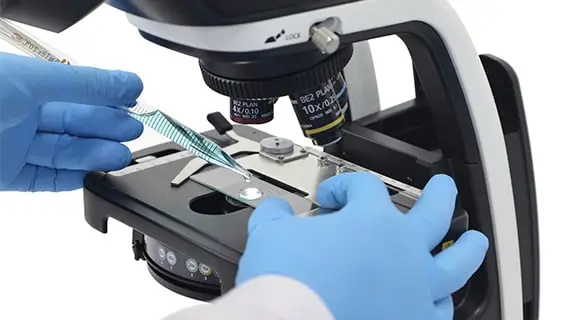
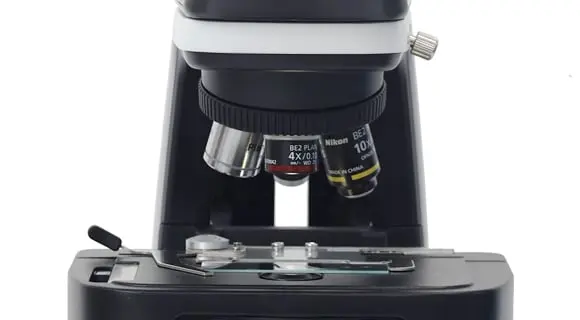
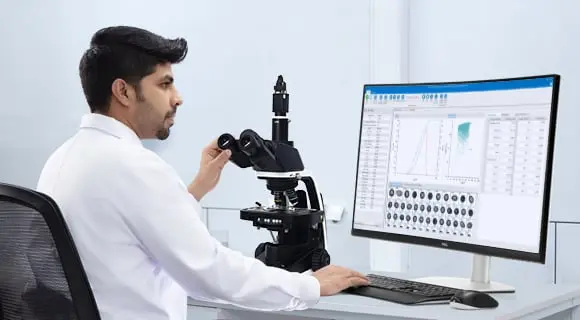
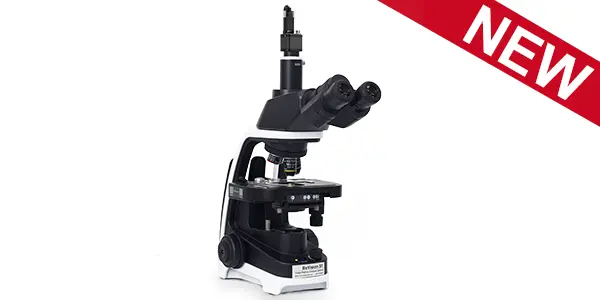
The BeVision S1 integrates light microscopy and image analysis to deliver size and shape distributions of both powders and suspensions. With an objective magnification of up to 100x, the BeVision S1 efficiently analyzes and records particles as fine as 0.3 μm.

Features and Benefits

  • Biological microscope and metallographic microscope for option
  • Measurement range: 0.3 to 4,500 µm (biological microscope); 0.1 to 2700 µm (metallographic microscope);
  • Both dry and wet measurements
  • 34 different particle size and shape parameters
  • 4 optional test modes for different applications
  • Results in compliance with ISO 9276-6
  • Powerful software eases your work
  • Customizable reports for different evaluation options
  • A budget - friendly solution for your particle analysis
Video

What is Image Analysis? Fundamentals of BeVision Series Video play

How to Install and Operate BeVision S1 Video stop

Overview of BeVision Series | Precision in Particle Vision Video stop

Overview

Citations

  • BeVision S1

    Features of the mechanism of pasty propellants burning

    DOI: 10.1016/j.enmf.2023.10.002 Read Article Go logo
    Baltic state technical university | 2023
    The composition of a pasty propellant for small-sized space engines has been proposed. For this propellant, a research of the burning process was carried out. This research included the determination of the burning rate law, the characteristics of the agglomeration process, and the properties of the surface layer. The presence of an intermediate structure, a skeleton layer, during the burning of such propellants, and the nature of the influence of pressure, additives, and the size of oxidizer particles on this structure, have been established. The determining influence of this structure on the burning process is shown. Composition solutions that provide control over the burning rate law of such propellants are determined. These solutions make it possible to change the absolute value of the burning rate, as well as its dependence on pressure. Regularities of the agglomeration process have been established. These regularities are associated with the features of the formation of the skeleton layer, which depend on the structure of the propellant, pressure, and the presence of additives.
  • BeVision S1

    Challenges on pumping infra-lightweight concrete based on highly porous aggregates

    DOI: 10.1016/j.jobe.2022.105761 Read Article Go logo
    Universität der Bundeswehr München | 2022
    Infra-lightweight concrete (ILC) is the latest step in the development lightweight concrete mainly for the use in monolithic exterior walls. By optimizing the balance between reduced density, sufficient strength and the lowest possible thermal conductivity, ILC offers a competitive alternative to multilayer wall structures commonly used today. Pumping of fresh concrete is becoming increasingly important owing to further rationalization on the construction site and the increasing use of ready-mix concrete. However, pumping lightweight concretes is often associated with difficulties. This article presents the first study ever on pumpability of a record breaking ILC, using some of the most common concrete pumps. Therefore, an experimental study was carried out to determine whether the pressurization of the fresh concrete in the course of the pumping process influences fresh and hardened ILC properties. Based on the results, it can be concluded that ILC can be pumped. The delivery principle of the pumps has a particular influence on fresh ILC properties, especially in terms of abrasive stress on the porous aggregates and workability. No significant negative influences on hardened concrete properties were detected. Classification of the ILC can be accomplished in the same density and strength class before and after pumping. The study highlights challenges of pumping ILC with highly porous aggregates and provides practical approaches to its realization.
  • BeVision S1

    Identification and characteristic analysis of powder ejected from a lithium ion battery during thermal runaway at elevated temperatures

    DOI: 10.1016/j.jhazmat.2020.123169 Read Article Go logo
    Nanjing University of Science and Technology | 2020
    The thermal runaway of a lithium ion battery under abusive conditions has become an urgent problem in recent years. The thermal runaway generates flammable and toxic gases and ejects a hazardous black solid powder. Although relevant research on gas vented from thermal runaway has been studied in recent works, the composition, hazardous characteristics and formation process of the ejected powder remain unclarified. To investigate the hazardous characteristics of the ejected powder products and further provide insights into the thermal runaway mechanisms of lithium ion battery in terms of the identified components, a series of instrumental tests were performed and analyzed in this work. The results show that the powder ejected from the thermal runaway of a lithium ion battery is composed of carbon, organic chemicals, carbonate, metal, metal oxides and other impurities. Different states of charge of the lithium ion battery, heating modes and environmental atmospheres have certain effects on the formation of the ejected powder. These effects include the production of slightly different components in the ejected powder and changes in the particle sizes. The ejected powder is produced via a complex formation process and is hazardous due to its organic components, metal and metal oxides.
  • BeVision S1

    Probiotic encapsulation in water-in-water emulsion via heteroprotein complex coacervation of type-A gelatin/caseinate

    DOI: 10.1016/j.foodhyd.2020.105790 Read Article Go logo
    Shanghai Jiao Tong University | 2020
    The production of dried probiotic bacterial cells that are shelf stable at room temperature remains challenging. In this work, the potential of encapsulation of probiotic Lactobacillus reuteri using heteroprotein complex coacervation (type-A gelatin/sodium caseinate, GE/Cas) was compared to a protein/polysaccharide complex coacervation (type-A gelatin/gum arabic, GE/GA). The optimal pH and GE/Cas ratio for formation of water-in-water emulsions were found to be pH = 6.0 and GE/Cas = 2.0. L. reuteri TMW1.656 survived spray drying without loss of viability; the survival after simulated digestion, heating and ambient storage decreased in the order GE/Cas ≥ Cas > GE/GA > GE. The improved protection of the GE/Cas matrix was related to a reduced hygroscopicity, solubilization and wettability, and may be caused by the relatively higher hydrophobicity of GE/Cas heteroprotein coacervation system. To the best of our knowledge, this is the first study employing heteroprotein coacervation to encapsulate probiotics.
Page 1 of 11
  • 1
  • 2
  • 3
  • 4
  • 5
  • 6
  • 11
Go to

Curated Resources

  • Application Note

    2025-04-02

    Food and Drink Application Note Collection

    bigClick
  • Industry Solution
    Additive Manufacturing Solution Particle and Powder Characterization

    2024-02-28

    Additive Manufacturing Solution - Particle and Powder Characterization

    bigClick
  • Application Note
    Particle Size Analysis-Exploring the Impact of homogenization on Soy Milk

    2023-09-20

    Particle Size Analysis: Exploring the Impact of Homogenization on Soy Milk

    bigClick

More resources

Related Image Analyzer

  • Bettersizer S3 Plus

    Bettersizer S3 Plus

    Laser Diffraction Particle Size Analyzer

    Measurement range: 0.01 - 3,500μm (Laser System)

    Measurement range: 2 - 3,500μm (Image System)

  • BeVision D2

    BeVision D2

    Image Analyzer

    Dispersion type: Dry

    Measurement range: 30 - 10,000μm

    Technology: Dynamic Image Analysis

  • BeVision M1

    BeVision M1

    Automated Static Image Analyzer

    Dispersion type: Dry

    Measurement range: 0.3 - 10,000 μm

    Technology: Static Image Analysis