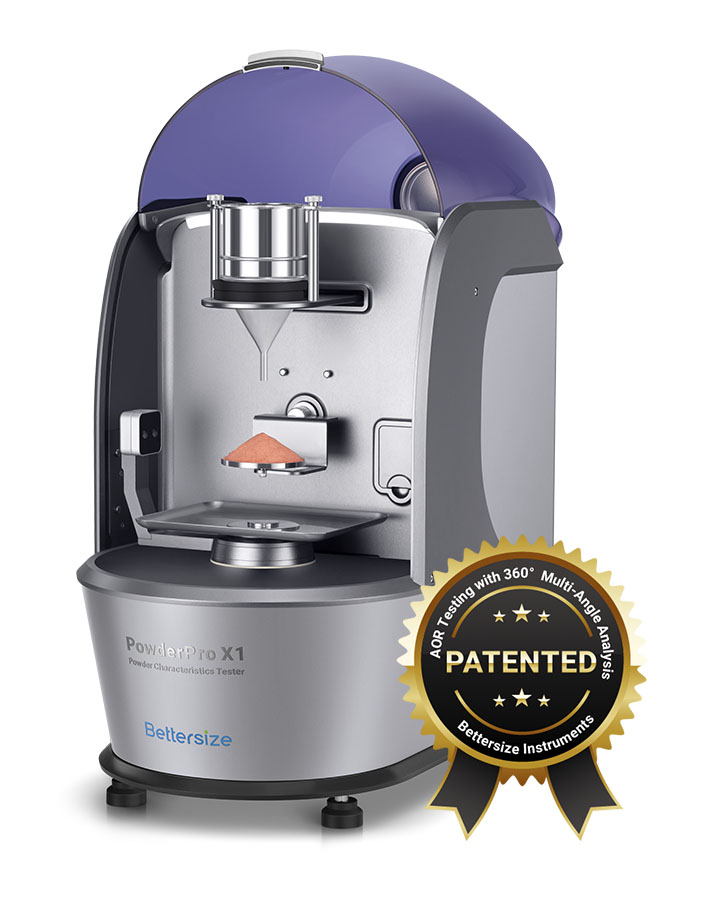
Abstract: Bulk density, tapped density, compressibility index (CI), and Hausner ratio (HR) are established pharmacopeial parameters for evaluating the packing behavior of pharmaceutical excipients. In this study, lactose, microcrystalline cellulose (MCC), and maltodextrin were evaluated using PowderPro X1. Lactose exhibited the lowest CI (13.9%) and HR (1.16), while MCC showed the highest values (27.9% and 1.39), indicating a stronger packing tendency and greater densification behavior. In addition to automatically calculating CI and HR, PowderPro X1 continuously records powder volume throughout the tapping process and determines the tapping equilibrium point. Lactose, maltodextrin, and MCC reached stable packing after approximately 250, 400, and 450 taps, respectively. These results demonstrate that monitoring the complete consolidation process provides a more comprehensive evaluation of powder packing behavior than conventional tapped density measurements performed at a predefined number of taps.
Keywords: Pharmaceutical excipients, Bulk density, Tapped density, Compressibility Index (CI), Hausner Ratio (HR), Powder consolidation, Tapping equilibrium, Powder packing behavior, PowderPro X1
| Product | PowderPro X1 |
| Industry | Pharmaceutical |
| Sample | Pharmaceutical excipients |
| Measurement Type | Powder Characteristics, Density |
| Measurement Technology | Carr Index Method |
1. Introduction
Pharmaceutical excipients with similar compositions can still exhibit markedly different behaviors during filling, blending, and compaction due to differences in particle size, shape, surface characteristics, and packing structure. To ensure consistent powder performance, bulk density, tapped density, compressibility index (CI), and Hausner ratio (HR) are recognized in USP <616> and adopted by the European, Japanese, Chinese, and other international pharmacopoeias as standard parameters for evaluating powder packing and consolidation behavior.
Bulk density reflects how powder occupies volume when gently poured into a container, while tapped density represents the packing state achieved after controlled mechanical compaction. The resulting compressibility index and Hausner ratio, derived from these measurements, provide quantitative indicators of packing efficiency and consolidation tendency. However, endpoint density values alone do not reveal how rapidly a powder reaches a stable packing state.
In this study, PowderPro X1 continuously records powder volume throughout the tapping process and automatically determines the tapping equilibrium point. This approach provides insight into both the extent and kinetics of consolidation, supporting excipient selection, supplier qualification, batch-to-batch comparison, formulation development, and routine quality control.
2. INSTRUMENT AND MATERIALS
2.1 PowderPro X1 Density Testing Configuration
PowderPro X1 supports bulk and tapped density measurements using pharmacopeia-compliant glass graduated cylinders. The instrument features an adjustable tapping mechanism with a tapping height range of 0.1 to 20 mm and a tapping frequency range of 30 to 300 taps/min, allowing test conditions to be configured for USP, ISO, ASTM, and other recognized test methods.
During testing, PowderPro X1 continuously monitors and records powder volume at user-defined intervals throughout the tapping process. The software automatically calculates tapped density, compressibility index, and Hausner ratio while simultaneously tracking volume reduction to identify the tapped equilibrium point, defined by the 1% stabilization criterion. This capability provides insight into both the extent and rate of powder consolidation.
For regulated laboratory environments, the accompanying software includes features that support compliance with FDA 21 CFR Part 11, including user access control, electronic signatures, and audit trail functionality.
|
Test Parameter |
Setting Used in This Study |
|
Sample cylinder |
100 mL pharmacopoeia-compliant glass graduated cylinder |
|
Sample mass |
50 g |
|
Tapping height |
3 mm |
|
Tapping frequency |
250 taps/min |
|
Volume recording interval |
Every 50 taps |
|
Equilibrium criterion |
Relative volume change between two consecutive movements≤ 1% |
|
Reported results |
Bulk density, tapped density, compressibility index, Hausner ratio, tapping curve, and equilibrium point |
2.2 Materials
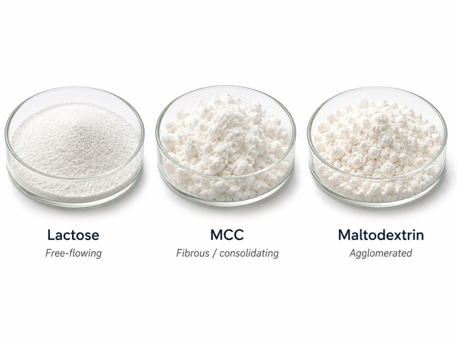
The commonly used pharmaceutical excipients with different packing characteristics were selected for evaluation. Lactose was chosen as a relatively free-flowing material with efficient particle packing. MCC represented an irregular, fibrous powder known for significant consolidation during tapping. Maltodextrin was selected as an agglomerated powder with intermediate packing behavior. Together, these materials provide a useful comparison of different consolidation profiles.
3. RESULTS AND DISCUSSION
| Sample |
Bulk Density |
Tapped Density (g/mL) |
Compressibility Index (%) |
Hausner Ratio |
Equilibrium (taps) |
| Lactose | 0.62 | 0.72 | 13.9 | 1.16 | 250 |
| MCC | 0.31 | 0.43 | 27.9 | 1.39 | 450 |
| Maltodextrin | 0.48 | 0.61 | 21.3 | 1.27 | 400 |
3.1 Density and Derived Indices
Lactose exhibited the highest bulk density (0.62 g/mL) and the smallest density increase upon tapping, indicating efficient initial particle packing. In contrast, MCC showed the lowest bulk density (0.31 g/mL) and the largest density increase after tapping, reflecting substantial particle rearrangement and consolidation. Maltodextrin displayed intermediate behavior between these two materials.
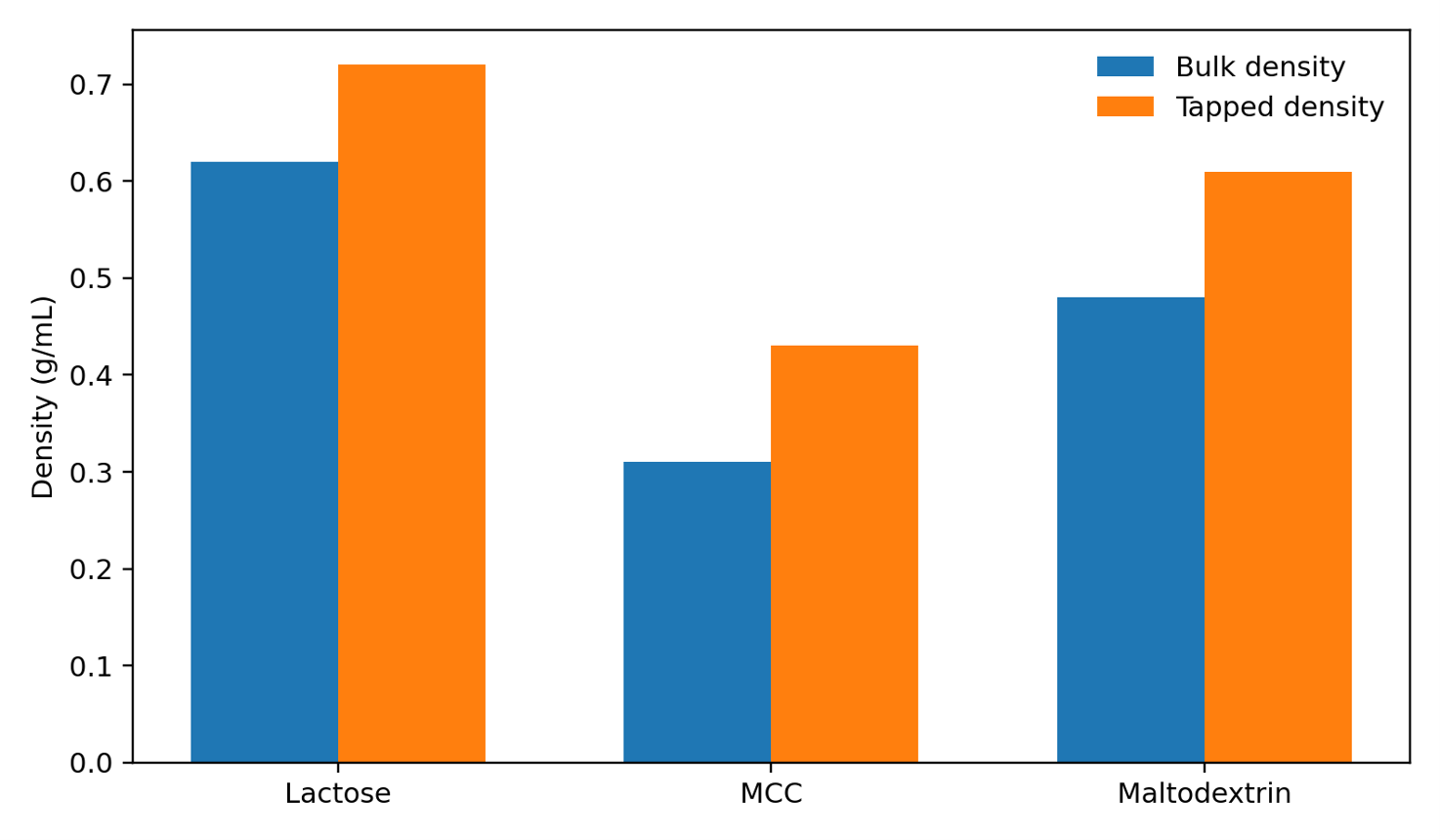
Figure 1. Bulk and tapped density of the three excipients.
Compressibility Index (CI) and Hausner Ratio (HR) are derived from bulk and tapped density and provide a more direct quantitative assessment of powder consolidation than density values alone. Lower CI and HR values indicate that a powder is already efficiently packed and undergoes limited structural rearrangement during tapping, whereas higher values reflect a looser initial packing state, greater compressibility, and a stronger tendency toward consolidation.
Among the materials evaluated, lactose exhibited the lowest CI (13.9%) and HR (1.16), indicating efficient particle packing and minimal consolidation. MCC showed the highest CI (27.9%) and HR (1.39), consistent with the formation of a loosely packed powder bed due to its fibrous and irregular particles, which required significant rearrangement during tapping. Maltodextrin displayed intermediate values, reflecting a moderate consolidation tendency.
These results demonstrate that CI and HR provide a more convenient quantitative means of comparing packing behavior among excipients than bulk and tapped density measurements alone, supporting material selection, supplier comparison, and routine quality control.
3.2 Tapped Equilibrium
Tapped equilibrium was defined as a relative volume change of no more than 1% between two consecutive measurement intervals. PowderPro X1 automatically compared successive volume readings, identified the point at which this criterion was satisfied, and automatically stopped the test.
Lactose reached equilibrium after approximately 250 taps, whereas maltodextrin and MCC required approximately 400 and 450 taps, respectively. These results indicate that MCC underwent the most extensive particle rearrangement before reaching a stable packing state.
| Sample | Previous Reading (taps) |
Previous Volume (mL) |
Final Reading (taps) |
Final Volume (mL) |
Relative Change (%) |
| Lactose | 200 | 70.1 | 250 | 69.5 | 0.8 |
| MCC | 400 | 117.4 | 450 | 116.8 | 0.5 |
| Maltodextrin | 350 | 82.5 | 400 | 82.0 | 0.6 |
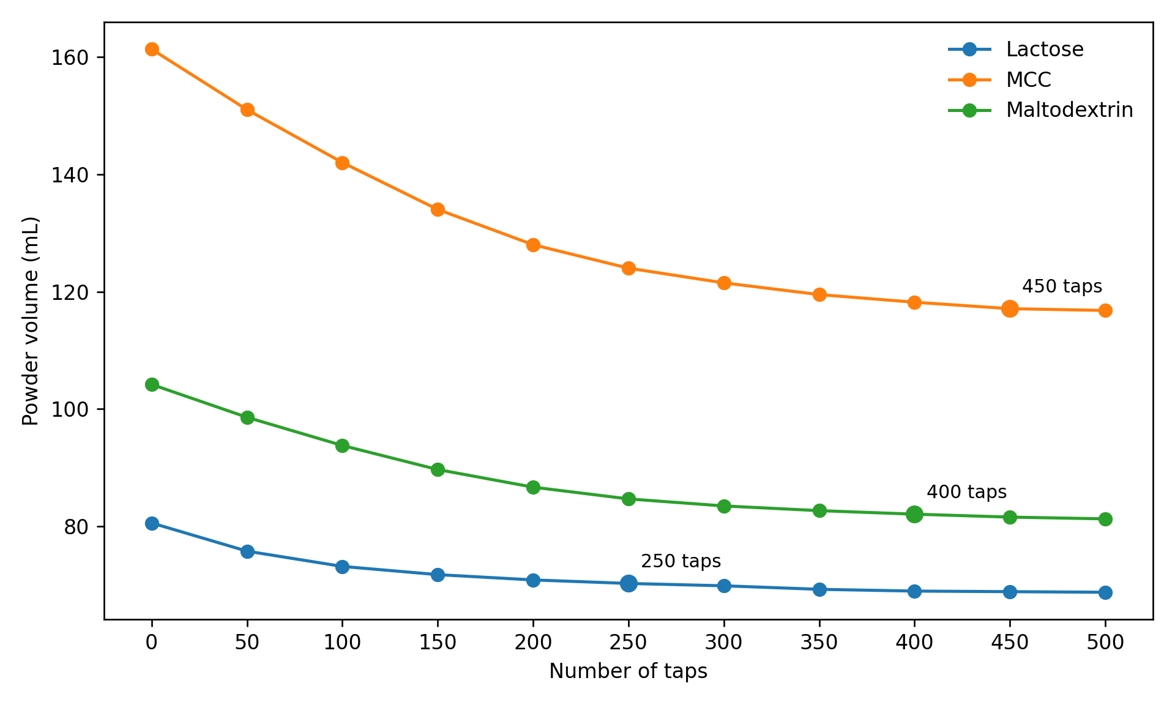
Figure 2. Tapping curves and equilibrium points determined using the 1% equilibrium criterion
While tapped density reflects the final packing state of a powder, the equilibrium point provides additional insight into the consolidation rate. Powders that reach equilibrium rapidly require relatively little particle rearrangement, whereas powders that require more taps continue to consolidate over a longer period.
Unlike conventional methods that terminate after a fixed number of taps, PowderPro X1 identifies the equilibrium point based on a 1% stop condition, ensuring that each material is evaluated according to its actual packing behavior. This approach can improve testing efficiency, reduce unnecessary tapping, and provide additional insight when comparing excipient grades, suppliers, or production batches.
4. Conclusion
PowderPro X1 effectively differentiated the packing behavior of lactose, MCC, and maltodextrin through analysis of bulk density, tapped density, compressibility index, Hausner ratio, and tapping equilibrium. Lactose demonstrated the most efficient packing and the lowest consolidation tendency, whereas MCC exhibited the greatest degree of consolidation and required the highest number of taps to reach equilibrium.
By continuously monitoring volume changes during tapping and automatically determining equilibrium, PowderPro X1 provides information on both the extent and rate of powder consolidation. This capability extends beyond conventional fixed-tap density testing and offers a more comprehensive assessment of powder packing behavior. It can support excipient selection, supplier and batch comparisons, formulation development, process optimization, and routine quality control in pharmaceutical manufacturing environments.
About the Author
 |
Feiqing Shen Application Engineer @ Bettersize Instruments |
|
|
PowderPro X1 18-in-1 Powder Characteristics Tester
|