
pH-Dependent Trends in Coffee Creamer Investigated by Size and Zeta Potential Analysis
2025-05-23Application Note
Explore how pH affects coffee creamer stability using BeNano 180 Zeta Max for precise Particle Size, Zeta Potential analysis.
| Product | BeNano 180 Zeta Max |
| Industry | Food and Drink Analysis |
| Sample | Coffee creamer |
| Measurement Type | Particle Size, Zeta Potential |
| Measurement Technology |
Jump to a section:
Introduction
The zeta potential of particles is highly influenced by the dispersant environment, with factors such as pH, ionic strength, and small molecules significantly impacting both its magnitude and sign. Among these, pH exerts the most pronounced effect. Generally, particles carry a positive charge in low-pH environments and a negative charge in high-pH conditions, excluding the effects of hydrogen and hydroxide ion adsorption. Near the isoelectric point (IEP), particle charge is minimal, resulting in a low zeta potential, an increased likelihood of aggregation, and reduced stability. Consequently, both size and zeta potential serve as crucial indicators of system stability.
The BeNano 180 Zeta Max, integrated with the BAT-1 autotitrator, enables precise measurement of particle size and zeta potential across a range of pH conditions within a single test sequence, offering a comprehensive assessment of sample stability. This application note investigates the relationship between pH, size, and zeta potential in coffee creamer.
Experimental
The BeNano 180 Zeta Max employs a 671 nm laser with a power output of 50 mW as its light source. Zeta potential measurements were conducted using a detector positioned at 12°, while particle size was determined at 173°.For this study, a coffee creamer sample dispersed in water was analyzed to examine variations in size and zeta potential across different pH levels. The pH titration process involved the addition of HCl solution to adjust the sample's pH. The target pH was set to 2, with increments of 1 and a tolerance of 0.2. The built-in temperature control unit of the Bettersize BeNano maintained a constant temperature of 25°C ± 0.1°C. Measurements were taken using a capillary folded cell.
Results and Discussion
By measuring the size and zeta potential at various pH values, the trend as a function of pH was obtained.

By measuring particle size and zeta potential across various pH values, a clear trend emerged. At the beginning of titration (pH 9.14), the zeta potential was approximately -60 mV, indicating a high negative charge density on the particle surface. At this pH, the particle size measured around 380 nm.
As HCl was introduced and the pH decreased, the zeta potential gradually approached zero, reaching the isoelectric point (IEP) at pH 5.52. At this stage, the particle size increased significantly due to reduced zeta potential, leading to diminished interparticle repulsion and substantial particle aggregation.With further HCl addition, the charge of the particle system
shifted from negative to positive. As the pH continued to drop, the zeta potential became increasingly positive, resulting in stronger electrostatic repulsion between the particles and a corresponding decrease in particle size.

Conclusion
This study examined the pH-dependent variations in size and zeta potential of coffee creamer. At high pH levels, the zeta potential was negative, transitioning to positive as the pH decreased, with the isoelectric point identified near pH 5.52. At this stage, particle aggregation intensified significantly. These results highlight the crucial role of pH in regulating the stability and behavior of colloidal systems.
About the Authors
 |
Zhibin Guo Application Manager @ Bettersize Instruments |
 |
Dr. Ning Chief Product Officer @ Bettersize Instruments |
|
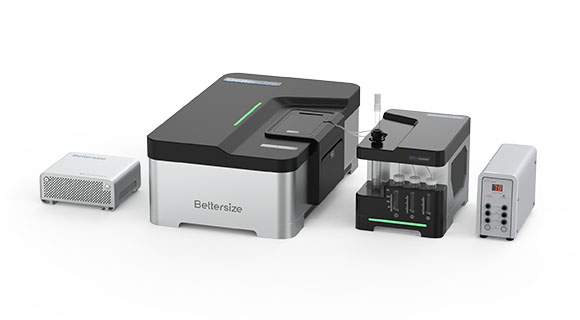
BeNano 180 Zeta Max Advanced Nanoparticle Size & Zeta Potential Analyzer
|
|
LOGIN TO ACCESS EXCLUSIVE CONTENT
More Resources Including
- Application Notes & Collections
- Webinars & Workshops
- Presentations & Videos
- Monthly Newsletters
- Exclusive Events...

Recommended articles
Rate this article