Startseite > Branchen > Keramische Materialien
Building Materials banner

Keramische Materialien

Die von Bettersize bereitgestellten Messgeräte ermöglichen die Partikelgrößenanalyse für keramische Produkte während der Herstellung. 


Bei der Herstellung von Keramik kann eine geeignete Partikelgröße der Ausgangsstoffe für Formkörper, Glasur und Pigmente sowie andere Materialeigenschaften die Produktqualität deutlich verbessern. Veränderungen im Endprodukt, insbesondere während des Sinterprozesses, hängen maßgeblich von den Eigenschaften des Ausgangspulvers ab und stehen in engem Zusammenhang mit der Partikelgröße. Eine optimale Größenverteilung der Teilchen des Formkörpers erhöht die Strukturdichte und steigert dadurch die Festigkeit z.B. des Porzellans. Eine geringe Partikelgröße verbessert zudem die Oberflächenglätte der resultierenden Glasur. Bei der Verwendung sehr feiner Ausgangspulver (bis in den Nanometerbereich) lassen sich keramische Werkstoffe mit sehr hohen Festigkeiten und damit großem Anwendungsspektrum herstellen.


Im Fall der Sanitärkeramikproduktion darf der finale Schlicker nicht zu fein gemahlen werden, da ein erhöhter Feinanteil die Poren der Trocknungsform blockiert. Dies verhindert die Entwässerung und verschlechtert die Formkörpereigenschaften für den nachfolgenden Brennprozess.


Während der Herstellung keramischer Werkstoffe lassen sich Partikelgrößenverteilung, -form, Pulvercharakteristika der Ausgangspulver sowie weitere Eigenschaften von Formkörpern, Glasuren und Pigmenten exakt messen.


 

Weiterlesen

Citations

  • Bettersizer 2600

    Functional redundancy as an indicator for evaluating functional diversity of macrobenthos under the mussel raft farm near Gouqi Island

    DOI: 10.1016/j.aquaculture.2023.740024 Read Article Go logo
    Zhejiang Ocean University | 2024
    Biological traits analysis (BTA) helps to evaluate the effects of different environmental variables on the traits-based functional composition of macrobenthos. However, research on functional traits of macrobenthos under mussel farming is limited. We investigated the spatial and temporal response of the benthic system in terms of taxonomic and functional diversity to environmental variables of farming and natural stressors resulting from suspended mussel farming near Gouqi Island of eastern China Sea. The functional traits of macrobenthic assemblages under mussel farming were characterized by “medium adult body size”, “vermiform body form”, “high flexibility”, “infauna”, “semi-motile”, “gonochoristic”, “surface deposit-feeders”, “carnivores”, “semi-motile burrowers”, and “tube-dwellers”. Functional redundancy was stable in response to mussel farming stresses among seasons, whereas species diversity showed efficient to evaluate natural variables. Functional diversity was significantly affected by farming stressors rather than natural variables, Further analysis using multivariate methods together with continuous monitoring were highlighted to evaluate the impacts of mussel farming. Our results reinforce the importance of macrobenthic species and functional traits analysis to evaluate human stresses driven impacts in offshore ecosystems. By analysing the environmental variables with different sources, independently, we concluded the main effects of human pressures on macrobenthic community. Such distinction could be particularly effective to isolate variable environmental descriptors and evaluate their effects on functional diversity, making the current approach promising for the evaluation of ecological effects of anthropogenic stressors in aquaculture areas.
  • Bettersizer 2600

    Degradation characteristics and utilization strategies of a covalent bonded resin-based solid amine during capturing CO2 from flue gas

    DOI: 10.1016/j.seppur.2023.125621 Read Article Go logo
    China University of Petroleum | 2024

    In this study, various types of degradation as well as attrition which are possibly encountered in a circulating fluidized bed temperature swing adsorption (CFB-TSA) process, were conducted experimentally to evaluate the stability of a resin-based solid amine sorbent. Other characterizations methods, such as elemental analysis (EA), Fourier transform infrared spectroscopy (FTIR) etc. were applied to further reveal the degradation mechanisms. The results showed that thermal degradation occurs from 140–160 °C due to the decomposition of amine group. The CO2-induced degradation occurs from a higher temperature of 160–180 °C accompanied by the production of urea. Hydrothermal stability is good below 130 °C, but the ionic impurities in steam crystalized on particle surface can accelerate the degradation. Oxidative degradation is the most harmful, which starts at a lower temperature of 70–80 °C with the formation of aldehyde. The existence of H2O in atmosphere can alleviate the oxidative and CO2-induced degradations. The employed sorbent has a very low attrition index of 0.05, which is 1–2 orders lower than typical commercial fluidized bed catalysts. Based on the results of stability evaluation, some design suggestions for proper utilization of this sorbent or other similar resin-based sorbents have been provided in an industrial CFB-TSA process.

  • Bettersizer 2600

    De-branching of starch molecules enhanced the complexation with chitosan and its potential utilization for delivering hydrophobic compounds

    DOI: 10.1016/j.foodhyd.2023.109498 Read Article Go logo
    Shihezi University | 2024
    The current study aimed to prepare the complexes between debranched-waxy corn starch and chitosan polymers (DBS-CS), and then investigated their corresponding structural characteristics, rheological property and potent application in Pickering emulsion. The results indicated that the existence of chitosan significantly inhibited starch short-range molecular rearrangement for all DBS-CS samples, which was manipulated by both debranching treatment and chitosan content. Interestingly, this is the first study to reveal that the outstanding peak at 1.8 ppm in 1H NMR spectrum for sample DBS-CS was gradually shifted towards a lower-field region following an increased chitosan content. Moreover, the debranching treatment shifted the crystallinity pattern from A-type to B-type and the relative crystallinity of DBS-CS decreased gradually with the increased content of CS. All samples had a pseudoplastic fluid and shear-thinning behavior with an enhanced shear resistance following the complexation. The DBS-CS was applied in a Pickering emulsion for showing a greater emulsifying stability and a lower gel strength than native NS-CS prepared emulsion. Importantly, the encapsulation ability of curcumin in the DBS-CS emulsion was significantly improved, followed by an increase of 15.45% for its corresponding bioavailability compared to the control. Therefore, this study might highlight a potential carrier for delivering the bioactive substances in a green pattern.
  • Bettersizer 2600

    Heat-induced aggregation behavior of wheat gluten after adding citrus pectin with different esterification degree

    DOI: 10.1016/j.foodhyd.2023.109420 Read Article Go logo
    Gansu Agricultural University | 2024
    Wheat gluten aggregation during heat treatment is beneficial to the final quality of gluten-based products. Exogenous pectin can affect gluten aggregation. However, the effect of pectin with different degrees of esterification on the heat-induced aggregation behavior of gluten and its possible mechanism are still unclear. Thus, the heat-induced aggregation behavior of gluten after adding pectin with different esterification degree was studied in this study. When the temperature was raised from 25 °C to 95 °C, pectin affected gluten aggregation and was related to the degree of esterification. Specifically, the results of rheological properties and particle size indicated that low-ester pectin improved the viscoelasticity of gluten and promoted gluten aggregation. Thermal properties revealed that enthalpy of gluten added with low-ester pectin (37%) increased from 92.96 J/g to 95.40 J/g during heating process. Structurally, the fluorescence intensity and surface hydrophobicity of gluten added with low-ester pectin (37%) were lower than those added with high-ester pectin (73%). In addition, low-ester pectin (37%) significantly increased the disulfide bond content (from 15.31 μmol/g to 18.06 μmol/g) and maintained β-sheet content of gluten compared with gluten alone at 95 °C, indicating that low-ester pectin was more likely to induce gluten aggregation. However, scanning electron microscope showed that the gluten added with low-ester pectin (46%) exhibited a denser network structure at 95 °C than that added with low-ester pectin (37%). These results will provide a theoretical base for the regulation of gluten aggregation and the quality of gluten-based products by pectin with different esterification degree.
Page 1 of 84
  • 1
  • 2
  • 3
  • 4
  • 5
  • 6
  • 84
Go to

Ausgewählte Ressourcen

  • Application Note
    Advanced ceramic QC with Bettersizer S3 plus

    2022-12-13

    The Quality Control of Advanced Ceramic Products by the Bettersizer S3 Plus

    bigClick
  • Application Note
    Ceramic material particle size measurement

    2022-04-18

    Particle Size Measurement and Agglomerates Detection of Ceramic Materials During Production Process

    bigClick
  • Application Note
    Ceramic powder size analysis by laser diffraction

    2021-09-10

    Analysis of Particle Size Distribution of Ceramic Powder Based on Laser Diffraction

    bigClick

More resources

Verwandte Partikelgrößenanalysatoren

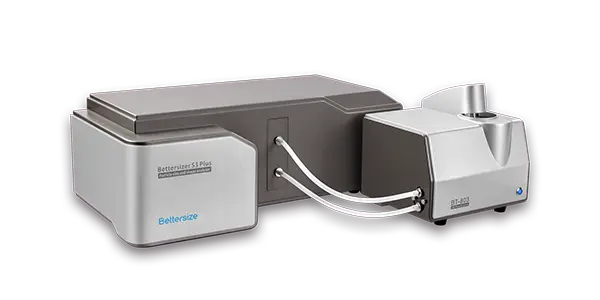
  • Bettersizer S3 Plus

    Bettersizer S3 Plus

    Analysegerät für Partikelgröße und -form

    Messbereich: 0,01 - 3.500μm (Laser-System)

    Messbereich: 2 - 3.500μm (Bildsystem)

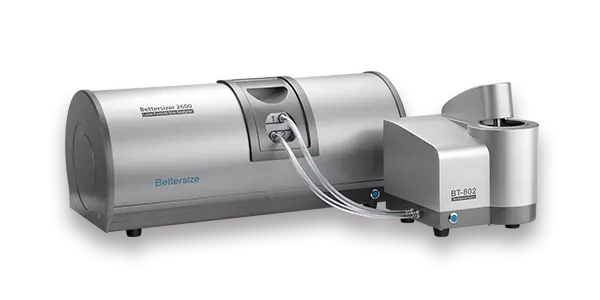
  • Bettersizer 2600

    Bettersizer 2600

    Laserbeugungs-Partikelgrößenanalysator

    Messbereich: 0,02 - 2.600μm (nass)

    Messbereich: 0,1 - 2.600μm (trocken)

  • BeNano 180 Zeta Pro

    BeNano 180 Zeta Pro

    Analysator für die Größe und das Zeta-Potenzial von Nanopartikeln

    Technologie: Dynamische Lichtstreuung, elektrophoretische Lichtstreuung, statische Lichtstreuung

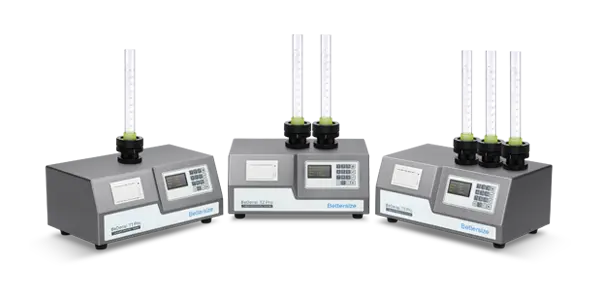
  • BeDensi T Pro Series

    BeDensi T Pro Series

    Stampfdichteprüfer mit einer kosteneffizienten Lösung

    Anzahl von Arbeitsplätzen: 1-3

    Gewindeschneidgeschwindigkeit: 100 - 300 Gewindebohrer/min

    Reproduzierbarkeit: ≤1% Abweichung

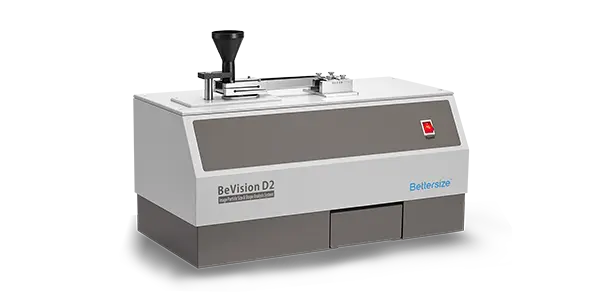
  • BeVision D2

    BeVision D2

    Dynamischer Bildanalysator

    Dispersionstyp: Trocken

    Messbereich: 30 - 10.000μm

    Technologie: Dynamische Bildanalyse

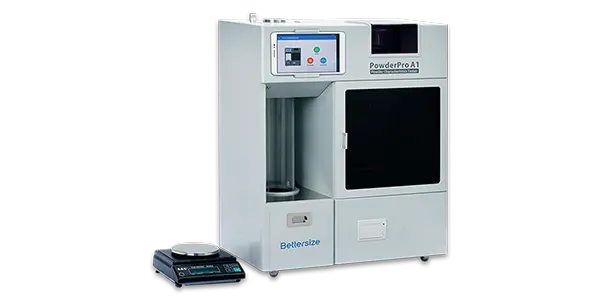
  • PowderPro A1

    PowderPro A1

    Automatisches Prüfgerät für Pulvereigenschaften

    Betriebsart: Automatisch

    Gewindeschneidgeschwindigkeit: 50 - 300 Gewindebohrer/min

    Reproduzierbarkeit: ≤3% Abweichung

  • Bettersizer 2600 Plus

    Partikelgrößen- und Formanalysator

    Messbereich: 0,02–2.600 µm (Nassdispergierung)

    Messbereich: 0,1–2.600 µm (Trockendispergierung)

    Messbereich der dynamischen Bildanalyse: 2–3.500 µm

  • BeScan Lab stability analyzer

    BeScan Lab

    Stabilitäts-Analysator

    Die Partikelgröße reicht von 10 nm bis 1 mm

    Volumenanteil bis zu 95%

    Übereinstimmung mit ISO/TR 18811, 13097, 21357, 22107