ホーム > 製品 > Bettersizer ST

Bettersizer ST

お見積依頼 連絡販売
パンフレットをダウンロード

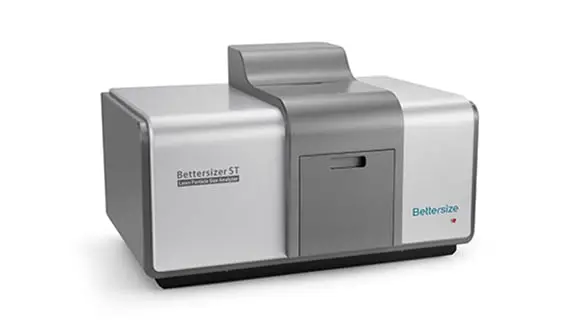
Bettersizer STは、湿式分散測定に対応した全自動・一体型粒子径分布測定装置です。品質管理向けのBettersizer STは、手作業でのミスを減らし、高精度で再現性の良い測定結果を提供します。機能を十分に搭載しながらも省スペースにこだわっており、生産現場やラボなど幅広いシーンで活躍しています。

機能と利点

  • 湿式分散
  • 測定範囲: 0.1 – 1000 μm
  • 頑丈な構造
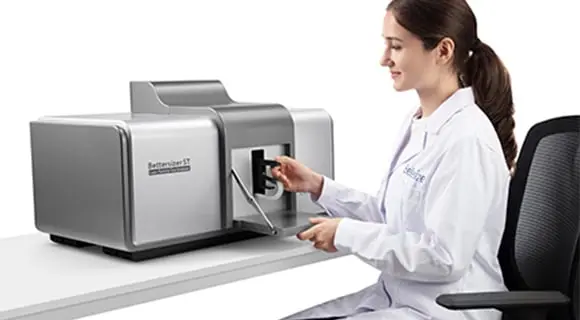
  • 使いやすさ
  • メンテナンスが容易
  • 分析部と前処理部を一体化した、コンパクトな設計
  • コストパフォーマンスが良い
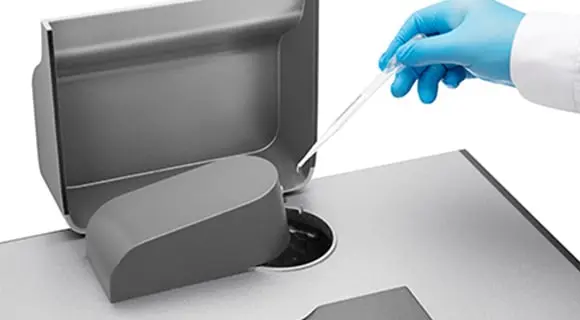
  • SOP(標準操作手順)を準じて自動測定可能
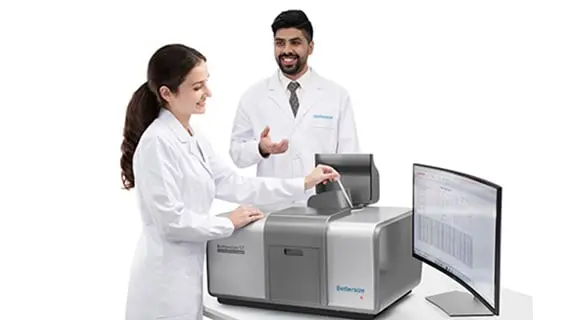
  • ひと目でわかる測定画面により操作性が良い

ビデオ

How to Install and Operate Bettersizer ST Video play

Bettersizer ST Self-Installation is Quick and Easy Video stop

Learn How Bettersizer ST can Help with Your Quality Control in 2 Minutes Video stop

Bettersizer ST | Demo (CaCO3 Sample) Video stop

Bettersizer ST Overview | Laser Diffraction Particle Size Analyzer for QC Video stop

概要

Citations

  • Bettersizer ST

    Super stable Melaleuca alternifolia essential oil Pickering emulsions stabilized with cellulose nanofibrils: Rheological aspects

    DOI: 10.1016/j.molliq.2022.121183 Read Article Go logo
    Federal University of ABC (UFABC) | 2023
    Melaleuca alternifolia essential oil (MaEO) has attracted technological interest in the pharmaceutical, cosmetic and food sectors for its outstanding and broad antimicrobial spectra. However, its active components are highly susceptible to oxidation due to weathering. Therefore, stabilization of the MaEO components is essential. In this work, we evaluated the stability and rheology of MaEO-in-water Pickering emulsions using cellulose nanofibrils (CNF) as an eco-friendly and sustainable stabilizing agent. Small amplitude oscillatory shear (SAOS) tests brought exciting information about the relationship between internal microstructure strength and the relaxation processes, retardation processes, and viscous flow behavior of the emulsions. Measurements of oil droplet diameter distribution and steady-state rheological tests indicate that the emulsions have super stability under static environmental conditions within 28 storage days. Also, the emulsions present steady-state viscosity suitable for applications in dysphagic foods, presenting a pronounced shear-thinning behavior appropriate to developing cream and lotion skin-care eco-friendly products for the human body.
  • Bettersizer ST

    Rare-Earth Elements Extraction from Low-Alkali Desilicated Coal Fly Ash by (NH4)2SO4 + H2SO4

    DOI: 10.3390/ma16010006 Read Article Go logo
    Ural Federal University | 2023

    Coal fly ash (CFA) obtained from pulverized coal furnaces is a highly refractory waste that can be used for alumina and rare-earth elements (REEs) extraction. The REEs in this type of CFA are associated with a mullite and amorphous glassy mass that forms a core-shell structure. In this research, it was shown that complete dissolution of amorphous aluminosilicates from the mullite surface with the formation of the low-alkali mullite concentrate prior to sulfuric acid leaching with the addition of (NH4)2SO4 helps to accelerate the extraction of REEs. The extraction degree of Sc and other REEs reaches 70–80% after 5 h of leaching at 110 °C and acid concentration of 5 M versus less than 20% for the raw CFA at the same conditions. To study the leaching kinetics of the process, the effects of temperature (90–110 °C), liquid-to-solid ratio (5–10), and leaching time (15–120 min) on the degrees of Al and rare-earth elements (REEs) extraction were evaluated. After 120 min of leaching at 110 °C and L/S ratio = 10, the extraction of Al was found to be lower than 30%. At the same time, total REEs (TREE) and Fe extraction were greater than 60%, which indicates that a part of the TREE was transferred into the acid soluble phase. After leaching, the residues were studied by laser diffraction (LD), X-ray diffraction (XRD), X-ray fluorescence (XRF), and scanning electron microscopy (SEM-EDS) to evaluate the leaching mechanism and the solubility of Al- and Fe-containing minerals, such as mullite, hematite, and amorphous aluminosilicate.

  • Bettersizer ST

    From waste graphite fines to revalorized anode material for Li-ion batteries

    DOI: 10.1016/j.carbon.2023.118004 Read Article Go logo
    National Institute of Scientific Research/Institut national de la recherche scientifique | 2023
    A crucial step in the production of battery grade natural graphite for lithium-ion batteries is the spheroidization process. However, the spheroidization yield is typically only about 50%. The by-product consists of graphite fines that are not suitable for use in lithium-ion batteries due to their small particle size (<10 μm), therefore, graphite fines are discarded or sold at a loss. In this work, we report a method for graphite fines re-agglomeration and petroleum pitch coating that allows for revalorization and recycling of waste graphite from the spheroidization process. Re-agglomeration of graphite fines was achieved by spray drying technique using carboxymethyl cellulose as binder and citric acid as cross-linking agent to improve the mechanical strength of the agglomerate. The as-obtained particles were subjected to heat treatment in presence of petroleum pitch for simultaneous binder and pitch decomposition to obtain pitch-coated particles. Resulting agglomerate particles showed a median size comparable to a commercial battery grade natural graphite reference and proved structurally sound to withstand the electrode calendering process. Pitch-coated agglomerate particles exhibited lower surface area and improved stability in comparison with non-coated graphite agglomerate. The electrochemical performance of the coated material was comparable to a commercial graphite reference, particularly in terms of cumulative irreversible capacity. Analysis by X-ray nano-computed tomography provided further insight into morphological properties and dimensional changes after calendering and upon galvanostatic cycling. Overall, the material obtained through this method shows great potential for re-introduction in the production chain of battery grade natural graphite for lithium-ion batteries.
  • Bettersizer ST

    Pozzolanic activity of stockpile ash: Comparison of test methods

    DOI: 10.1016/j.cscm.2023.e02396 Read Article Go logo
    University of Chemistry and Technology Prague | 2023
    The paper deals with the determination of the pozzolanic activity of coal-fired power plant fly and bottom ash deposited in stockpiles in the Czech Republic. The pozzolanic activity of the ash was determined using the Frattini test, modified Chapelle test, electrical conductivity test, and strength activity index. The ash collected from a stockpile was not found to display any pozzolanic activity by the methods utilised. However, milling the fly and bottom ash was shown to be the means of activating its pozzolanic properties. The study demonstrated the pozzolanic activity of the deposited ash notably increasing together with a growing time of milling and the associated increase in the specific surface area. Also, the research study presented here carried out the comparison of the individual methods regarding their effect on the pozzolanic activity and has revealed their good mutual correlation.
Page 1 of 6
  • 1
  • 2
  • 3
  • 4
  • 5
  • 6
Go to

厳選されたリソース

その他の資料

お客様のお声

貴重なQCマシン

過去3年間、炭酸カルシウムの粒度分析にBettersizer STを使用してきました。この装置は、私たちが粉砕工程を設計する際の貴重なQC装置であることが証明されました。その一貫した正確な結果は、私たちの粉砕と研究室の運営に大きく貢献しています。

Chaudhary Ali Arif

使いやすい

使いやすい、性能が良い、信頼できる、良い投資

Yolanda Marcela Enríquez-Méndez

start end
SelectScience

関連粒度分布測定機

  • Bettersizer 2600

    Bettersizer 2600

    あらゆるニーズに応える粒子解析装置

    測定範囲:0.02~2,600μm(湿式分散)

    測定範囲:0.1~2,600μm(乾式分散)

    測定範囲:2~3,500 μm(動的画像解析)

  • Bettersizer S3 Plus

    Bettersizer S3 Plus

    粒子径・粒子形状分析装置

    測定範囲:0.01~3,500μm(レーザ回折・散乱法)

    測定範囲:2~3,500μm(動的画像解析法)

  • BeScan Lab stability analyzer

    BeScan Lab

    分散安定性評価装置

    完全非破壊測定

    最大95%v/vの高濃度分散体の評価が可能

    80℃まで加熱温調機能を搭載

  • BeNano 180 Zeta Pro

    BeNanoシリーズ

    ナノ粒子径・ゼータ電位測定装置

    搭載技術:DLS(動的光散乱法)、ELS(電気泳動光散乱法)、SLS(静的光散乱法)