> 제품 > PowderPro A1

PowderPro A1

견적 요청 연락 판매
브로셔 다운로드

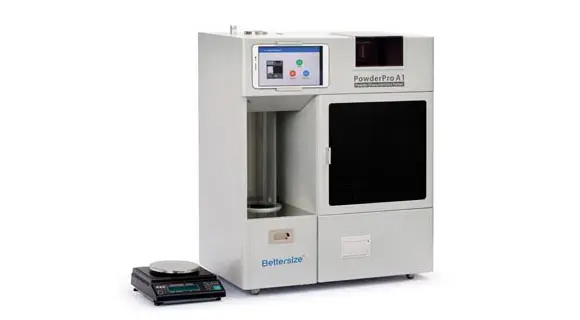
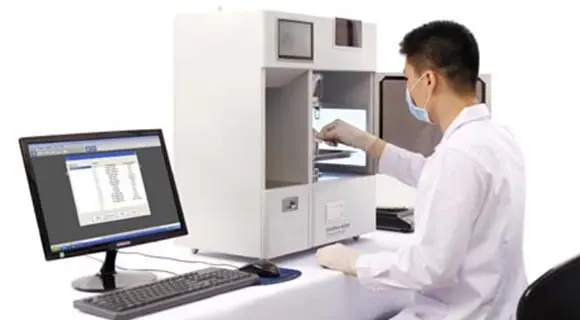
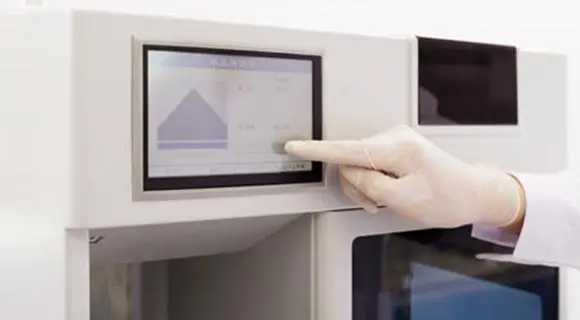
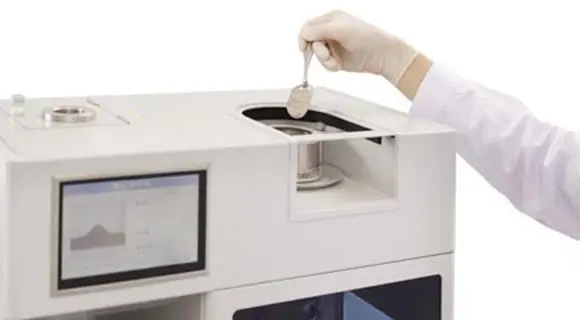
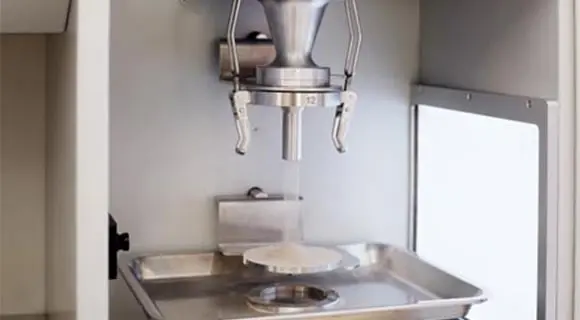
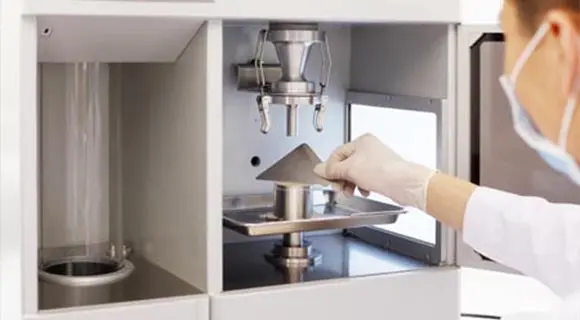
PowderPro A1 스마트형 분체 특성 측정기는 Wi-Fi 제어, 이미지 처리, 체 입도 분석(sieve analysis), 3D 전자기 진동 등 첨단 기술을 탑재하여, 14가지 분체 특성을 빠르고 정확하게 측정합니다. 이 지능형 측정기는 분말 재료의 특성을 이해하고 연구하는 데 필수적인 도구입니다.

특징 및 장점

  • 컴팩트한 디자인
  • 체 입도 분석 가능
  • 빠르고 간편한 데이터 출력
  • 지능형 데이터 전송 및 분석
  • 앱을 통해 제어 가능
  • 자동화된 이미지 처리 기술

동영상

What is angle of repose? Why and how do we measure it? Video play

Flowability Calculation of Powder Materials Using PowderPro A1 Video stop

Cohesion & Uniformity Measurement and Calculation of Powder Materials Using PowderPro A1 Video stop

Tapped Density and Compressibility Measurement of Powder Materials Using PowderPro A1 Video stop

Bulk Density Testing of Non-metallic Powder Materials with PowderPro A1 Video stop

Angle of Spatula Measurement of Powder Materials with PowderPro A1 Video stop

Angle of Repose, Angle of Fall & Angle of Difference Testing of Powder Materials with PowderPro A1 Video stop

PowderPro A1 Overview | Automatic Powder Characteristics Tester Video stop

개요

Citations

  • PowderPro A1

    Optimization of inorganic powder properties for manufacturing ceramic filter using binder jetting process

    DOI: 10.1016/j.addma.2023.103564 Read Article Go logo
    Korea University | 2023
    Porous ceramics are employed in an extensive range of industrial applications due to superior thermal insulation and physical properties that permit their use for separation and storage. However, in conventional manufacturing environments, an additional process is required for artificial pore control. Furthermore, these methods are inferior in terms of the geometric design of the fabricated products owing to limitations in the forming process. To improve these disadvantages, many studies have recently been conducted on the porous structures using additive manufacturing techniques. In particular, binder jetting method can be utilized for fabricating porous ceramics to overcome the limitations of conventional manufacturing process. This study demonstrates an optimal process for the fabrication of porous ceramics by applying binder jetting technology. Powder flowability and compatibility were optimized using the flow agent and the secondary binder. The effects of adding glass frit and adjusting the sintering temperature on the microstructure, porosity, and mechanical properties of the final product were also investigated in detail. Additionally, various filter design of inner flow path was investigated using computational fluid dynamics to improve the filtering efficiency and fabricated using the optimized ceramic powder through binder jetting technique.
  • PowderPro A1

    Hierarchically porous alumina ceramic catalyst carrier prepared by powder bed fusion

    DOI: 10.1016/j.jeurceramsoc.2020.03.059 Read Article Go logo
    Xi'an Jiaotong University | 2020
    Hierarchical porous ceramic catalyst carriers, which exhibit good catalytic performance, are widely used in the petrochemical industry. However, the fabrication of ceramic carriers with hierarchically porous structures is highly challenging for conventional preparation processes. Thus, a strategy for designing and manufacturing hierarchically porous alumina ceramic catalyst carriers using aluminium trihydrate as raw material and powder bed fusion (PBF) as the forming process is proposed herein. PBF process parameters were optimised to define the processing window for creating ceramics with complex structures. Controllable pore characteristics in nano- and microscales has been achieved by combining dehydroxylation, PBF, and post-sintering processes. The effects of raw material composition and process parameters on crush strength, porosity, and specific surface area were systematically investigated. The resulting porous ceramics exhibit a crush strength of 86.03 ± 18.10 N/cm, specific surface area of 1.958 ± 0.123 m2/g, and porosity of 64.85 ± 1.15% with a multipeak distribution at 95 ± 1.23 nm and 17.76 ± 0.14 μm. The possibility of complicated monolithic catalyst carrier structures with bionic leaf vein characters has been validated for potential industrial applications.
  • PowderPro A1

    Physicochemical properties of mealworm (Tenebrio molitor) powders manufactured by different industrial processes

    DOI: 10.1016/j.lwt.2019.108514 Read Article Go logo
    Gangneung Institute of Natural Products | 2019
    The mealworm is a typical edible insect, and when mealworms are processed to powder form, their desirability to consumers may increase. To identify optimal conditions for producing mealworm powders, six conditions were tested and verified. First, spray-dried whole-fat powder and solvent-defatted powder ground with a cutter mill were prepared. In addition, four types of press-defatted powders were ground with a pin-, hammer-, jet-, or cutter-mill. In conclusion, whole-fat spray-dried powder had more round shape and showed high homogeneity of particle size, but there were many limitations in powder flowability. Mealworm powders had better flowability and other physical properties, such as emulsion and foaming activities, when the fat was removed. However, the solvent-defatted powders, which lacked fat, were less desirable to consumers due to their lack of flavor. Among the press-defatted mealworm powders, the one milled by a jet mill showed better flowability and physicochemical properties compared to the other powders.
  • PowderPro A1

    Effect of carrier agents on the physical properties and morphology of spray-dried Monascus pigment powder

    DOI: 10.1016/j.lwt.2018.08.056 Read Article Go logo
    Beijing Technology & Business University | 2018
    Spray drying is an economic technique used in preservation and production of Monascus pigment powder. This study was performed to encapsulate the Monascus pigment with maltodextrin using spray drying technique with three types of carrier agents: propylene glycol, mannitol and polyglycerol ester at different concentrations (0.5%, 1% and 1.5%). Analyses of particle size, the spattering behavior, microstructure, color value, and thermal profile were performed on the obtained powder. The addition of propanediol, mannitol and polyglycerol ester in combination with maltodextrin led to an increase of 17.5%, 45.8%, and 23.5% in the volume mean diameter of Monascus pigment powder, respectively. The decrease of spattering of Monascus pigment with maltodextrin was clearly evident in the case of formulations containing 1.5% polyglycerol ester. Scanning electronic microscopy analyses showed that Monascus pigment particle treated with maltodextrin exhibited microstructures that were smooth and dented, while the particles treated with carriers exhibited rough, irregular surface and adherence of smaller particles on their surfaces. UV–visible spectroscopy proved that the addition of carriers did not influence the molecular structure of Monascus pigment compared to the powder without carrier treatment. Differential scanning calorimeter analysis revealed that mannitol enhanced water vaporization during spray drying process as lower enthalpy change was observed in thermogram. The addition of an appropriate carrier (0.5%, 1.5% propanediol or 1% mannitol) improved the color values of Monascus pigment.
Page 1 of 2
  • 1
  • 2
Go to

선별된 리소스

더 많은 리소스

관련 분말 특성 분석기

  • PowderPro A1

    PowderPro A1

    스마트형 분체 특성 측정기

    작동 방식: 자동

    탭 속도: 50 - 300 탭/분

    재연성: ≤3% variation

  • BeDensi T Pro Series

    BeDensi T Pro 시리즈

    비용 효율적인 탭밀도 측정기

    작업 스테이션 수: 1-3

    탭핑 속도: 100 - 300 탭/분

    반복성: ≤1% 변동

  • BeDensi B1 Bulk Density Tester

    BeDensi B1

    벌크 밀도 테스터

    측정: 벌크 밀도

    GB/T 16913 준수

  • BeDensi-B1-S-Scott-Volumeter

    BeDensi B1-S

    스콧 볼류미터

    측정: 벌크 밀도

    USP, Ph. Eur., ASTM 및 ISO 표준 준수

  • HFlow 1 Flowmeter Funnel

    HFlow 1

    플로우미터 깔때기 (Flowmeter Funnel)

    측정 항목: 겉보기 밀도 및 흐름 속도

    규격 준수: USP, Ph. Eur., ASTM, ISO 표준 준수

  • BeDensi AR Angle of Repose Tester

    BeDensi AR

    안식각 측정기

    측정 종목: 안식각

    USP 및 Ph. Eur.표준을 준수

  • BeDensi-P-Bulk-Density-Tester-Plastic

    BeDensi P

    겉보기 밀도 측정기 - 플라스틱 재료

    겉보기 밀도 측정용

    ISO 및 GB/T 표준 준수