Bettersizer S3 Plus
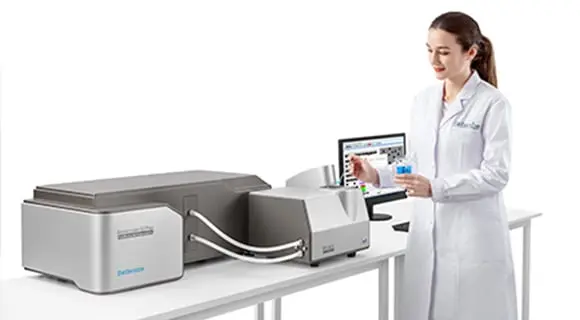
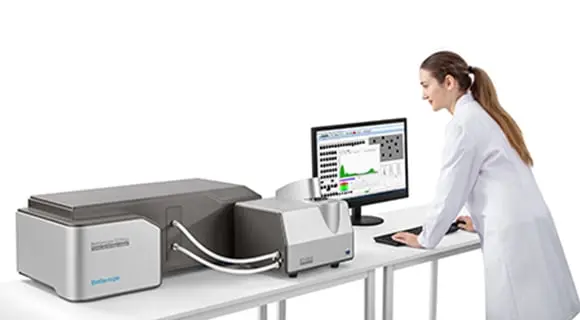
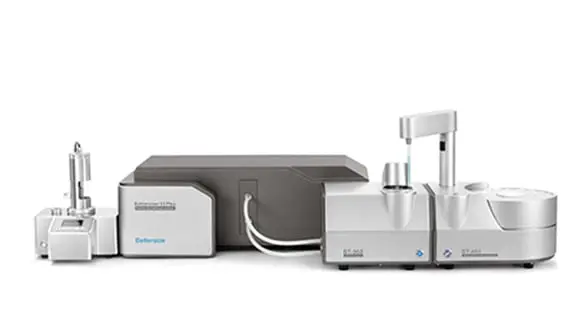
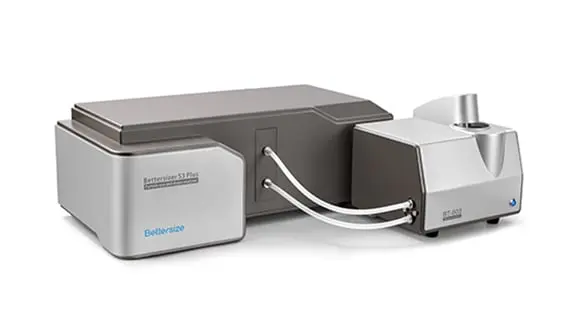
Le Bettersizer S3 Plus combine la diffraction laser et l'analyse dynamique d'images en un seul instrument. Il peut mesurer la taille et la forme des particules de 0,01 μm à 3500 μm. Sa sensibilité exceptionnelle, que ce soit pour les particules ultrafines ou les particules surdimensionnées, et sa résolution inégalée en font l'analyseur de taille et de forme le plus puissant pour les chercheurs enthousiastes qui mènent des recherches scientifiques de haut niveau.
Caractéristiques et avantages
- ● Plage de mesure de 0,01 à 3 500μm (système laser), 2 à 3 500μm (système d'imagerie).
- ● Combinaison de la diffraction laser et de l'analyse dynamique d'images en un seul instrument, permettant d'obtenir simultanément des résultats sur la taille et la forme.
- ● Le système breveté DLOI (Dual Lenses & Oblique Incidence) permet de mesurer des particules ultrafines jusqu'à 0,01 um.
- ● La technologie d'imagerie à double caméra permet d'afficher les images des particules en temps réel et de détecter les particules surdimensionnées jusqu'à 3500 um.
- ● La mesure de l'indice de réfraction permet de déterminer l'indice de réfraction d'échantillons inconnus et d'améliorer la fiabilité des résultats.
- ● Conformité avec 21 CFR Part 11, ISO 13320, USP <429>, CE
Vidéo
How to Install and Operate Bettersizer S3 Plus 
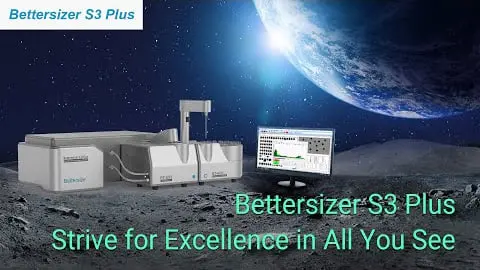
Bettersizer S3 Plus | Strive for Excellence in All You See 
BT-A60 Autosampler | Demo 
Demo of Bettersizer S3 Plus 2-In-1 Particle Size and Shape Analyzer 
Fundamentals of Bettersizer S3 Plus 2-In-1 Particle Size and Shape Analyzer 
Bettersizer S3 Plus | Particle Size and Shape Analyzer 
Bettersizer S3 Plus Overview | Strive for Excellence in All You See 
Vue d'ensemble
Citations
- Bettersizer S3 Plus
Experimental study on particles directed transport by an alternating travelling-wave electrostatic field
DOI: 10.1016/j.powtec.2022.117107 Read ArticleChina Academy of Space Technology | 2022A continuous and controllable lunar regolith directed transport is crucial for the development of the 3D printing technology on the moon. The electrostatic method becomes a promising particle transport method for the extraterrestrial environment due to its irreplaceable advantages over other traditional methods. In this paper, particle directed transport by an alternating four-phase travelling-wave electrostatic field is experimentally investigated. Great efforts are made to carefully present the detailed particle movement trajectories and to deeply understand the particle control mechanism of the electrostatic method. It is found that not only the excitation frequency would affect the particles' transport direction, but also the voltage amplitude and geometric parameters would change the transport direction. For the present experiments, the backward transport of lunar regolith simulant can be realized at the low frequency conditions (2– 30 Hz). By post-processing of the recorded pictures, the detailed particle behaviors and the changes of the particles' velocity vector distribution with the electrostatic field propagation are obtained. The formation processes of both the forward and backward directed transports of particles are carefully demonstrated and discussed. Based on the obtained results, the most important part of particles, which plays a great role in the directed transport formation in an alternating electrostatic field, is determined and valuable investigation suggestion is proposed. Additionally, the impacts of the key influencing parameters on particle transport performance are obtained. - Bettersizer S3 Plus
Preparation of alkali-activated grouts as an innovative method for utilisation of gold ore tailings
DOI: 10.1080/19648189.2022.2033328 Read ArticleZaozhuang University | 2022his study reports the use of gold ore tailings (GOTs) in alkali-activated grouts. A series of tests were performed to investigate the engineering properties of the alkali-activated grout pastes with different mix proportions. The ranges of water-to-solid ratios and the mechanically ground GOTs contents were 0.6–1.5 and 0–50%, respectively. It was found that the bleed capacity, mini-slump diameter and compressive strength decreased with the increase in mechanically ground GOTs content, while the apparent viscosity and setting time were increased. To ensure sufficient flowability, reduced bleeding, a reasonable setting time, and adequate strength, the water-to-solid ratio and the mechanically ground GOTs contents were recommended as 1.0 and 30 wt.%, respectively. At the same time, the hydration properties of the alkali-activated grouts were investigated. It was found that mechanically ground GOTs exhibit pozzolanic activity and possess similar hydration properties to ground granulated blast-furnace slag (GGBFS), although its pozzolanic activity is lower than GGBFS. Mechanically activated GOTs can react with calcium hydroxide to form C–S–H gel and ettringite crystals in the presence of anhydrous gypsum. This innovative method provides reliable technical indexes and scientific basis for utilisation of GOTs. - Bettersizer S3 Plus
Size, morphology, and composition of lunar samples returned by Chang’E-5 mission
DOI: 10.1007/s11433-021-1818-1 Read ArticleChina Academy of Space Technology | 2022This study focuses on the physical and chemical properties of surficial lunar regolith (LR) samples returned from the Moon by the Chang'E-5 (CE-5) mission. Insights regarding the effect of a new sampling geological site on the surficial lunar sample CE5C0400 were illustrated using nondestructive techniques such as laser diffractometry coupled with image analysis, X-ray computed tomography, and field emission scanning electron microscopy equipped with energy dispersive spectroscopy, and X-ray diffraction combined with Rietveld refinement. From the characterization analyses, the CE-5 sampling site in the northeastern Oceanus Procellarum on the Moon yields a unique collection of relatively regular-shaped and fine basalt-dominated particles. The median grain size D50 is (55.24±0.96) μm, falling within the relatively low end of the range of the Apollo lunar returned samples. The coefficient of uniformityCu of 15.1 and the coefficient of curvature CC of 1.7 could classify CE5C0400 to be well-graded. The minerals in CE5C0400 comprise approximately 44.5% pyroxene, 30.4% plagioclase, 3.6% olivine, and 6.0% ilmenite. There is a relatively low content of approximately 15.5% glass phase in the CE-5 lunar sample. From the results, we deduce that the CE-5 LR structure could have mainly resulted from micrometeoroid impacts to achieve such a high level of maturity. - Bettersizer S3 Plus
Enhancing the bioaccessibility of puerarin through the collaboration of high internal phase Pickering emulsions with β-carotene
DOI: 10.1039/D1FO03697A Read ArticleBohai University | 2022Puerarin, a bioactive flavonoid found in the root of Pueraria lobata, is claimed to possess various medicinal properties. However, application of puerarin in functional foods is currently limited by its poor bioaccessibility. Existing delivery systems that guarantee puerarin bioaccessibility involve complex preparation steps and safety issues. Therefore, this study aimed to use meat protein and olive oil to efficiently and economically fabricate a food grade high internal phase Pickering emulsion (HIPPE) with co-encapsulated puerarin and β-carotene to improve the bioaccessibility of puerarin. Moreover, the impact on lipid digestibility and puerarin bioaccessibility was verified using a simulated in vitro gastrointestinal tract. Co-encapsulating puerarin and β-carotene in HIPPE increased puerarin bioaccessibility (85.17%) compared to that achieved with only puerarin in HIPPE (62.66%). This increased bioaccessibility may have been due to the personalized formulation and the exceptional structure of the HIPPE, which slowed down lipid digestion and inhibited puerarin degradation. A synergistic interaction occurred between β-carotene and HIPPE to improve puerarin bioaccessibility. Our results have important implications for the design of effective delivery systems for encapsulation of puerarin and other bioactive components.
- 1
- 2
- 3
- 4
- 5
- 6
- 12
Ressources sélectionnées
Témoignages

Analyseur de taille de particules apparenté
-
Bettersizer ST
One-stop Particle Size Analyzer
Dispersion type: Wet
Measurement range: 0.1 - 1,000µm
Repeatability: ≤1% variation
-
BT-Online1
Online Particle Size Analyzer
Dispersion type: Dry
Measurement range: 0.1 - 1,000μm
Accuracy: ≤1% (D50 of certified reference material)
-
Bettersizer 2600
Particle Size & Shape Analyzer
Measurement range: 0.02 - 2,600μm (Wet dispersion)
Measurement range: 0.1 - 2,600μm (Dry dispersion)
Measurement range: 2 - 3,500μm (Dynamic imaging)
-
BeVision M1
Automated Static Image Analyzer
Dispersion type: Dry
Measurement range: 0.3 - 10,000 μm
Technology: Static Image Analysis
-
BeVision D2
Image Analyzer
Dispersion type: Dry
Measurement range: 30 - 10,000μm
Technology: Dynamic Image Analysis
-
BeVision S1
Classical and Versatile Static Image Analyzer
Dispersion type: Dry & Wet
Measurement range: 0.3 - 4,500 µm
Technology: Static Image Analysis
-
BeScan Lab
Stability Analyzer
Particle size ranges from 10 nm to 1 mm
Volume fraction up to 95%
Compliance with ISO/TR 18811, 13097, 21357, 22107