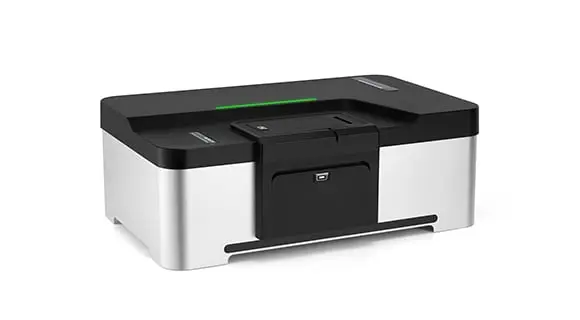
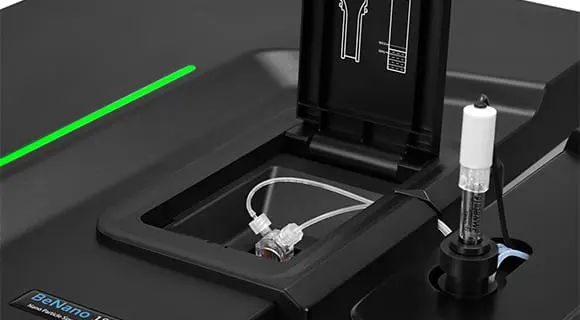
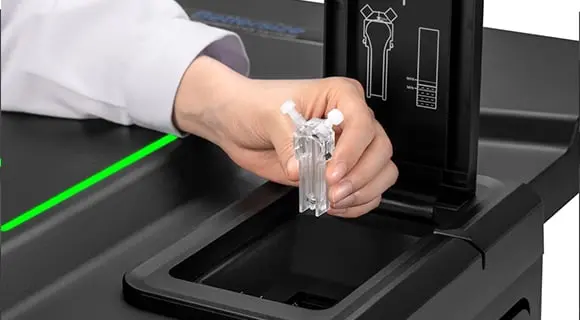
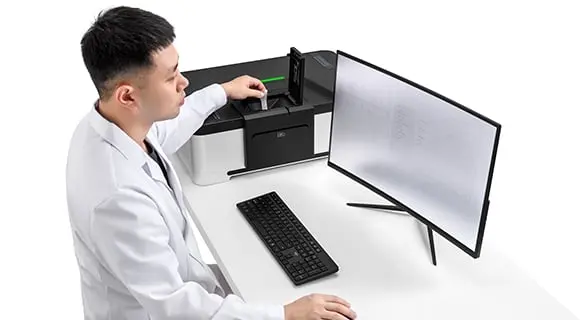
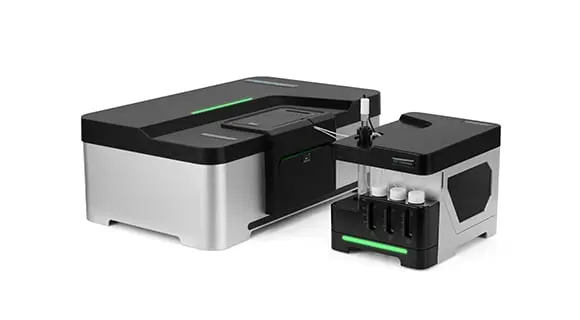
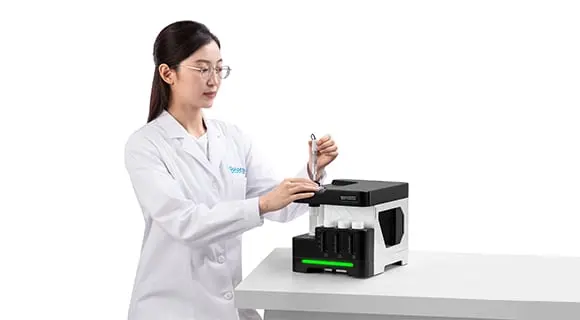
BeNano 180 Zeta Pro
La série BeNano est la dernière génération d'analyseurs de la taille des nanoparticules et du potentiel zêta conçus par Bettersize Instruments. La diffusion dynamique de la lumière (DLS), la diffusion électrophorétique de la lumière (ELS) et la diffusion statique de la lumière (SLS) sont intégrées dans le système pour fournir des mesures précises de la taille des particules, du potentiel zêta et du poids moléculaire. La série BeNano est largement appliquée dans les processus académiques et de fabrication de divers domaines, y compris, mais sans s'y limiter, le génie chimique, les produits pharmaceutiques, les aliments et les boissons, les encres et les pigments, et les sciences de la vie, etc.
Caractéristiques et avantages
- ● Taille : 0,3 nm - 15μm
- ● Volume minimal de l'échantillon : 3μL
- ● Détecteur APD (Avalanche Photodiode) offrant une sensibilité exceptionnelle
- ● Réglage automatique de l'intensité du laser
- ● Algorithme intelligent d'évaluation des résultats
- ● Technologie de détection par rétrodiffusion DLS (173°)
- ● Volume de diffusion réglable par l'utilisateur pour les échantillons concentrés
- ● Technologie PALS (Phase Analysis Light Scattering)
- ● Système de contrôle de la température programmable
- ● Conformité avec 21 CFR Part 11, ISO 22412, ISO 13099
Vidéo
Enhanced Size Resolution with DLS Flow Mode 
BeNano 90 Zeta | Demo (Polystyrene Standard Sample) 
Fundamentals of BeNano 90 Zeta 
BeNano 90 Zeta | Nanoparticle size and zeta potential analyzer 
BeNano Series | Customer Perspective & Demo 
Understanding the DLS Backscattering Technology 
Book a Free Demo with Global Distributors 
BeNano 180 Zeta Pro | Demo (Polystyrene Latex Sample) 
BeNano 180 Zeta Pro | Nanoparticle size and zeta potential analyzer 
BeNano 180 Zeta Pro Launch Event | Nanoparticle size and zeta potential analyzer 
4 Questions Nanoparticle Researchers are Really Asking About 
Fundamentals of BeNano 180 Zeta Pro 
Fundamentals of BAT 1 Autotitrator 
Fundamentals of DLS Microrheology 
How to Measure Microrheological Properties of Liquids by BeNano? 
How to Operate BAT 1 Autotitrator to Measure Zeta Potential vs. pH 
Fundamentals of BeNano 180 Zeta Pro 
Vue d'ensemble
Citations
- BeNano 180
Wetting and deposition behaviors of pesticide droplets with different dilution ratios on wheat leaves infected by pathogens
DOI: 10.1016/j.molliq.2022.120977 Read ArticleChinese Academy of Agricultural Sciences | 2023The pesticide formulations should be diluted to different concentrations according to selected application methods. The structure and properties of crop leaf surfaces can undergo severe changes after infestation with pests or diseases. Previous studies have mostly focused on the interfacial behaviors of pesticide droplets on healthy plant leaves. Here, we prepared 25 % pyraclostrobin microemulsion and diluted it according to different dilution ratios corresponding to low volume and conventional volume spray methods. The dynamic wetting and deposition behaviors of pesticide solution on wheat leaves infected with powdery mildew were investigated. The surface structure and properties of wheat leaves covered by the fungus Blumeria graminis will be changed. Conidia produce more non-polar components. The droplets with low dilution were more likely to deposit and reach the Wenzel state on wheat powdery mildew leaves. However, the droplets with high dilution were difficult to wet and easy to break and rebound from leaf surfaces. This research guides the control of wheat powdery mildew with pesticides under different application methods and the interface interaction between pesticide droplets and hydrophobic leaf surfaces infected by pathogens. - BeNano 180 Zeta
Gallium-doped MXene/cellulose nanofiber composite membranes with electro/photo thermal conversion property for high performance electromagnetic interference shielding
DOI: 10.1016/j.cej.2023.142565 Read ArticleHuazhong University of Science and Technology | 2023With the rapid development of science and technology, information security and multiscenario applications of electronic equipment have received increasing attention in recent years. Therefore, the design and development of multifunctional electromagnetic interference shielding materials are key to solving the current development needs of electronic equipment. Based on the above topics, multifunctional liquid metal gallium (Ga)-doped transition metal carbides/nitrides (MXenes)/cellulose nanofiber (CNF/MXene@Ga, CMG) composite membranes with a nacre-like “brick–mortar” layered structure were synthesized using an ultrasonic probe and vacuum-assisted filtration. By optimizing the design, the CMG composite membranes could achieve a tensile strength of 36.12 MPa with good flexibility and could achieve a maximum thermal conductivity of approximately 9.11 W/m·K. The heterogeneous interface between MXenes and Ga nanoparticles and the intercalation of Ga nanoparticles significantly influenced the composite membranes for the absorption of electromagnetic waves, which yielded a specific shielding effectiveness per unit volume (SSE/t) of 6444.1 dB·cm2·g−1; this value is over the vast majority reported in the current literature. Further studies confirmed that the CMG composite membranes possessed excellent electrothermal and photothermal conversion functions. The electrothermal conversion agreed with Joule's law. Moreover, the phase transition behavior of Ga also imparts the membranes with the ability to store heat. The photothermal conversion ability was attributed to the surface plasmon resonance effect of Ga. Therefore, this work provides material support for the information security and multi-scenario applications of electronic equipment. - BeNano 180 Zeta Pro
Applying dynamic light scattering to investigate the self-assembly process of DNA nanostructures
DOI: 10.1016/j.cclet.2023.108384 Read ArticleUniversity of Chinese Academy of Sciences | 2023Understanding the dynamic assembly process of DNA nanostructures is important for developing novel strategy to design and construct functional devices. In this work, temperature-controlled dynamic light scattering (DLS) strategy has been applied to study the global assembly process of DNA origami and DNA bricks. Through the temperature dependent size and intensity profiles, the self-assembly process of various DNA nanostructures with different morphologies have been well-studied and the temperature transition ranges could be observed. Taking advantage of the DLS information, rapid preparation of the DNA origami and the brick assembly has been realized through a constant temperature annealing. Our results demonstrate that the DLS-based strategy provides a convenient and robust tool to study the dynamic process of forming hieratical DNA structures, which will benefit understanding the mechanism of self-assembly of DNA nanostructures. - BeNano 180 Zeta Pro
Enhanced Sludge Dewatering by Fenton-Like Reaction Initiated by Fe-Rich Sludge Biochar with In-Situ Generation of H2O2: Fe/C Structure as an Electron Shuttle
DOI: 10.1016/j.resconrec.2023.107184 Read ArticleHuazhong University of Science and Technology | 2023Fenton-like reaction has been used to enhance sludge dewaterability effectively. However, the unstable characteristic, ignitability, and corrosivity of H2O2 make it difficult for application. To address this challenge, a novel process of in-situ H2O2 generation by Fe-rich sludge biochar under aeration condition combined with poly-diallyldimethylammonium chloride (PDMDAAC) was proposed to enhance sludge dewaterability. Under optimized conditions, the capillary suction time and specific resistance to filterability of the conditioned sludge were reduced significantly compared with raw sludge (54.2 vs. 351 s, 0.249×10¹³ vs. 2.68×10¹³ m/kg, respectively). The carbon skeleton in Fe-rich sludge biochar can reduce the charge transfer impedance between Fe and O2, promoting in-situ generation of H2O2. The degradation of hydrophilic organics in extracellular polymeric substances of sludge floc and the PDMDAAC coagulation effect promoted the release of bound water. This study provides a strategy to enhance sludge dewaterability by Fenton-like reaction initiated by Fe-rich biochar with no H2O2 addition.
- 1
- 2
- 3
- 4
- 5
- 6
- 11
Ressources sélectionnées
Témoignages

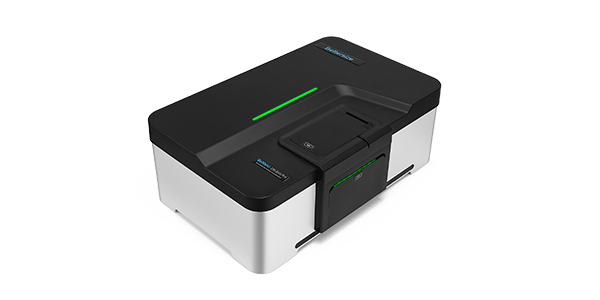
BeNano 180 Zeta Pro
La série BeNano est la dernière génération d'analyseurs de la taille des nanoparticules et du potentiel zêta conçus par Bettersize Instruments. La diffusion dynamique de la lumière (DLS), la diffusion électrophorétique de la lumière (ELS) et la diffusion statique de la lumière (SLS) sont intégrées dans le système pour fournir des mesures précises de la taille des particules, du potentiel zêta et du poids moléculaire. La série BeNano est largement appliquée dans les processus académiques et de fabrication de divers domaines, y compris, mais sans s'y limiter, le génie chimique, les produits pharmaceutiques, les aliments et les boissons, les encres et les pigments, et les sciences de la vie, etc.
Analyseur de taille de particules apparenté
-
Bettersizer 2600
Particle Size & Shape Analyzer
Measurement range: 0.02 - 2,600μm (Wet dispersion)
Measurement range: 0.1 - 2,600μm (Dry dispersion)
Measurement range: 2 - 3,500μm (Dynamic imaging)
-
Bettersizer ST
One-stop Particle Size Analyzer
Dispersion type: Wet
Measurement range: 0.1 - 1,000µm
Repeatability: ≤1% variation
-
Bettersizer S3 Plus
Laser Diffraction Particle Size Analyzer
Measurement range: 0.01 - 3,500μm (Laser System)
Measurement range: 2 - 3,500μm (Image System)
-
BeVision S1
Classical and Versatile Static Image Analyzer
Dispersion type: Dry & Wet
Measurement range: 0.3 - 4,500 µm
Technology: Static Image Analysis
-
BeVision M1
Automated Static Image Analyzer
Dispersion type: Dry
Measurement range: 0.3 - 10,000 μm
Technology: Static Image Analysis
-
BeScan Lab
Stability Analyzer
Particle size ranges from 10 nm to 1 mm
Volume fraction up to 95%
Compliance with ISO/TR 18811, 13097, 21357, 22107