Bettersizer ST
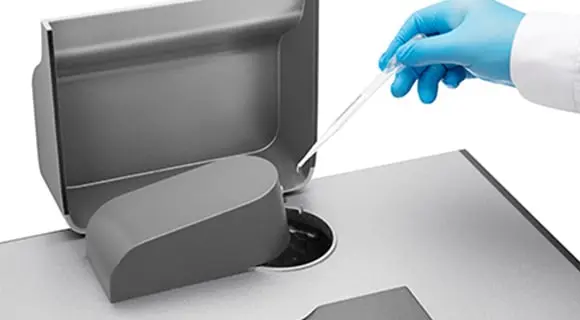
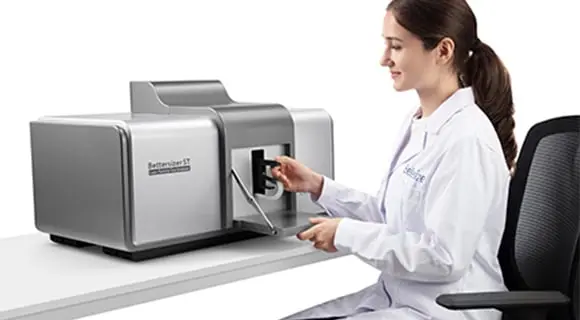
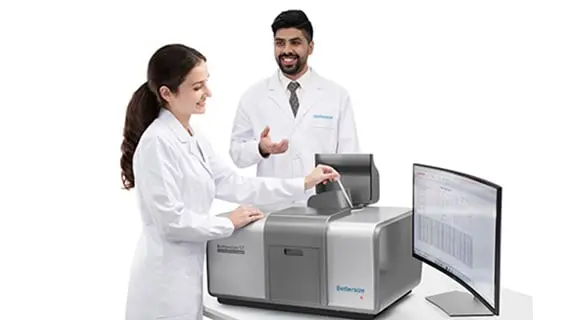
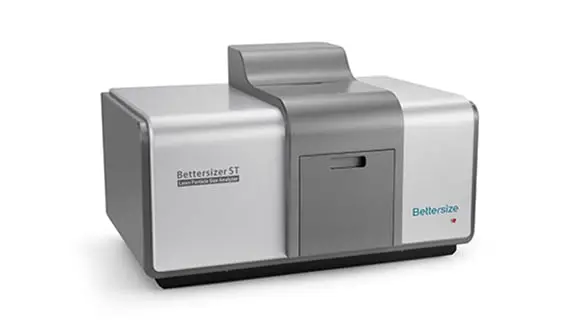
El Bettersizer ST es un analizador granulométrico totalmente automatizado e integrado con un sistema de funcionamiento inteligente por dispersión húmeda. Optimizado para el proceso de control de calidad industrial, el Bettersizer ST proporciona resultados de ensayo estables y fiables con una intervención mínima del usuario. Su tamaño compacto ahorra un valioso espacio de trabajo en fábricas y laboratorios.
Características y ventajas
- ● Tipo de dispersión: Húmedo
- ● Gama de tamaños: 0,1 - 1.000µm
- ● Robustez
- ● Facilidad de uso
- ● Rentabilidad
- ● Diseño compacto
- ● Bajo mantenimiento
- ● Sistema de doble lente
- ● Función de alineación automática
- ● Medición automática con SOP
Vídeo
How to Install and Operate Bettersizer ST 
Bettersizer ST Self-Installation is Quick and Easy 
Learn How Bettersizer ST can Help with Your Quality Control in 2 Minutes 
Bettersizer ST | Demo (CaCO3 Sample) 
Bettersizer ST Overview | Laser Diffraction Particle Size Analyzer for QC 
Visión general
Citations
- Bettersizer ST
Super stable Melaleuca alternifolia essential oil Pickering emulsions stabilized with cellulose nanofibrils: Rheological aspects
DOI: 10.1016/j.molliq.2022.121183 Read ArticleFederal University of ABC (UFABC) | 2023Melaleuca alternifolia essential oil (MaEO) has attracted technological interest in the pharmaceutical, cosmetic and food sectors for its outstanding and broad antimicrobial spectra. However, its active components are highly susceptible to oxidation due to weathering. Therefore, stabilization of the MaEO components is essential. In this work, we evaluated the stability and rheology of MaEO-in-water Pickering emulsions using cellulose nanofibrils (CNF) as an eco-friendly and sustainable stabilizing agent. Small amplitude oscillatory shear (SAOS) tests brought exciting information about the relationship between internal microstructure strength and the relaxation processes, retardation processes, and viscous flow behavior of the emulsions. Measurements of oil droplet diameter distribution and steady-state rheological tests indicate that the emulsions have super stability under static environmental conditions within 28 storage days. Also, the emulsions present steady-state viscosity suitable for applications in dysphagic foods, presenting a pronounced shear-thinning behavior appropriate to developing cream and lotion skin-care eco-friendly products for the human body. - Bettersizer ST
Rare-Earth Elements Extraction from Low-Alkali Desilicated Coal Fly Ash by (NH4)2SO4 + H2SO4
DOI: 10.3390/ma16010006 Read ArticleUral Federal University | 2023Coal fly ash (CFA) obtained from pulverized coal furnaces is a highly refractory waste that can be used for alumina and rare-earth elements (REEs) extraction. The REEs in this type of CFA are associated with a mullite and amorphous glassy mass that forms a core-shell structure. In this research, it was shown that complete dissolution of amorphous aluminosilicates from the mullite surface with the formation of the low-alkali mullite concentrate prior to sulfuric acid leaching with the addition of (NH4)2SO4 helps to accelerate the extraction of REEs. The extraction degree of Sc and other REEs reaches 70–80% after 5 h of leaching at 110 °C and acid concentration of 5 M versus less than 20% for the raw CFA at the same conditions. To study the leaching kinetics of the process, the effects of temperature (90–110 °C), liquid-to-solid ratio (5–10), and leaching time (15–120 min) on the degrees of Al and rare-earth elements (REEs) extraction were evaluated. After 120 min of leaching at 110 °C and L/S ratio = 10, the extraction of Al was found to be lower than 30%. At the same time, total REEs (TREE) and Fe extraction were greater than 60%, which indicates that a part of the TREE was transferred into the acid soluble phase. After leaching, the residues were studied by laser diffraction (LD), X-ray diffraction (XRD), X-ray fluorescence (XRF), and scanning electron microscopy (SEM-EDS) to evaluate the leaching mechanism and the solubility of Al- and Fe-containing minerals, such as mullite, hematite, and amorphous aluminosilicate.
- Bettersizer ST
From waste graphite fines to revalorized anode material for Li-ion batteries
DOI: 10.1016/j.carbon.2023.118004 Read ArticleNational Institute of Scientific Research/Institut national de la recherche scientifique | 2023A crucial step in the production of battery grade natural graphite for lithium-ion batteries is the spheroidization process. However, the spheroidization yield is typically only about 50%. The by-product consists of graphite fines that are not suitable for use in lithium-ion batteries due to their small particle size (<10 μm), therefore, graphite fines are discarded or sold at a loss. In this work, we report a method for graphite fines re-agglomeration and petroleum pitch coating that allows for revalorization and recycling of waste graphite from the spheroidization process. Re-agglomeration of graphite fines was achieved by spray drying technique using carboxymethyl cellulose as binder and citric acid as cross-linking agent to improve the mechanical strength of the agglomerate. The as-obtained particles were subjected to heat treatment in presence of petroleum pitch for simultaneous binder and pitch decomposition to obtain pitch-coated particles. Resulting agglomerate particles showed a median size comparable to a commercial battery grade natural graphite reference and proved structurally sound to withstand the electrode calendering process. Pitch-coated agglomerate particles exhibited lower surface area and improved stability in comparison with non-coated graphite agglomerate. The electrochemical performance of the coated material was comparable to a commercial graphite reference, particularly in terms of cumulative irreversible capacity. Analysis by X-ray nano-computed tomography provided further insight into morphological properties and dimensional changes after calendering and upon galvanostatic cycling. Overall, the material obtained through this method shows great potential for re-introduction in the production chain of battery grade natural graphite for lithium-ion batteries. - Bettersizer ST
Pozzolanic activity of stockpile ash: Comparison of test methods
DOI: 10.1016/j.cscm.2023.e02396 Read ArticleUniversity of Chemistry and Technology Prague | 2023The paper deals with the determination of the pozzolanic activity of coal-fired power plant fly and bottom ash deposited in stockpiles in the Czech Republic. The pozzolanic activity of the ash was determined using the Frattini test, modified Chapelle test, electrical conductivity test, and strength activity index. The ash collected from a stockpile was not found to display any pozzolanic activity by the methods utilised. However, milling the fly and bottom ash was shown to be the means of activating its pozzolanic properties. The study demonstrated the pozzolanic activity of the deposited ash notably increasing together with a growing time of milling and the associated increase in the specific surface area. Also, the research study presented here carried out the comparison of the individual methods regarding their effect on the pozzolanic activity and has revealed their good mutual correlation.
- 1
- 2
- 3
- 4
- 5
- 6
Recursos seleccionados
Testimonios

Analizador granulométrico relacionado
-
Bettersizer 2600
Particle Size & Shape Analyzer
Measurement range: 0.02 - 2,600μm (Wet dispersion)
Measurement range: 0.1 - 2,600μm (Dry dispersion)
Measurement range: 2 - 3,500μm (Dynamic imaging)
-
Bettersizer S3 Plus
Laser Diffraction Particle Size Analyzer
Measurement range: 0.01 - 3,500μm (Laser System)
Measurement range: 2 - 3,500μm (Image System)
-
BT-Online1
Online Particle Size Analyzer
Dispersion type: Dry
Measurement range: 0.1 - 1,000μm
Accuracy: ≤1% (D50 of certified reference material)
-
BeScan Lab
Stability Analyzer
Particle size ranges from 10 nm to 1 mm
Volume fraction up to 95%
Compliance with ISO/TR 18811, 13097, 21357, 22107