Productos químicos
Los instrumentos de Bettersize se utilizan ampliamente en el análisis del tamaño de partículas, la forma de partículas y las características del polvo de productos químicos para investigación y control de calidad.
Para desarrollar y optimizar la producción de materiales químicos, es necesario supervisar una serie de propiedades físicas, incluyendo el tamaño de partículas, la forma de las partículas y las características del polvo.
Los polímeros y plásticos constituyen el mayor sector de la producción de la industria química a nivel mundial. Los principales productos incluyen polietileno, polipropileno, cloruro de polivinilo, tereftalato de polietileno, poliestireno y policarbonato. La medición del tamaño de partículas en estos materiales desempeña un papel fundamental durante su producción y en las actividades de investigación y desarrollo.
Los principales mercados de los plásticos son el envasado, seguido de la construcción residencial, envases, electrodomésticos, tuberías, transporte, juguetes y juegos.
● El polímero de mayor volumen, el polietileno (PE), se utiliza principalmente en películas de envasado, botellas de leche, envases y tuberías.
● El cloruro de polivinilo (PVC), otro producto de gran volumen, se utiliza principalmente para fabricar tuberías para la construcción, así como revestimientos, materiales de transporte y de envasado.
● El polipropileno (PP), con un volumen similar al del PVC, se utiliza en mercados que abarcan desde el envasado, electrodomésticos y envases hasta la ropa y las alfombras.
● El poliestireno (PS), otro plástico de gran volumen, se utiliza principalmente en electrodomésticos, envases y especialmente como elemento de seguridad en vehículos para reducir las consecuencias de un accidente.
● Las principales fibras sintéticas incluyen poliéster, nailon, polipropileno y acrílicos, con aplicaciones en ropa, mobiliario del hogar y otros usos industriales y de consumo.
Otros productos químicos incluyen:
● Caucho sintético, tensioactivos, colorantes y pigmentos, trementina, resinas, negro de humo, explosivos y productos de caucho.
● Los productos químicos inorgánicos incluyen sal, sosa cáustica, carbonato de sodio, ácidos (como ácido nítrico, ácido fosfórico y ácido sulfúrico) y dióxido de titanio.
● Los fertilizantes constituyen la categoría más pequeña e incluyen fosfatos, amoníaco y compuestos de potasa.
Los equipos de proceso utilizados para la fabricación de plásticos incluyen moldes de inyección, moldes de compresión, extrusoras y moldes rotacionales. Un elemento común en todos estos procesos es el uso de gránulos o polvo como material inicial. Las características del material de alimentación deben cumplir ciertos criterios, como el punto de fusión. Además, la composición química, la resistencia a la flexión, la resistencia a la compresión, la resistencia al impacto, la densidad, la resistencia química y la resistencia a la tracción determinan las propiedades del producto final. El tamaño de partícula de los gránulos influye significativamente en la procesabilidad del polímero. La fluidez desde la tolva y la velocidad de fusión al calentarse afectan directamente la velocidad del proceso. Las partículas (gránulos) se producen generalmente en un rango de 200 a 2.000 micrómetros para su transporte y aplicación.
Para promover el desarrollo de la industria, se necesitarán mejores métodos de medición del tamaño de las partículas. ¿Qué tipo de métodos de análisis granulométricoserán mejores? El analizador láser de partículas Bettersize puede ayudar en el desarrollo de productos químicos en los siguientes aspectos:
● Medición del tamaño de partículas, la forma de las partículas, las características del polvo y otras propiedades de los materiales.
● Medición de productos de referencia para garantizar su rendimiento y estabilidad.
● Controlar la calidad para garantizar el cumplimiento de las normas reglamentarias.
● Desarrollo de materiales de envasado adecuados.

Citations
- Bettersizer 2600
Functional redundancy as an indicator for evaluating functional diversity of macrobenthos under the mussel raft farm near Gouqi Island
DOI: 10.1016/j.aquaculture.2023.740024 Read ArticleZhejiang Ocean University | 2024Biological traits analysis (BTA) helps to evaluate the effects of different environmental variables on the traits-based functional composition of macrobenthos. However, research on functional traits of macrobenthos under mussel farming is limited. We investigated the spatial and temporal response of the benthic system in terms of taxonomic and functional diversity to environmental variables of farming and natural stressors resulting from suspended mussel farming near Gouqi Island of eastern China Sea. The functional traits of macrobenthic assemblages under mussel farming were characterized by “medium adult body size”, “vermiform body form”, “high flexibility”, “infauna”, “semi-motile”, “gonochoristic”, “surface deposit-feeders”, “carnivores”, “semi-motile burrowers”, and “tube-dwellers”. Functional redundancy was stable in response to mussel farming stresses among seasons, whereas species diversity showed efficient to evaluate natural variables. Functional diversity was significantly affected by farming stressors rather than natural variables, Further analysis using multivariate methods together with continuous monitoring were highlighted to evaluate the impacts of mussel farming. Our results reinforce the importance of macrobenthic species and functional traits analysis to evaluate human stresses driven impacts in offshore ecosystems. By analysing the environmental variables with different sources, independently, we concluded the main effects of human pressures on macrobenthic community. Such distinction could be particularly effective to isolate variable environmental descriptors and evaluate their effects on functional diversity, making the current approach promising for the evaluation of ecological effects of anthropogenic stressors in aquaculture areas. - Bettersizer 2600
Degradation characteristics and utilization strategies of a covalent bonded resin-based solid amine during capturing CO2 from flue gas
DOI: 10.1016/j.seppur.2023.125621 Read ArticleChina University of Petroleum | 2024In this study, various types of degradation as well as attrition which are possibly encountered in a circulating fluidized bed temperature swing adsorption (CFB-TSA) process, were conducted experimentally to evaluate the stability of a resin-based solid amine sorbent. Other characterizations methods, such as elemental analysis (EA), Fourier transform infrared spectroscopy (FTIR) etc. were applied to further reveal the degradation mechanisms. The results showed that thermal degradation occurs from 140–160 °C due to the decomposition of amine group. The CO2-induced degradation occurs from a higher temperature of 160–180 °C accompanied by the production of urea. Hydrothermal stability is good below 130 °C, but the ionic impurities in steam crystalized on particle surface can accelerate the degradation. Oxidative degradation is the most harmful, which starts at a lower temperature of 70–80 °C with the formation of aldehyde. The existence of H2O in atmosphere can alleviate the oxidative and CO2-induced degradations. The employed sorbent has a very low attrition index of 0.05, which is 1–2 orders lower than typical commercial fluidized bed catalysts. Based on the results of stability evaluation, some design suggestions for proper utilization of this sorbent or other similar resin-based sorbents have been provided in an industrial CFB-TSA process.
- Bettersizer 2600
De-branching of starch molecules enhanced the complexation with chitosan and its potential utilization for delivering hydrophobic compounds
DOI: 10.1016/j.foodhyd.2023.109498 Read ArticleShihezi University | 2024The current study aimed to prepare the complexes between debranched-waxy corn starch and chitosan polymers (DBS-CS), and then investigated their corresponding structural characteristics, rheological property and potent application in Pickering emulsion. The results indicated that the existence of chitosan significantly inhibited starch short-range molecular rearrangement for all DBS-CS samples, which was manipulated by both debranching treatment and chitosan content. Interestingly, this is the first study to reveal that the outstanding peak at 1.8 ppm in 1H NMR spectrum for sample DBS-CS was gradually shifted towards a lower-field region following an increased chitosan content. Moreover, the debranching treatment shifted the crystallinity pattern from A-type to B-type and the relative crystallinity of DBS-CS decreased gradually with the increased content of CS. All samples had a pseudoplastic fluid and shear-thinning behavior with an enhanced shear resistance following the complexation. The DBS-CS was applied in a Pickering emulsion for showing a greater emulsifying stability and a lower gel strength than native NS-CS prepared emulsion. Importantly, the encapsulation ability of curcumin in the DBS-CS emulsion was significantly improved, followed by an increase of 15.45% for its corresponding bioavailability compared to the control. Therefore, this study might highlight a potential carrier for delivering the bioactive substances in a green pattern. - Bettersizer 2600
Heat-induced aggregation behavior of wheat gluten after adding citrus pectin with different esterification degree
DOI: 10.1016/j.foodhyd.2023.109420 Read ArticleGansu Agricultural University | 2024Wheat gluten aggregation during heat treatment is beneficial to the final quality of gluten-based products. Exogenous pectin can affect gluten aggregation. However, the effect of pectin with different degrees of esterification on the heat-induced aggregation behavior of gluten and its possible mechanism are still unclear. Thus, the heat-induced aggregation behavior of gluten after adding pectin with different esterification degree was studied in this study. When the temperature was raised from 25 °C to 95 °C, pectin affected gluten aggregation and was related to the degree of esterification. Specifically, the results of rheological properties and particle size indicated that low-ester pectin improved the viscoelasticity of gluten and promoted gluten aggregation. Thermal properties revealed that enthalpy of gluten added with low-ester pectin (37%) increased from 92.96 J/g to 95.40 J/g during heating process. Structurally, the fluorescence intensity and surface hydrophobicity of gluten added with low-ester pectin (37%) were lower than those added with high-ester pectin (73%). In addition, low-ester pectin (37%) significantly increased the disulfide bond content (from 15.31 μmol/g to 18.06 μmol/g) and maintained β-sheet content of gluten compared with gluten alone at 95 °C, indicating that low-ester pectin was more likely to induce gluten aggregation. However, scanning electron microscope showed that the gluten added with low-ester pectin (46%) exhibited a denser network structure at 95 °C than that added with low-ester pectin (37%). These results will provide a theoretical base for the regulation of gluten aggregation and the quality of gluten-based products by pectin with different esterification degree.
- 1
- 2
- 3
- 4
- 5
- 6
- 84
Recursos seleccionados
Analizador granulométrico relacionado
-
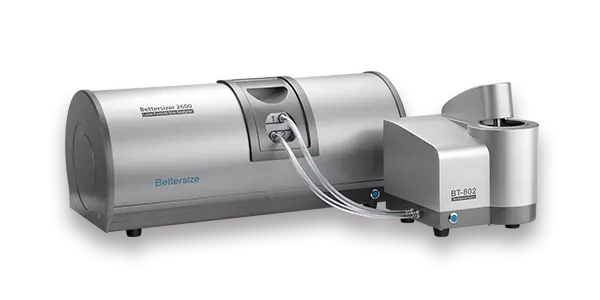
Bettersizer 2600
Analizador de tamaño de partículas por difracción láser
Rango de medición: 0,02 - 2.600μm (Húmedo)
Rango de medición: 0,1 - 2.600μm (en seco)
-
BeNano 180 Zeta Pro
Analizador de tamaño de nanopartículas y potencial zeta
Tecnología: Dispersión dinámica de la luz, dispersión electroforética de la luz, dispersión estática de la luz
-
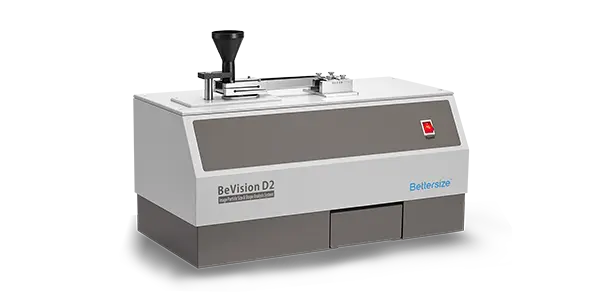
BeVision D2
Analizador dinámico de imágenes
Tipo de dispersión: Seco
Rango de medición: 30 - 10.000μm
Tecnología Análisis dinámico de imágenes
-
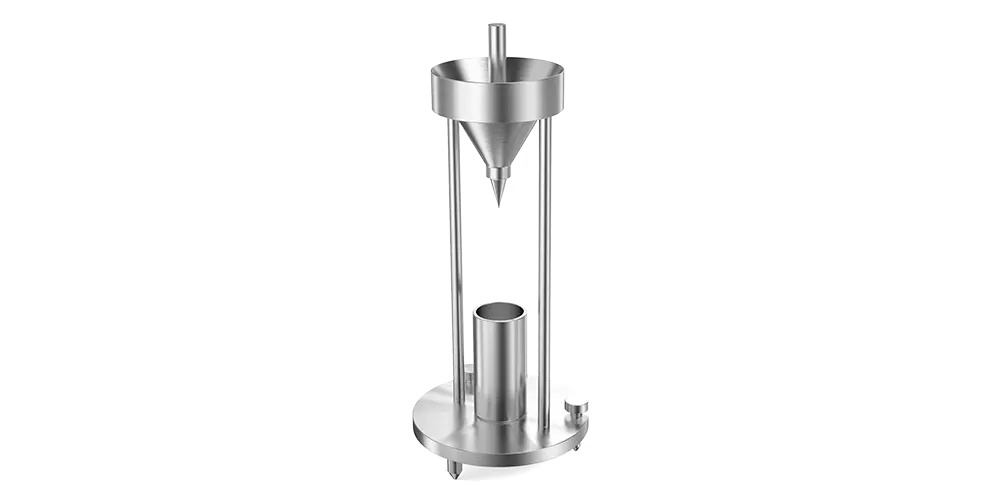
BeDensi B1
Medidor de densidad aparente
Medición: Densidad aparente
Conformidad con GB/T 16913
-
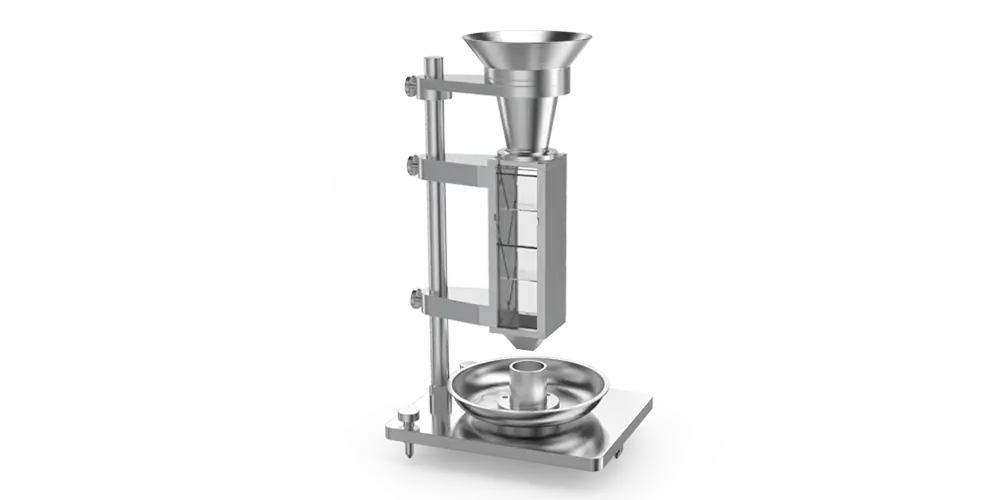
BeDensi B1-S
Volumenómetro Scott
Medición: Densidad aparente
Cumplimiento de las normas USP, Ph. Eur., ASTM e ISO
-
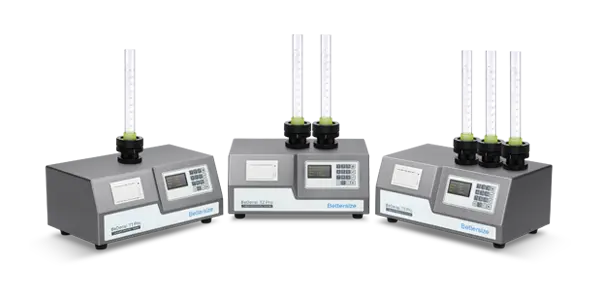
BeDensi T Pro Series
Solución económica para la medición de la densidad golpeada
Número de puestos de trabajo: 1-3
Velocidad de roscado: 100 - 300 machos/min.
Repetibilidad: ≤1% de variación
-
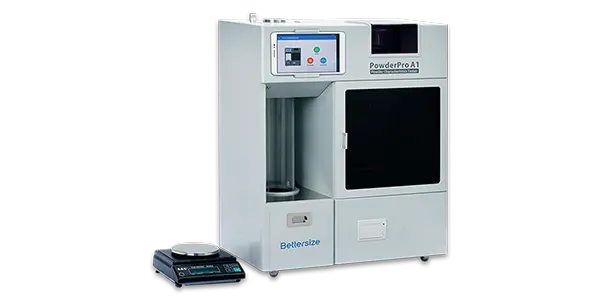
PowderPro A1
Analizador automático de propiedades de polvos
Modo de funcionamiento: Automático
Velocidad de roscado: 50 - 300 machos/min.
Repetibilidad: variación ≤3%.
-
BeScan Lab
Analizador de estabilidad
El tamaño de las partículas oscila entre 10 nm y 1 mm
Fracción de volumen de hasta el 95%
Cumplimiento de las normas ISO/TR 18811, 13097, 21357, 22107
-
BeSEC
Detector de dispersión de luz para sistemas SEC/GPC
Ángulos de detección duales: 7° y 90°
Rango de peso molecular: de 1 kDa a 2 GDa
Admite un radio de giro (Rg) > 12 nm